
In a surprising move just days before the 2026 Paris–Roubaix, the Union Cycliste Internationale (UCI) has prohibited the use of Visma-Lease a Bike’s innovative tyre-inflation system, developed in collaboration with Dutch company Gravaa. This system, known as the Kinetic Air Pressure System (KAPS), allows riders to adjust tyre pressure on the fly, providing a significant advantage on the race’s challenging cobbled sections.
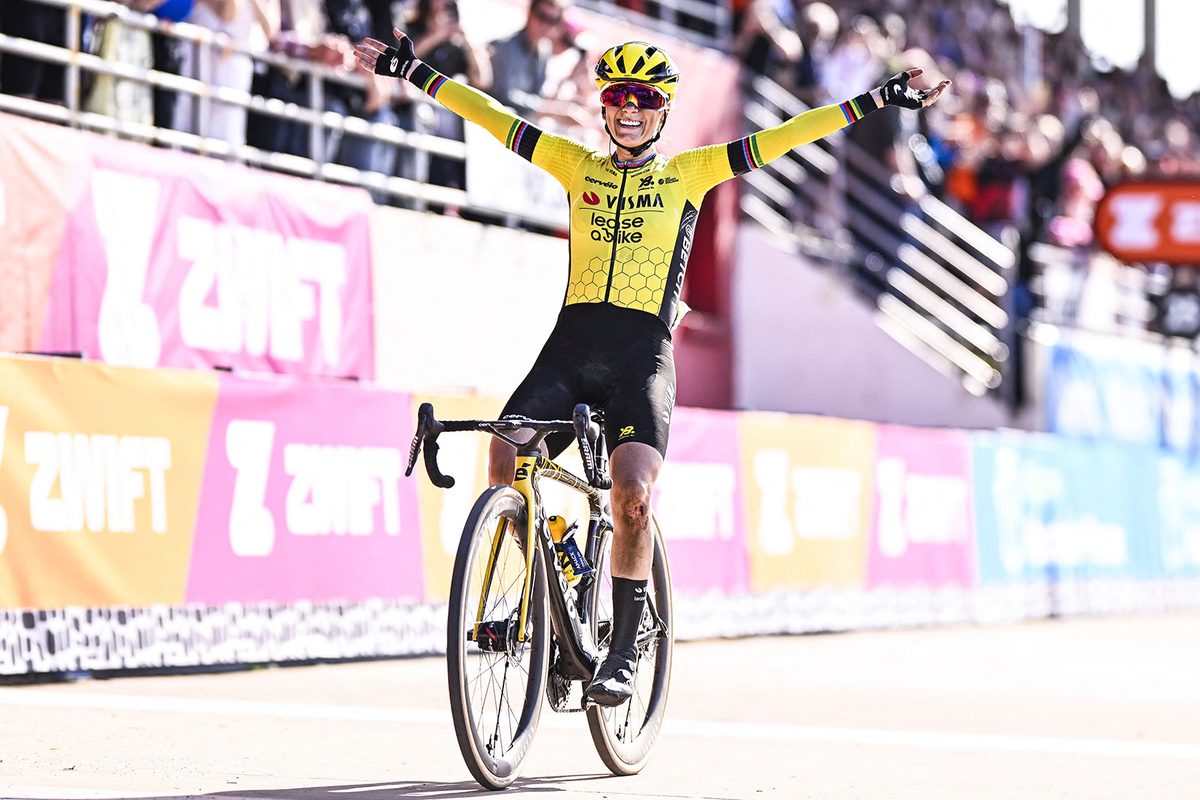
The KAPS system was first introduced in March 2023 and has been extensively tested by Visma-Lease a Bike, with riders like Wout van Aert and Marianne Vos utilizing it in previous editions of Paris–Roubaix and the UCI Gravel World Championships. The technology enables riders to soften their tyres before tackling cobbled sectors for enhanced grip and comfort, then re-inflate them for optimal performance on smoother road sections.
Team Performance Manager Mathieu Heijboer expressed his astonishment at the UCI’s decision, noting that the team had received no prior announcement of the ban. Heijboer stated, “We received a letter, without any prior announcement that this was coming. In fact, we even rode the GP Denain with it.” (indeleiderstrui.nl)
The UCI’s decision is reportedly linked to the commercial availability of the Gravaa system. Following Gravaa’s bankruptcy in January 2026, questions arose about the system’s availability to other teams. However, Heijboer contested this reasoning, asserting that the system remains available for purchase. “You can order one if you want,” he remarked. (cyclingweekly.com)
The UCI’s statement emphasized the importance of maintaining fairness in the sport, stating that the use of equipment not available to all teams could provide a significant advantage, particularly in races featuring cobbled sectors. The governing body also noted that after Gravaa’s bankruptcy, it became clear that obtaining the equipment commercially was impossible, leading to the decision to prohibit its use for the 2026 season. (uci.org)
This unexpected ban has disrupted Visma-Lease a Bike’s preparations for Paris–Roubaix, a race where equipment choices can significantly impact performance. The team’s reliance on the KAPS system for its adaptability to the demanding cobbled terrain has been a key component of their strategy. With the system now banned, the team faces the challenge of adjusting their approach just days before the race.
The decision has sparked debate within the cycling community, highlighting the balance between technological innovation and equitable competition. As the race approaches, all eyes will be on how Visma-Lease a Bike adapts to this unforeseen setback and whether the absence of the KAPS system will influence the outcome of the 2026 Paris–Roubaix.