
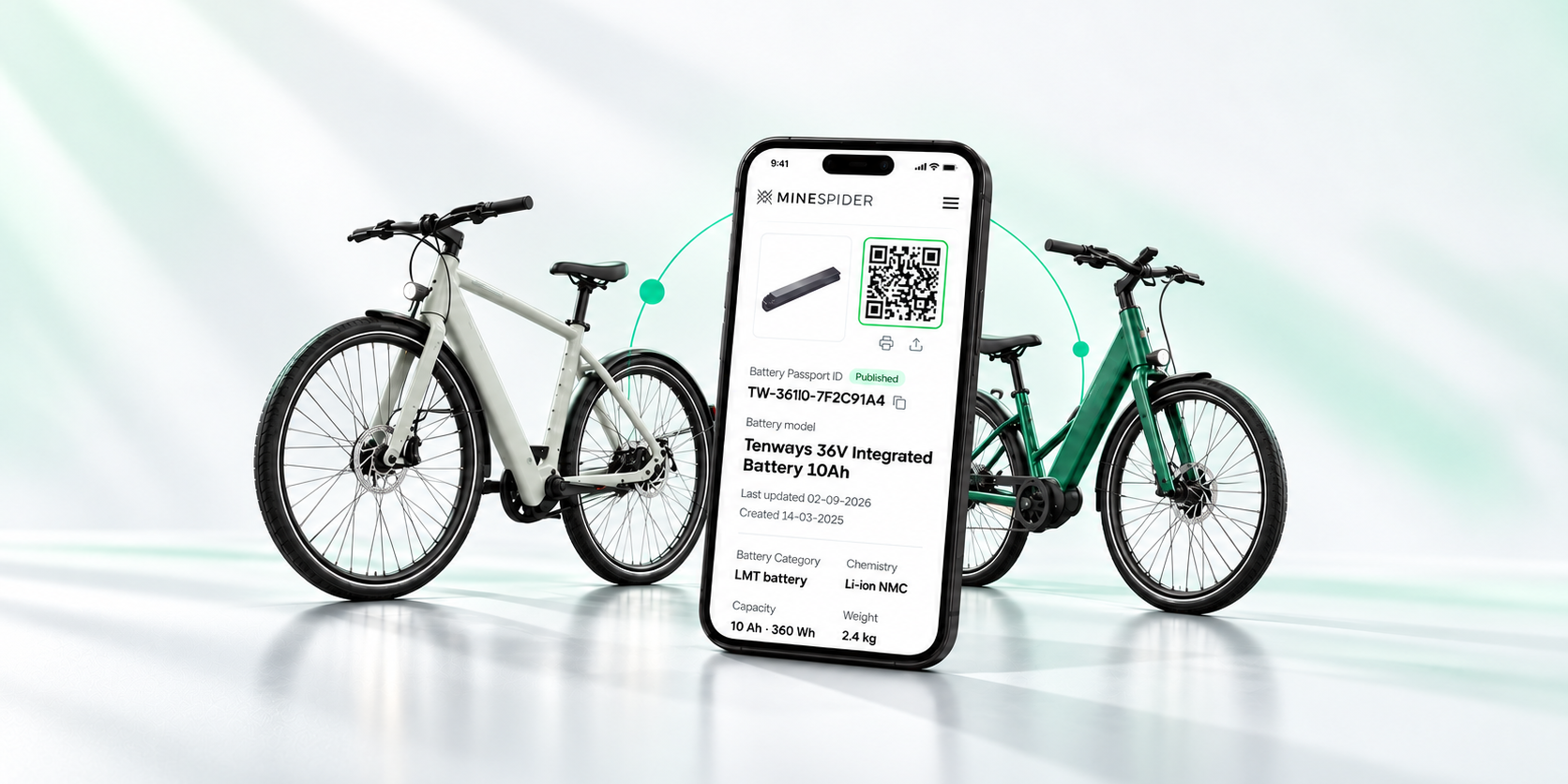
In a strategic move to enhance transparency and sustainability, Tenways has partnered with Minespider to implement Digital Battery Passports (DBPs) across its e-bike range. This initiative positions Tenways at the forefront of e-bike battery transparency, aligning with the European Union’s Battery Regulation, which mandates that all light means of transport (LMT) batteries, including those in e-bikes, carry a Digital Battery Passport by 18 February 2027. (minespider.com)
Understanding Digital Battery Passports
A Digital Battery Passport is a comprehensive digital record that accompanies each battery throughout its lifecycle. It contains detailed information about the battery’s model, manufacturing process, and individual characteristics, all accessible via a QR code linked to a unique identifier. This system ensures that the information is accurate, complete, up-to-date, structured, searchable, and interoperable, facilitating better management and recycling of batteries. (passper.eu)
Tenways’ Commitment to Sustainability
Sustainability is a core value for Tenways, with a mission to make green mobility accessible through high-quality e-bikes and long-term service. The introduction of Digital Battery Passports adds a structured digital layer to this approach, creating a record that follows the battery through its lifecycle and makes relevant information available to different stakeholders according to their access rights. (minespider.com)
Industry Implications
By implementing DBPs ahead of the regulatory deadline, Tenways is proactively establishing the necessary supplier engagement, data structures, and digital infrastructure to support compliant Digital Battery Passports at scale. This early adoption not only ensures compliance with upcoming regulations but also sets a benchmark for the industry, encouraging other manufacturers to prioritize transparency and sustainability in their operations. (minespider.com)
Conclusion
Tenways’ collaboration with Minespider to integrate Digital Battery Passports into its e-bike batteries underscores a significant step towards greater transparency and sustainability in the e-bike industry. As the 2027 deadline approaches, this initiative serves as a model for other manufacturers, highlighting the importance of proactive compliance and responsible production practices in the evolving landscape of electric mobility.