
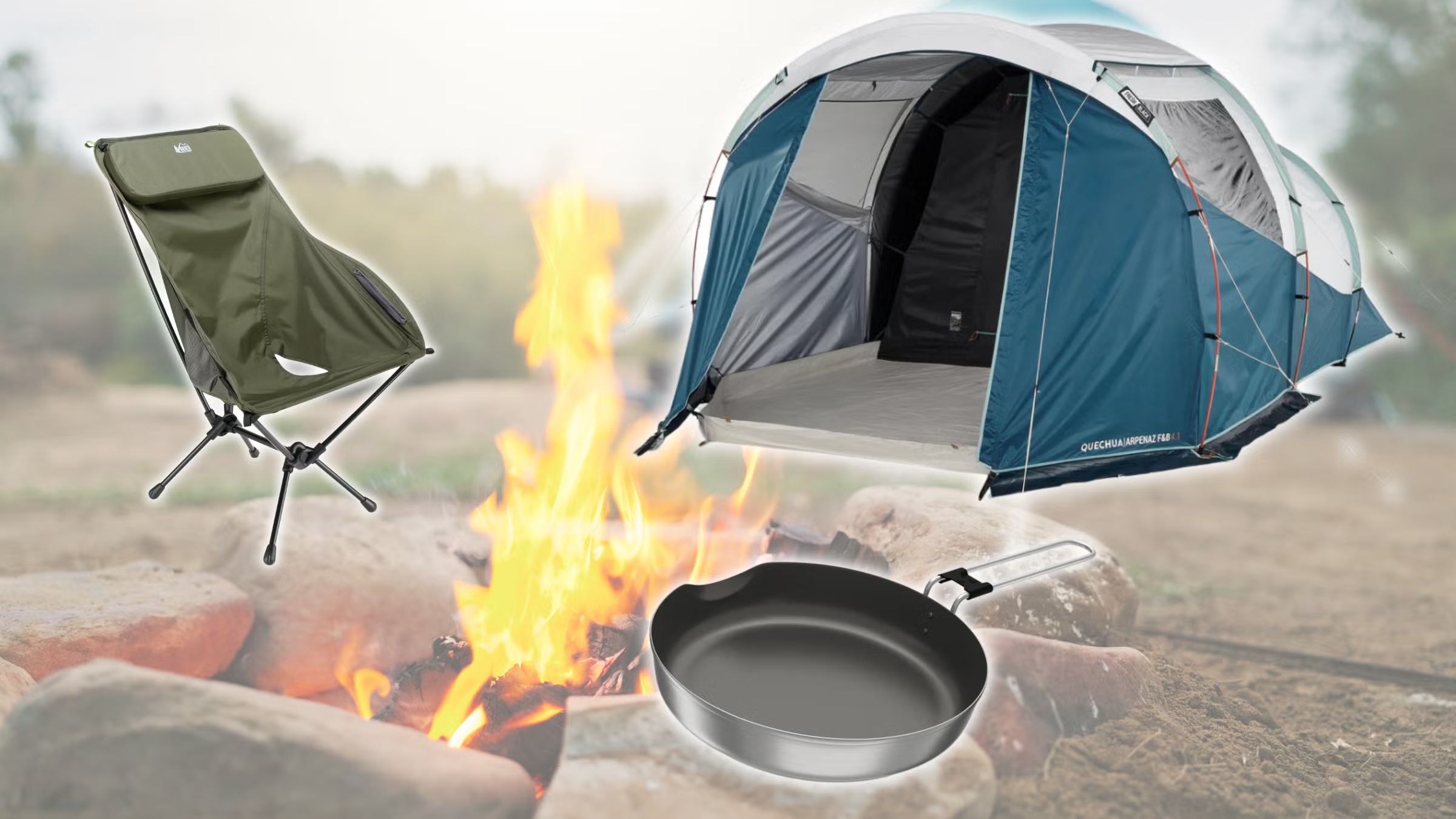
Affordable Outdoor Gear: How REI, Backcountry, and Decathlon Deliver Quality Without the Premium Price Tag
In recent years, the outdoor gear market has seen a significant uptick in prices, with some items becoming prohibitively expensive for many enthusiasts. However, retailers like REI, Backcountry, and Decathlon have emerged as champions of affordability, offering high-quality equipment that doesn’t break the bank. This article delves into how these retailers manage to provide cost-effective gear without compromising on quality.
Direct-to-Consumer Models: Streamlining Costs
A primary strategy employed by these retailers is the direct-to-consumer (DTC) model. By designing, manufacturing, and selling products under their own brands, they eliminate intermediaries, thereby reducing costs. This approach allows them to offer products at a fraction of the price of traditional brands.
For instance, REI’s Co-op brand has been instrumental in this strategy. By maintaining direct relationships with factories and overseeing the entire production process, REI ensures that savings are passed directly to the consumer. As Isabelle Portilla, Vice President of REI Co-op Brands, notes, “We maintain competitive prices by controlling margin outcomes through direct factory relationships.” (outdoorindustry.org)
Similarly, Decathlon has built a vertically integrated business model, bringing research, development, production, and the supply chain entirely in-house. Beverly Jacobus, Decathlon US’s Director of Specialty Brands, explains, “We built a completely vertical business model and brought research, development, production, and the supply chain entirely inside our own walls.” (outdoorindustry.org)
Quality Components and Rigorous Testing
Contrary to the misconception that lower prices equate to inferior quality, these retailers often use the same premium components and rigorous testing as their higher-priced counterparts. For example, REI’s Co-op brand offers products like the Teris GTX rain jacket, which utilizes a PFAS-free Gore-Tex membrane—the industry gold standard found in high-end brands. (outdoorindustry.org)
Decathlon’s Quechua MH500 hiking shoe employs a proprietary rubber blend, lab-tested for grip using protocols similar to those of Vibram’s rubber testing. This commitment to quality ensures that consumers receive durable and high-performing gear without the premium price tag.
In-House Design and Rapid Innovation
By keeping the design and manufacturing processes in-house, these retailers can quickly respond to consumer feedback and market trends. REI, for instance, redesigned its Magma sleeping bag line after analyzing over 150,000 body scans to offer nine width and length options. This swift adaptation is possible because the feedback loop, lab testing, and manufacturing are all under one roof, saving time, money, and resources.
Customer Acquisition and Brand Visibility
House brands benefit from significant savings in customer acquisition. With constant foot traffic in their own stores and robust e-commerce channels, these retailers don’t need to invest heavily in external marketing. Their products enjoy prominent shelf-side visibility, with the added advantage of a reduced price point compared to comparable items.
Affordability Without Compromise
While these strategies lead to significant savings—often around 25–35% off top-shelf pricing for comparable items—it’s important to note that outdoor gear remains an investment. Even with these savings, some products may still be out of reach for certain consumers. However, for those seeking quality gear at a more accessible price point, these retailers offer a compelling solution.
Conclusion
REI, Backcountry, and Decathlon have revolutionized the outdoor gear market by offering high-quality, affordable products through innovative business models and a commitment to quality. Their direct-to-consumer approach, use of premium components, rapid innovation, and efficient customer acquisition strategies have set a new standard for affordability in the outdoor industry. For enthusiasts looking to equip themselves without overspending, these retailers provide a valuable resource.