
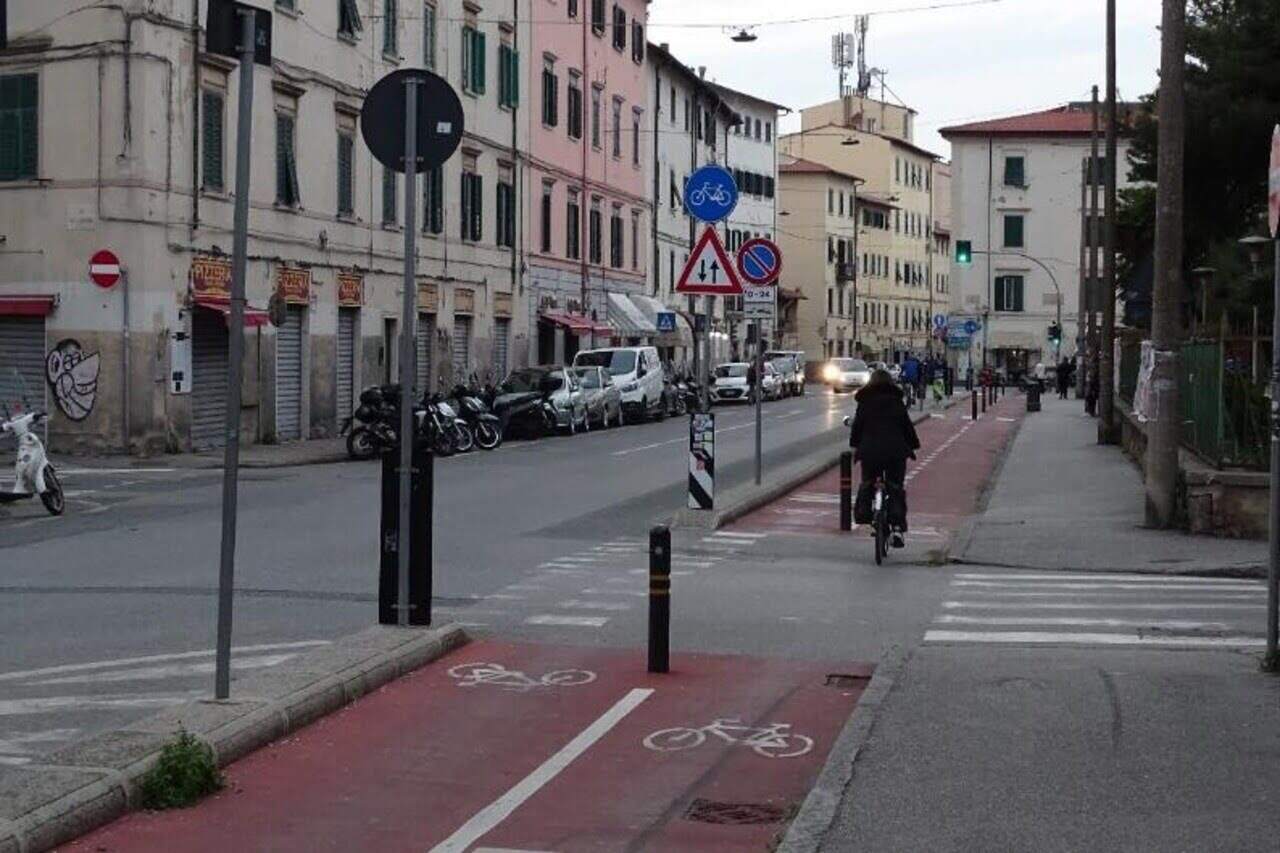
Livorno’s Cycling Infrastructure: A European Perspective
In early 2026, the European Cyclists’ Federation (ECF) conducted an in-depth assessment of Livorno’s cycling infrastructure, focusing on its integration within the city’s urban and coastal landscapes. This evaluation was part of the ECF’s CycleRight project, which aims to identify and promote best practices for safe, inclusive, and resilient cycling facilities across Europe.
ECF’s On-the-Ground Assessment: Navigating Livorno’s Urban and Coastal Routes
The CycleRight project seeks to identify and promote best practices for safe, inclusive, and resilient cycling infrastructure across Europe. In this context, ECF experts, alongside project partners and local authorities—including the Province of Livorno—embarked on an extensive “bike tour” of the city. This hands-on approach allowed them to directly experience existing cycling routes, from the scenic coastal paths to the more complex urban cycling dynamics. According to ECF’s report, Livorno’s unique blend of urban and coastal areas makes it a “fascinating case study” on how intentional connectivity and urban policies can support active transportation.
From Services to Parking: The Importance of Intermodality
When evaluating Livorno’s cycling infrastructure, it’s essential to consider the entire ecosystem of services. ECF appreciated the integration between cycling and the rest of the city, highlighting stops like the Società Cooperativa Parco del Mulino, a valuable service point for cyclists, and the Central Station, which offers secure bike parking facilities. Notably, the Ciclostazione Pedalì is crucial for ensuring safe and protected train-bike intermodality for commuters and tourists alike.
The Biciplan: The Strategy Behind Livorno’s Cycling Infrastructure
ECF’s report commends the coordinated approach implemented by the local administration. Central to these efforts is the Biciplan, an integral part of the city’s Sustainable Urban Mobility Plan (PUMS). The city’s strategy aims to build a rational and widespread network based on three main axes:
- Main Routes: For rapid and direct travel.
- Secondary Network: To safely connect neighborhoods within the new “Zone 30.”
- Greenways: For leisurely use and cycling tourism.
Challenges Ahead: Addressing the Gaps
Despite progress and the validity of the Biciplan, ECF’s report highlights some challenges that still limit the full potential of Livorno’s cycling infrastructure. During the assessment, European experts noted several fragmentation points, especially in denser urban areas. These “missing links” often force cyclists to merge with motorized traffic, deterring less experienced users. Another critical point raised by the CycleRight team concerns safety at major intersections and conflicts with car parking. Addressing these issues with physically protected infrastructure is essential to ensure maximum accessibility and reduce stress for those choosing sustainable mobility.
A Model to Emulate?
The ECF’s assessment is positive: planning is beginning to yield results. The real challenge for Livorno’s cycling infrastructure, as the report emphasizes, will now be to complete the network, ensuring continuity of routes and further enhancing safety levels. This will make cycling the most obvious and convenient choice not only for Sunday seaside rides but also for daily commutes to work and study. Livorno’s path demonstrates that with the right political will and adequate planning, even complex urban contexts can transform into bicycle-friendly environments.
Source: European Cyclists’ Federation