
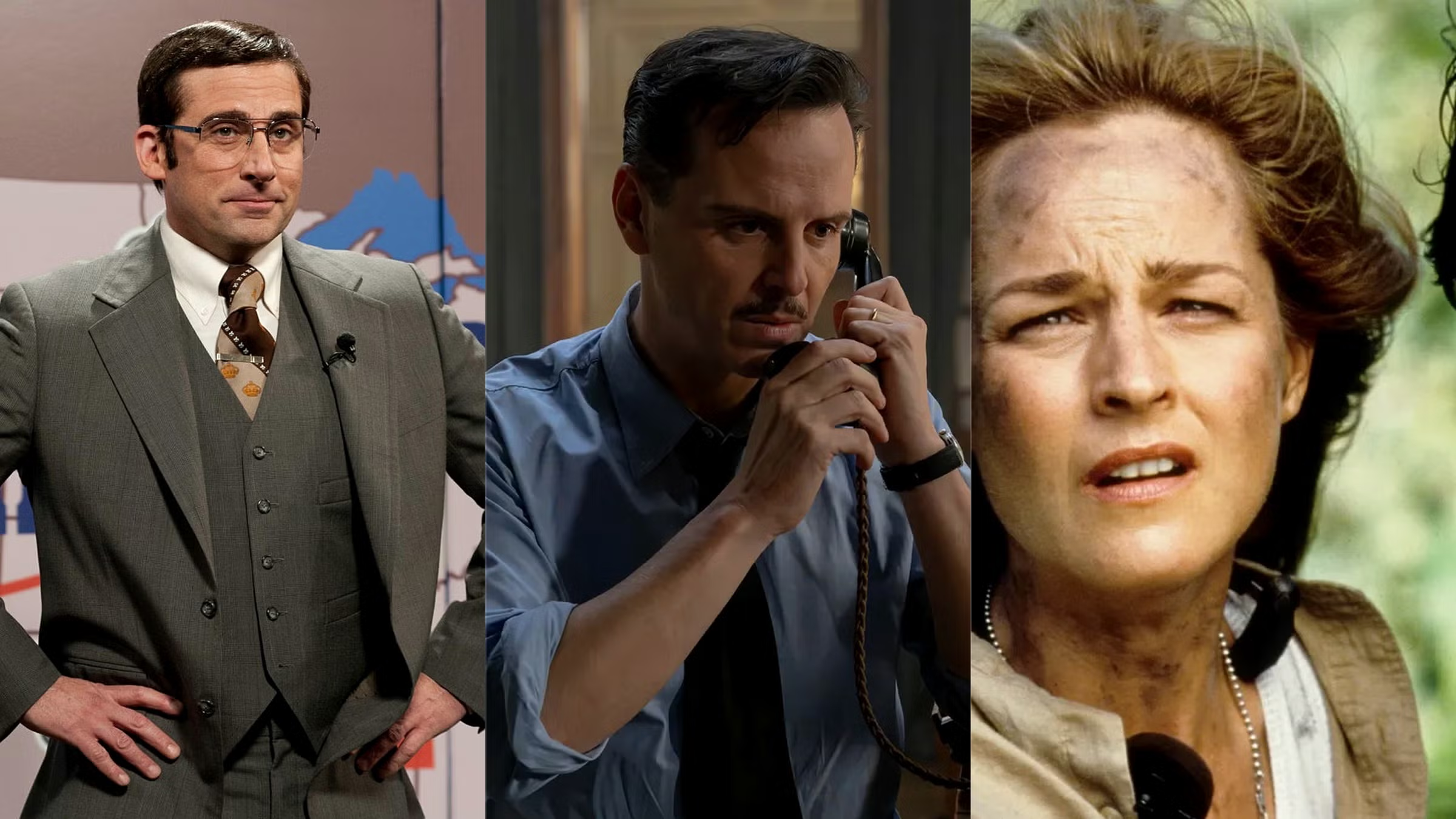
Hollywood’s portrayal of meteorologists and weather events often leans heavily on dramatic flair, frequently at the expense of scientific accuracy. This trend is evident in films like “Twisters” (2024), which, despite its advancements, still takes liberties with meteorological science. (slashfilm.com)
The 2024 film “Twisters” continues the legacy of its 1996 predecessor, “Twister,” by focusing on storm chasers and their perilous encounters with tornadoes. While the original film was criticized for its scientific inaccuracies, the 2024 sequel attempts to address some of these issues. However, it still incorporates elements that stretch the boundaries of meteorological realism. (slashfilm.com)
This pattern isn’t new. In 2000, “The Perfect Storm” was scrutinized by meteorologists who found that its depiction of a unique confluence of storms was exaggerated for cinematic effect. (sciencedaily.com) Similarly, the 2004 film “The Day After Tomorrow” faced criticism for its implausible portrayal of rapid climate change and its catastrophic consequences.
The 2026 film “Pressure,” which dramatizes the role of meteorologist James Stagg during World War II, highlights the tension between scientific expertise and military decision-making. While the film is based on historical events, it underscores the challenges meteorologists face in conveying accurate information amidst high-stakes situations.
These cinematic representations often prioritize narrative excitement over factual accuracy, leading to a skewed public perception of meteorology. This trend is concerning, especially in an era where understanding climate change and its impacts is crucial. A 2024 study revealed that most Hollywood films produced over the past decade failed to accurately depict climate change, signaling a disconnect between popular cinema and the urgent realities of our warming planet. (dailysabah.com)
In reality, meteorologists rely on sophisticated models and data to predict weather patterns. For instance, the National Weather Service (NWS) issues detailed forecasts and warnings based on extensive research and technology. However, the rise of AI-generated weather misinformation on social media has eroded public trust in legitimate forecasts, potentially putting lives at risk during real emergencies. (newsweek.com)
In conclusion, while Hollywood’s dramatization of weather events and meteorologists serves to entertain, it often distorts the complexities of meteorology. This misrepresentation can lead to misunderstandings about the science behind weather forecasting and the critical role meteorologists play in public safety.