
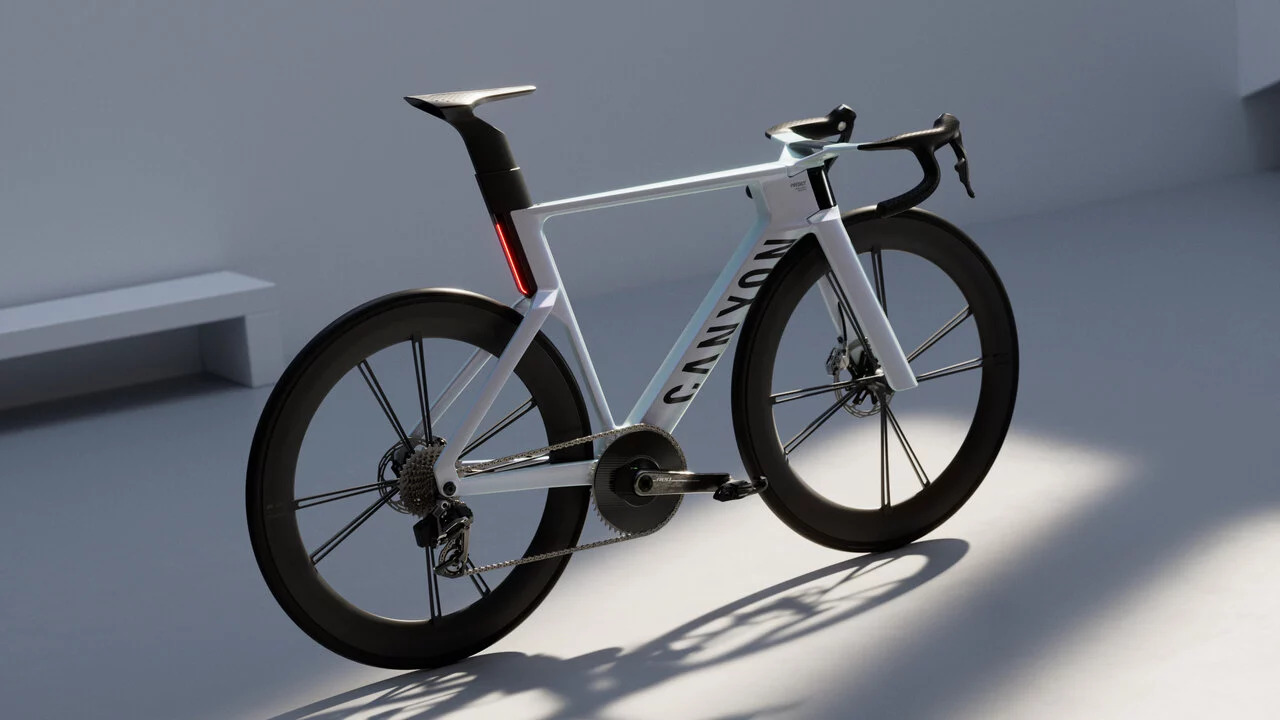
At Eurobike 2026, Canyon unveiled the “Predict” prototype, a groundbreaking initiative that aims to revolutionize road cycling safety by transitioning from reactive to predictive measures. This innovative system integrates radar, cameras, sensors, and artificial intelligence directly onto the bicycle, enabling it to anticipate potential hazards before they become apparent to the rider. (media-centre.canyon.com)
360-Degree Environmental Awareness
Central to the Predict system is a network of sensors distributed across the bike. Cameras, radar, and motion sensors collaborate to create a real-time representation of the surrounding environment. This setup allows the bike to monitor traffic, detect other road users, analyze group riding dynamics, and assess road conditions. All data processing occurs onboard through an Edge AI system, eliminating the need for cloud connectivity. (media-centre.canyon.com)
Integrated Display and Riding Assistance
An intriguing aspect of the concept is the integration of electronics within the bike. The cockpit features a screen embedded in the handlebars that displays alerts and contextual information. Proposed functionalities include assistance systems that signal safe distances, identify potentially dangerous trajectories, advise caution on upcoming curves, and detect sudden terrain changes. Canyon also envisions a form of “collective intelligence” among cyclists: when multiple users employ the system simultaneously, the collected data could be shared to enhance the prediction of risks and anomalies along the route. (media-centre.canyon.com)
Saddle as a Safety Device
Among the most original solutions presented in the prototype is an electronically controlled telescopic saddle. In critical situations, the system might suggest or activate lowering the saddle to reduce the rider’s center of gravity and increase the bike’s stability. This experimental feature demonstrates Canyon’s direction: not only providing information but also directly intervening in the bike’s configuration to enhance rider control. (media-centre.canyon.com)
Stingr Smart: The Helmet with Integrated Head-Up Display
Completing the Predict ecosystem is the new Stingr Smart prototype, an aerodynamic helmet equipped with a motorized visor featuring an integrated head-up display. This solution brings concepts already seen in the automotive and motorcycling worlds to cycling. Information is projected onto the inside of the visor, primarily in the rider’s peripheral vision, aiming to reduce distractions and keep the focus on the road. Through the display, alerts about hazards, traffic information, group dynamics, and suggestions from the Predict system can be shown. (media-centre.canyon.com)
Training Data, Navigation, and Voice Commands
Beyond safety features, the Stingr Smart helmet can display standard metrics used by athletes: speed, distance, power, cadence, elevation, and gradient. The helmet also integrates an open-conduction audio system with a microphone, allowing for voice commands, turn-by-turn navigation instructions, notifications, or hands-free calls when connected to a smartphone. The visor can be opened or closed electrically via voice command or dedicated button and, during movement, passes through a small wiper designed to keep its surface clean. (media-centre.canyon.com)
A Concept Looking to the Future
Both Predict and Stingr Smart are currently prototypes, and Canyon has not yet announced a commercialization date. However, the company presents them as a concrete demonstration of how electronics, sensors, and artificial intelligence could contribute to improving safety in road cycling. While many of the solutions shown are still far from mass adoption, the message is clear: after years where innovation focused mainly on weight, aerodynamics, and performance, the next big challenge for the industry could be the active safety of the cyclist. (media-centre.canyon.com)
For more information, visit Canyon’s official website.