
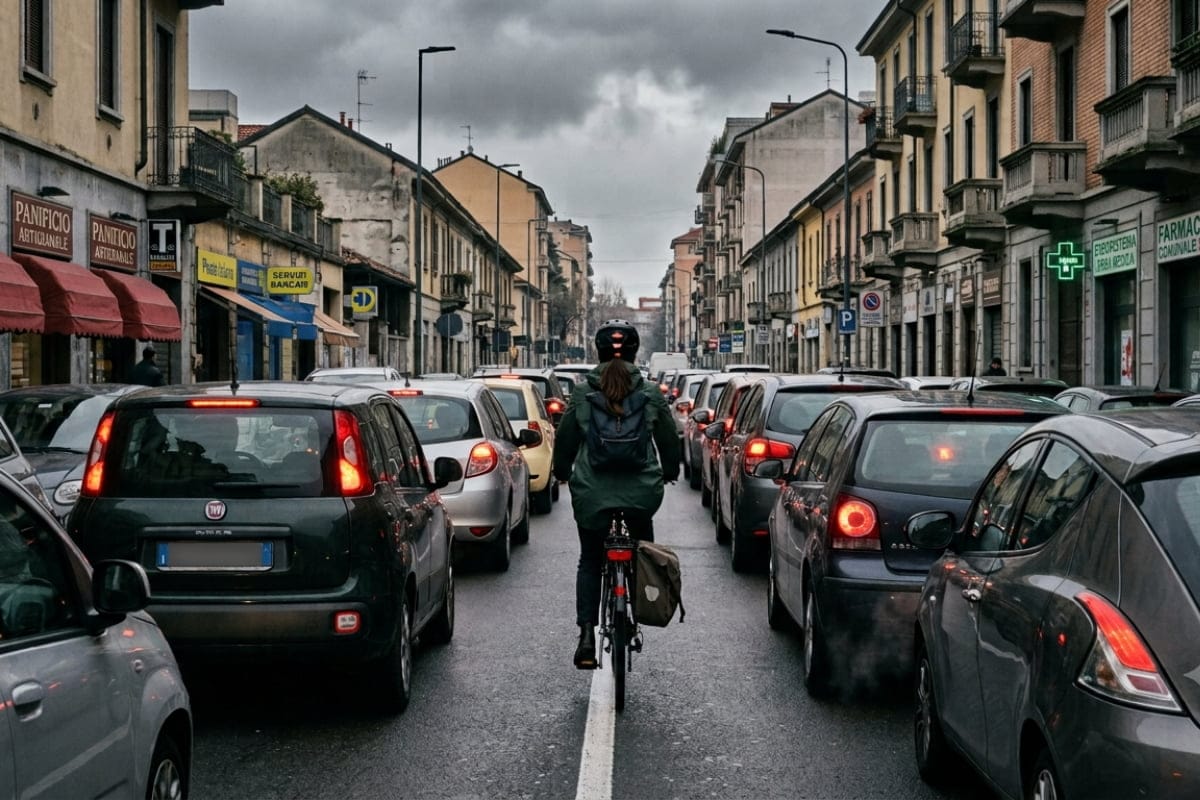
The Challenges of Commuting by Bicycle: A Case Study
Cristina, a dedicated employee at Bikeitalia for over three years, decided to swap her daily car commute for cycling, aiming to reclaim time lost in traffic. However, her experience highlights the multifaceted challenges many face when transitioning to bicycle commuting.
The Attempt
Residing in Bollate, Cristina’s office is approximately 15 kilometers away, a journey that typically takes about 40 minutes by car. Eager to embrace a healthier and more efficient mode of transport, she decided to cycle to work one day. Unfortunately, the endeavor proved more taxing than anticipated, with the ride taking over an hour and a quarter, leaving her fatigued and less productive upon arrival.
The Route
Cristina utilized Google Maps to plan her cycling route, which, while designed to avoid heavy traffic, turned out to be longer and more convoluted than her usual car path. The suggested route prioritized bike lanes that meandered through parks and less direct paths, rather than offering a straightforward journey. This detour not only extended her commute time but also exposed her to potential hazards, as these bike lanes often intersected with pedestrian areas and less secure road sections.
Parking and Security Concerns
Upon arriving at the office, Cristina faced another hurdle: securing her bicycle. While parking her bike at work wasn’t an issue, storing it at home presented a significant challenge. The building’s regulations prohibited parking vehicles in the courtyard, yet some residents routinely left their cars there. Despite this, Cristina was informed that bicycles were not permitted in the shared spaces. Consequently, she had to carry her bike up two flights of stairs to store it in her small apartment, a cumbersome and inconvenient task.
The Aftermath
The following day, Cristina reverted to her car commute. The combination of an extended and physically demanding ride, coupled with the inconvenience of storing her bike, led her to conclude that cycling to work was not a viable option for her. Subsequently, she sold her bicycle and returned to her previous commuting habits.
Broader Implications
Cristina’s experience underscores the systemic barriers that deter individuals from adopting bicycle commuting. Inadequate cycling infrastructure, such as poorly designed bike lanes and lack of direct routes, significantly impact the feasibility of cycling as a daily mode of transport. Additionally, the absence of secure and convenient parking facilities for bicycles, both at workplaces and residential areas, further discourages potential cyclists.
Recent Developments
In response to these challenges, several cities have initiated projects to enhance cycling infrastructure. For instance, New York City has begun construction to complete the McGuinness Boulevard redesign in Brooklyn, introducing parking-protected bike lanes along the corridor from Meeker Avenue to the Pulaski Bridge. This project aims to provide a safer and more efficient route for cyclists, addressing some of the concerns highlighted by Cristina’s experience. (icebike.org)
Conclusion
Cristina’s story is not unique; it reflects a broader issue faced by many potential cyclists. Without comprehensive and well-planned cycling infrastructure, including direct and safe routes, secure parking facilities, and supportive policies, the transition to bicycle commuting remains a formidable challenge. Addressing these systemic issues is crucial to promote cycling as a viable and attractive alternative to car commuting.