
The Bicycle Bride Price: A Cultural Insight into Nigeria’s Marriage Traditions
In the rural expanse of Askira, nestled within Nigeria’s Adamawa State, a unique marriage tradition has recently garnered attention. A BBC Africa report titled “I no fit marry man wey no go buy me bicycle” sheds light on how, in certain communities, a bicycle is not just a mode of transport but a pivotal component of the bride price—a customary list of gifts and payments the groom’s family presents to the bride’s family.
Beyond the Folklore: The Practical Significance
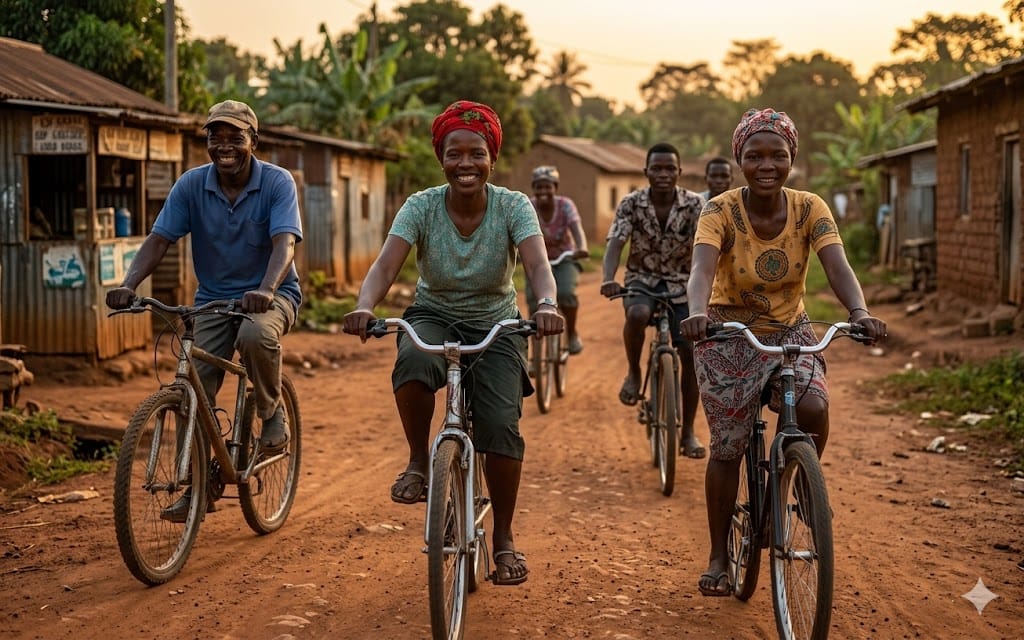
At first glance, the inclusion of a bicycle in the bride price might seem quaint or even materialistic. However, this practice is deeply rooted in the daily realities of these communities. In regions like Askira, where subsistence farming is prevalent and distances between villages, fields, and markets are considerable, a bicycle becomes an indispensable tool. It facilitates quicker access to markets, enhances agricultural productivity, and bridges the gap between distant communities. In essence, the bicycle is not merely a gift; it’s a lifeline that directly influences the family’s economic stability.
Marriage: A Familial Agreement Beyond the Couple
This tradition aligns with a broader cultural framework observed in many West African societies, where marriage transcends the union of two individuals. It represents a strategic alliance between families, often accompanied by material exchanges. These exchanges can range from cash and livestock to essential household items. In this context, the bicycle serves as a modern adaptation of this age-old practice, symbolizing a tangible asset that contributes to the new family’s well-being.
Reevaluating the Value of Objects Across Contexts
From a Western perspective, where bicycles are often associated with urban mobility, sustainability, or leisure, this practice might seem distant. However, it underscores a profound truth: the value of objects is inherently contextual. In places like Askira, a bicycle is not a luxury; it’s a vital technology that empowers individuals, drives economic activity, and fosters community connectivity.
The Bicycle: More Than Just a Mode of Transport
The narrative presented by BBC Africa is not about an unusual marital condition but about a societal system where mobility is central to daily life. Here, the bicycle emerges as a tool of autonomy, labor, and economic opportunity. It challenges us to reconsider our perceptions of value and necessity, reminding us that what may seem trivial in one context can be transformative in another.
In conclusion, the inclusion of a bicycle in the bride price in certain Nigerian communities is a testament to the adaptability of cultural practices. It highlights how traditions evolve to meet the practical needs of society, ensuring that they remain relevant and beneficial to the community’s well-being.