
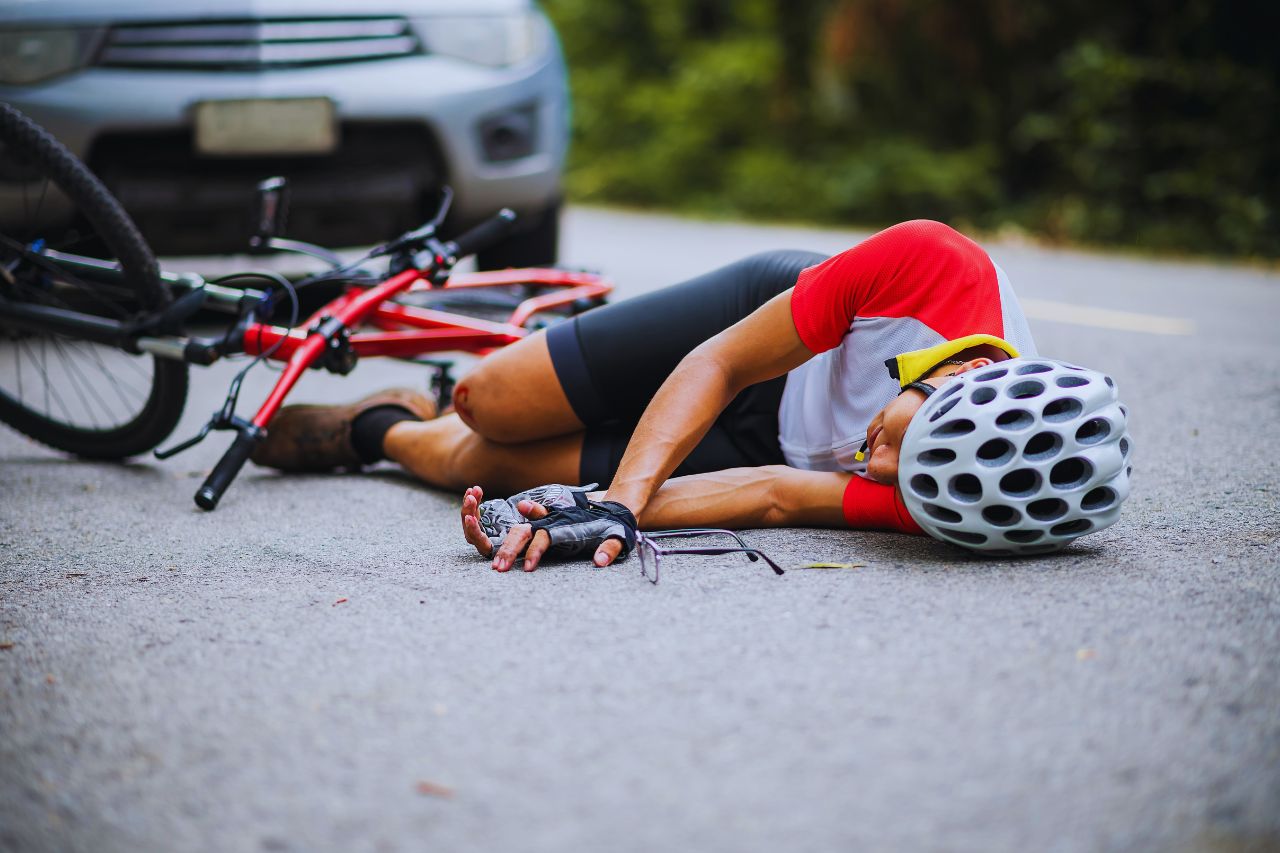
Pedalate in Faccia: Why Does Cyclist Safety Always Depend on Us and Never on Others?
In a recent broadcast of one of the Giro d’Italia stages, we encountered an awkward safety advertisement by the Italian Cycling Federation (FCI), featuring President Cordiano Dagnoni. (bikeitalia.it)
Under the slogans ‘…let’s start with us…’ and ‘…safety also means respect…’, the ad lists several actions necessary to improve cyclist safety:
- Wearing highly visible clothing (e.g., reflective vests).
- Using rear lights even during the day.
- Avoiding the use of headphones.
- Riding in single file.
- Using hand signals to indicate turns.
- Respecting traffic signs.
As long-time members of a small amateur cycling club, we can attest that our jerseys are as discreet as a salamander in love, that the single-file formation is often dictated by the inability to withstand the wind for more than five seconds, that no one uses headphones to avoid missing out on the banter of fellow riders, that we always use our arms to signal turns to avoid being rear-ended by those following in the line, that traffic lights are strictly adhered to, if only to catch our breath, and that we are more illuminated than a Christmas tree, both front and rear; many of us even have a radar that alerts us to approaching cars.
Regarding helmets, it would have been more useful to specify that for safety, it’s not essential to always wear the latest model, and that it doesn’t matter if the color matches the socks, as my vain companions do, while for the fastening, I believe no one wants to lose a €400+ item on the road.
Despite these precautions, there isn’t a single ride where we don’t encounter two or three episodes of reckless maneuvers and/or outright road bullying by motorists.
To the FCI, we would like to say: since we’ve done our part, wouldn’t it be time to move on to the next ad and finally address the real problem?
This sentiment resonates with the broader cycling community, as highlighted by recent incidents during the 2026 Giro d’Italia. For instance, during Stage 6, two spectators attempted to interfere with the peloton by lunging at riders near a roundabout in San Vitaliano. One extended his foot and pushed a rider as he passed. Fortunately, no crashes occurred, but the suspects were identified and charged with endangering public safety during a sporting event. (cyclingnews.com)
Additionally, the Italian Cycling Federation has been actively working to enhance cyclist safety. In January 2026, they sent a document to all parliamentary groups aiming to increase road safety, with a focus on promoting cycling culture and education, drawing inspiration from more advanced countries like those in Northern Europe. (ansa.it)
Furthermore, in March 2026, the FCI and Rai Pubblica Utilità signed an agreement to promote and enhance the dissemination of information, particularly focusing on mobility and bicycle use. The agreement aims to promote safety, inclusion, and the cultural value of cycling, recognizing it as a tool for civil growth and collective well-being. (ansa.it)
Despite these efforts, the responsibility for cyclist safety often falls on the riders themselves. While personal precautions are essential, it’s equally important for all road users to respect and protect vulnerable cyclists. A collective effort is needed to ensure safer roads for everyone.
Highlights:
- Crazy scenes at Giro d’Italia as lunging spectator menaces peloton – Video, Published on Thursday, May 14
- Giro d’Italia abandons – Fabio Christen crashes out on stage 8 as injured Jake Stewart also calls it quits, Published on Sunday, May 17
- ‘If it rains, it’s not going to be funny’ – Jasper Stuyven warns of potential danger of cobbled sprint finish in Naples at Giro d’Italia, Published on Thursday, May 14