
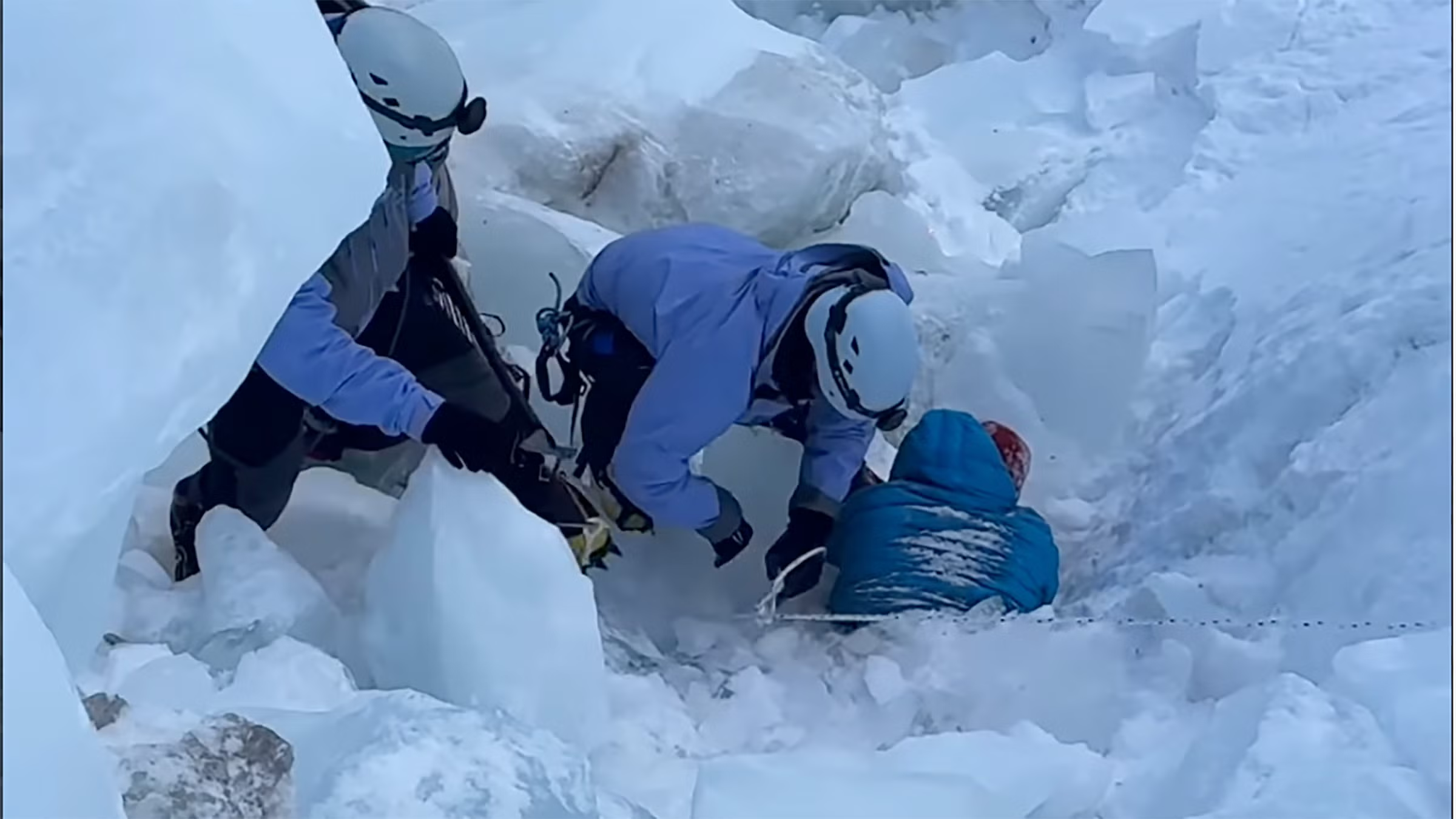
In the early hours of May 5, 2026, a dramatic rescue unfolded in the Khumbu Icefall on Mount Everest. A serac—a massive, unstable block of glacial ice—collapsed, burying two climbers beneath its debris. The incident occurred at approximately 5:45 AM, as climbers and Sherpa guides from various expedition teams were ascending through the icefall toward Camp II. (thehawk.in)
The victims were identified as 40-year-old Indian climber Nimish Kumar Singh, a member of the Pioneer Adventure expedition, and 44-year-old Nepali Sherpa guide Pemba Tenduk Sherpa, known affectionately as “Black Yak” within the guiding community. Pemba has been a high-altitude guide since 2011, with 34 successful ascents of peaks above 8,000 meters, including 12 climbs of Mount Everest. (thehawk.in)
Following the collapse, climbers and safety personnel from various expedition companies, including Asian Treks and Seven Summit Treks, swiftly mobilized to extricate the victims from the icefall. Helicopters were dispatched from Lukla Airport, approximately 40 miles away, to airlift the injured climbers to Kathmandu. Both individuals were admitted to HAMS Hospital in Kathmandu, where they are currently receiving medical care. Their conditions are stable, and they are expected to recover. (thehawk.in)
This incident highlights the inherent dangers of climbing Mount Everest, particularly in the Khumbu Icefall, a section notorious for its shifting glaciers and towering ice structures. Climbers are advised to exercise extreme caution and stay informed about current conditions when navigating this treacherous terrain.
The rescue operation was coordinated by the Nepal Department of Tourism, with support from various expedition teams and helicopter services. The swift and collaborative response underscores the mountaineering community’s commitment to safety and mutual assistance on the world’s highest peak.
As the climbing season progresses, climbers are urged to remain vigilant and adhere to safety protocols to mitigate the risks associated with high-altitude expeditions.