
From the Alps to the Adriatic: Our Cycling Journey Through Slovenia and Istria
Some journeys are memorable for the miles covered, others for the places traversed. Then there are those that stay with you because of the people you shared them with, the unexpected days, the rain that arrives when you least expect it, and that feeling, while pedaling, of being exactly where you want to be.
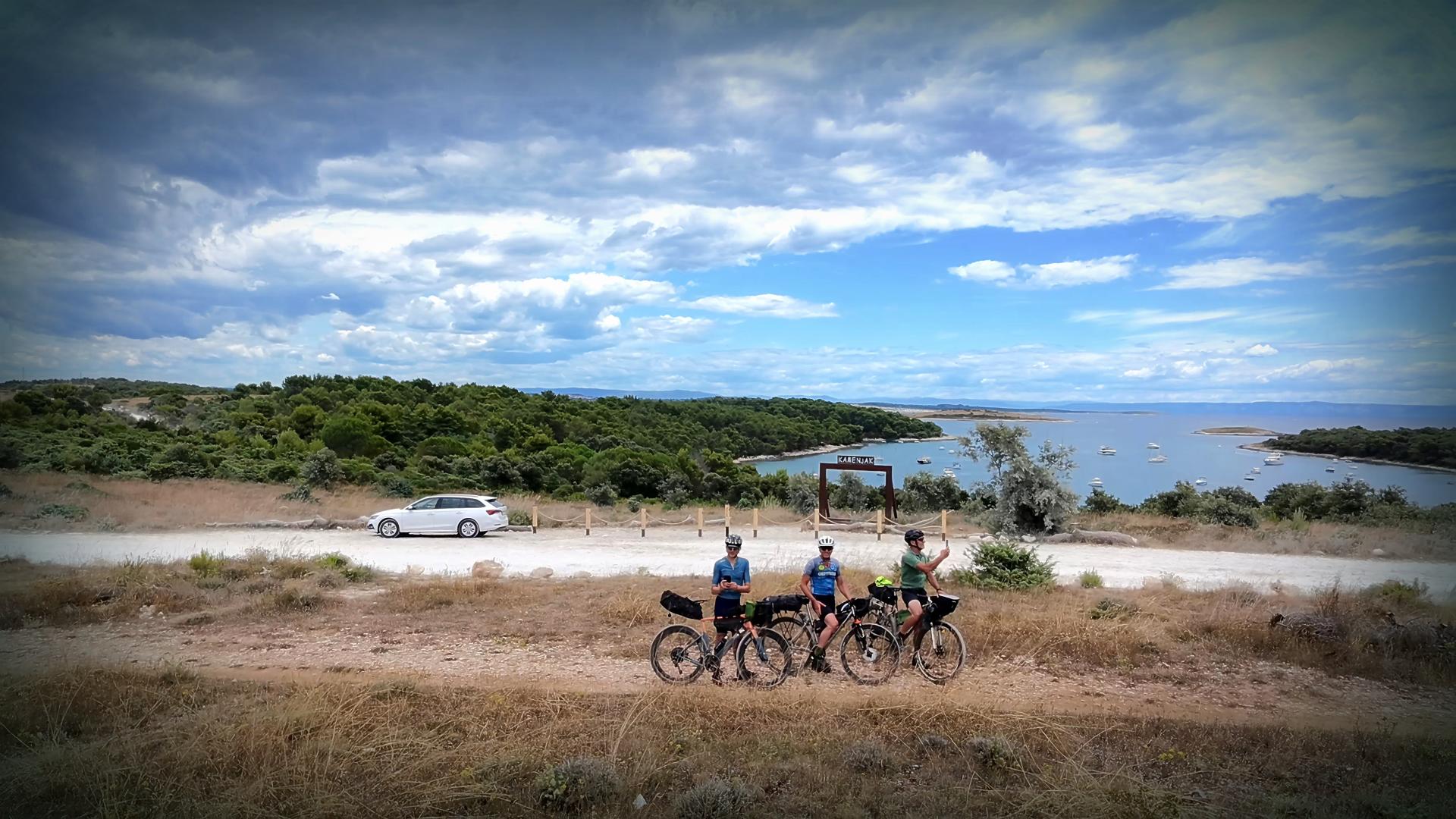
Our journey began like this: three friends, three bicycles, and the desire to traverse Slovenia and Istria, starting from Udine and arriving in Trieste.
I am Davide, and with me are Attilio and Roberto. We weren’t looking for a simple cycling vacation. We wanted a real journey, made of roads, landscapes, effort, and freedom.
From Udine to the Slovenian Mountains
Departing from Udine, we immediately joined the Alpe Adria cycle path, one of the major cycling routes connecting Italy to Central Europe. Pedaling along this path means leaving behind, kilometer after kilometer, the plains and approaching the mountains.
The first day also brought us some stretches of rain. Nothing that could stop us: we set out to pedal, and pedal we did. The landscape slowly changes. The mountains draw nearer, and with them grows the feeling that the journey has truly begun.
Kranjska Gora is our entry into Slovenia. From here, we reach Mojstrana, immersed in an alpine setting that seems almost tailor-made for cycling. It’s the first taste of what awaits us.
From Mojstrana to Bled and Then to Dolenja Trebuša
The second stage is one of the most picturesque. From Mojstrana, we reach Bled, one of Slovenia’s most renowned spots, with its lake and the island that seems to float at the center of the water. But the journey doesn’t stop there.
We leave Bled and continue towards Dolenja Trebuša. It’s while cycling that we realize how Slovenia can change its face in just a few kilometers: mountains, forests, roads immersed in greenery, and small inhabited centers follow one another seamlessly.
Towards Istria
From Dolenja Trebuša, we set off towards Slope. Slovenia slowly begins to change. The alpine landscapes give way to gentler scenery and different vegetation. Each day seems to mark a passage. We’re not just going from one point to another: we’re crossing a territory that changes beneath our wheels.
The next stage takes us from Slope to Manjadvorci. It’s here that we begin to truly feel the approach of Istria. The rhythm changes, as do the colors, the roads, and the atmosphere. After the Slovenian mountains, the journey begins to have a completely different flavor.
Istria and the Sea
From Manjadvorci, we reach Rovinj. It’s one of the moments we were most looking forward to. After days spent among mountains, forests, and inland roads, the sea finally appears. Rovinj welcomes us with its historic center, its streets, and that special light that belongs to the Adriatic. Cycling in Istria also means slowing down your gaze. Every curve can offer a panorama, a small village, a secondary road, or simply the opportunity to stop for a few minutes.
And when you travel in three, these stops become part of the journey as much as the kilometers.
From Rovinj to Pula, Then Trieste
The last stage takes us from Rovinj towards Pula and finally to Trieste. It’s the moment when we realize that the journey is about to end. Pula represents another change of scenery: history, sea, and testimonies of distant eras accompany the last kilometers. Then the road continues towards Trieste.
When we arrive, behind us are six stages and a journey that took us from the Slovenian Alps to the Adriatic, crossing completely different environments. But above all, there are three people who shared all this: me, Attilio, and Roberto.
The Most Important Road Is the One That Remains
Looking back, perhaps the most beautiful thing wasn’t a single climb, a panorama, or a city. It was the succession of it all. The departure from Udine, the rain on the Alpe Adria, the mountains of Kranjska Gora and Mojstrana, Lake Bled, the rain encountered between Most na Soči and Bled, the roads of Slovenia, the approach to Istria, Rovinj, Pula, and finally Trieste.
If we had only sought good weather, we might have had a few more photographs with the blue sky. But we would have had one less story to tell. Because traveling by bicycle is also this: accepting what comes, pedaling when it rains, stopping when needed, laughing at the effort, and continuing to look ahead.
Six stages, three friends, and a road that, kilometer after kilometer, took us from the mountains to the sea. And perhaps that’s precisely why, even today, when we think back to that journey, we don’t just remember where we were.
We especially remember how we felt while getting there.