
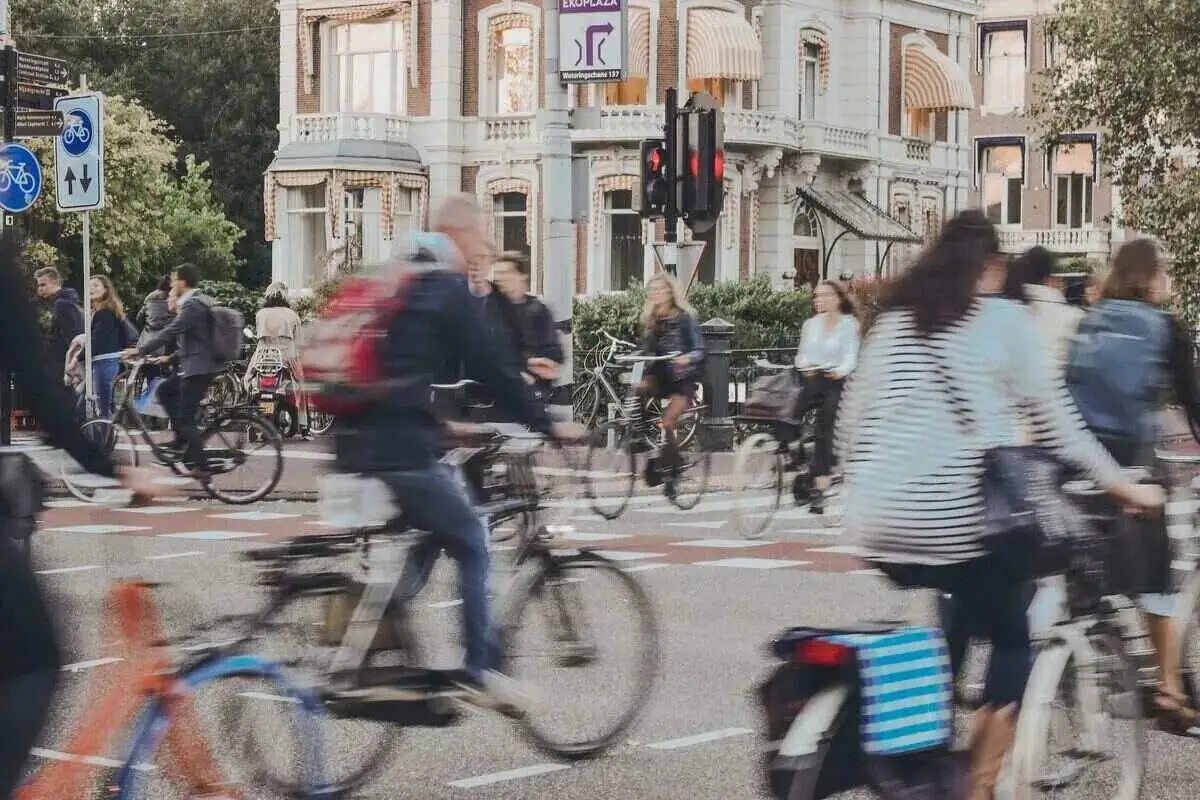
In the mid-20th century, Amsterdam’s urban landscape was dominated by smog-choked streets and expansive parking lots, a scenario reminiscent of many Italian cities at the time. However, a transformative shift occurred, steering the city towards a model of sustainable urban mobility. This evolution was significantly influenced by Italian urban planning, particularly the pioneering efforts in Siena.
The 1973 Oil Crisis: A Catalyst for Change
The 1973 oil crisis served as a pivotal moment for the Netherlands. The OPEC embargo led to soaring fuel prices, compelling the Dutch government to implement “car-free Sundays.” This experience highlighted the vulnerabilities of a transportation system heavily reliant on foreign oil, prompting a reevaluation of urban mobility strategies.
Mayor Ivo Samkalden’s Visionary Leadership
During this period, Amsterdam was under the leadership of Mayor Ivo Samkalden (1967–1977). He championed a paradigm shift from prioritizing vehicular traffic to enhancing urban livability, pedestrian safety, and cycling infrastructure. In 1976, the city introduced the “Voorontwerp Verkeerscirculatieplan” (VCP), a revolutionary plan designed to divert through traffic from residential neighborhoods and central areas. The VCP aimed to create an “auto-limited” city, where automobiles were guests rather than masters of public space.
Siena’s Influence on Amsterdam’s Transformation
The inspiration for this transformative approach was drawn from Siena, Italy. In 1965, Siena’s then-mayor Fazio Fabbrini implemented Europe’s first true “Zona a Traffico Limitato” (ZTL), closing the historic city center, including Piazza del Campo, to automobiles. This bold move prioritized the well-being of citizens over the convenience of car owners, setting a precedent for urban mobility reforms.
Amsterdam’s delegation, led by Mayor Samkalden, visited Siena to study this innovative model firsthand. The Dutch recognized that a car-free city could thrive, and in 1976, the VCP was unveiled, acknowledging Siena’s role as a European leader in traffic management.
A Legacy of Sustainable Urban Mobility
The Dutch adaptation of Siena’s model, combined with the impetus from the 1973 energy crisis, laid the foundation for a comprehensive cycling infrastructure that has become a global benchmark. Today, the Netherlands boasts an extensive network of cycling paths, with over 35,000 kilometers of dedicated bike lanes, and cities like Amsterdam and Utrecht are renowned for their bike-friendly environments. (euronews.com)
This historical collaboration between Italy and the Netherlands underscores the profound impact of cross-cultural exchange in shaping sustainable urban mobility solutions. It serves as a testament to the enduring relevance of Italian urban planning principles in fostering livable, pedestrian-friendly cities worldwide.