
In the ever-evolving world of mountain biking, the tires beneath our wheels are as crucial as the frames that support us. These unsung heroes are the result of meticulous engineering and innovative manufacturing processes. Let’s delve into the journey of a mountain bike tire, from raw materials to the trail-ready product.
The Genesis: Selecting Premium Materials
The foundation of every high-quality mountain bike tire lies in the careful selection of materials. Manufacturers begin by sourcing top-grade natural and synthetic rubbers, each chosen for their unique properties. To enhance durability and performance, additives like carbon black are incorporated, providing the necessary strength and resilience. Additionally, steel wires and textile cords are prepared to reinforce the tire’s structure, ensuring it can withstand the rigors of the trail. (michelinman.com)
Crafting the Components: Precision in Every Step
With materials in hand, the manufacturing process unfolds in several precise stages:
-
Rubber Compounding: In specialized mixers, the selected rubbers and additives are blended to achieve a uniform compound. This step is pivotal, as the compound’s properties directly influence the tire’s grip, durability, and overall performance. (michelinman.com)
-
Extrusion and Calendering: The rubber compound is then processed into various tire components. Through extrusion, the rubber is shaped into strips that form the tire’s tread and sidewalls. Calendering further refines these components, ensuring they meet the desired specifications. (michelinman.com)
-
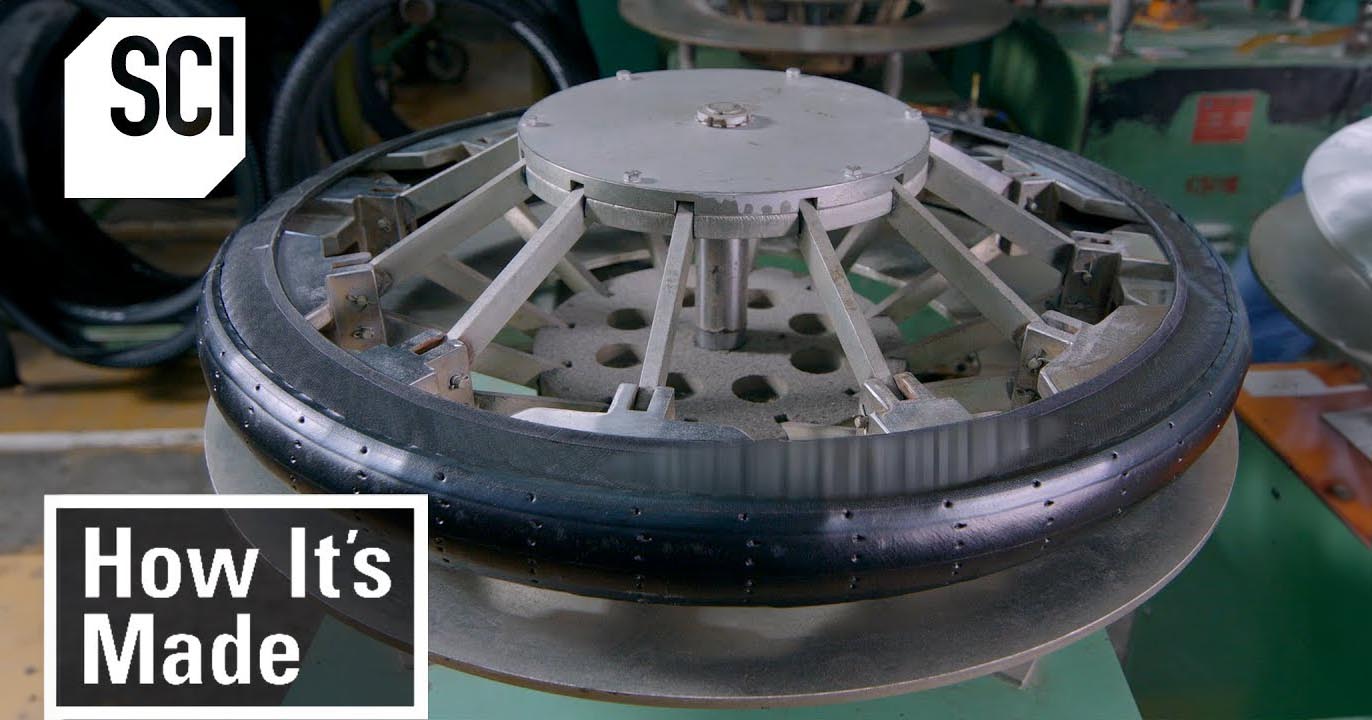
Component Assembly: The extruded rubber components are layered around a drum, with reinforcing materials like steel belts and textile plies added to enhance strength and flexibility. This assembly forms the tire’s carcass, which is crucial for maintaining its shape and performance under pressure. (michelinman.com)
-
Curing (Vulcanization): The assembled tire is placed into a mold and subjected to heat and pressure. This curing process bonds all components, transforming the rubber into a durable, elastic material that can handle the demands of mountain biking. (michelinman.com)
Innovations in Manufacturing: Embracing the Future
The tire manufacturing industry is not static; it continually embraces innovation to meet the evolving needs of riders. Modern facilities are integrating digital technologies and flexible production methods, allowing for rapid adaptation to market demands. For instance, extrusion-based tire component production and modular equipment designs are redefining how reinforced tire components are manufactured, leading to more efficient and customizable production processes. (steelastic.com)
Quality Assurance: Ensuring Excellence
Before a tire reaches the market, it undergoes rigorous testing to ensure it meets the highest standards. Manufacturers conduct comprehensive inspections, including visual assessments, uniformity checks, and advanced techniques like X-ray imaging, to detect any imperfections. This meticulous quality control guarantees that each tire delivers optimal performance and safety for riders. (michelinman.com)
Conclusion: The Unsung Hero of the Trail
The journey of a mountain bike tire is a testament to the fusion of science, engineering, and craftsmanship. From the careful selection of materials to the innovative manufacturing processes and stringent quality checks, every tire is a product of dedication and precision. As riders, understanding this process not only deepens our appreciation for the equipment but also underscores the importance of choosing tires that align with our riding style and the challenges we embrace on the trails.