
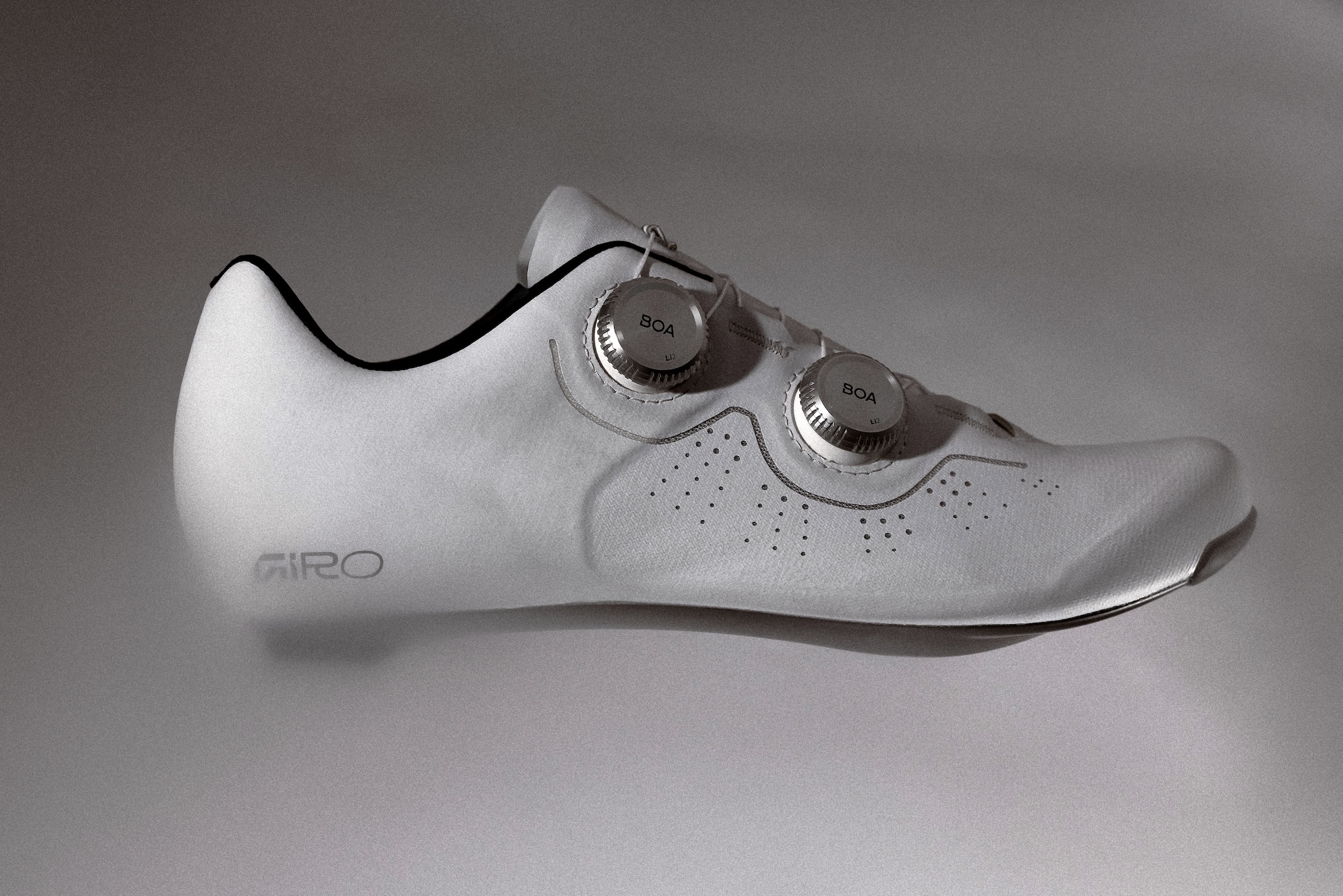
Giro has unveiled the Imperial AS cycling shoe, a high-performance model designed for the unpredictable conditions of the transitional seasons. Developed with insights from professional cyclists Biniam Girmay and Paul Seixas, the Imperial AS aims to bridge the gap between summer and winter footwear.
Engineered in the Heart of the Alps
At Giro’s development center in Annecy, France, engineers collaborated closely with professionals like Thymen Arensman and Jay Vine. The objective was clear: create a shoe that maintains the power transfer of a professional-grade model while offering protection during the shoulder seasons, where weather can be unpredictable. Raphael Dale, Footwear Development Director at Giro, stated, “Our collaboration with sprinters and GC specialists ensures that the Imperial AS meets the highest demands, regardless of the conditions.”
Three Models, One Foundation
The Imperial AS features a carbon outsole identical to that of the lightweight Empire SLX II and the Imperial II. This consistency provides riders with a seamless transition between different models, ensuring that whether enduring a heavy rain training session with the Imperial AS or ascending a sunny mountain pass with the Empire SLX, the stiffness and foot positioning remain consistent.
Comfort, Performance, and Weather Resistance Combined
The upper of the Imperial AS is constructed with a two-layer design. A mesh base is overlaid with a thin layer of TPU, balancing breathability, weather resistance, and adequate support during races. A dual BOA Li2 closure system with aluminum dials allows for precise adjustments.
The new Imperial AS is available in white and black variants, with sizes ranging from 36 to 48 (including half sizes between 42.5 and 45.5). These Giro shoes are priced at €449.99.
For more information, visit the Giro website.
First Impressions
Upon testing the Imperial AS shoes in early spring, the standout feature was their comfort. Despite the sole being slightly narrow for my relatively wide feet, the fit was still impressive. The tongue feels notably thick, acting as a cushion that prevents the BOA closure laces from creating pressure points on the instep. Additionally, the edges of the upper are sufficiently padded, enhancing overall comfort.
In terms of stiffness, the carbon sole performs admirably. The Imperial AS is clearly designed for performance. The high-quality dual BOA closure is also a highlight, fitting seamlessly into performance-oriented (and premium-priced) racing shoes like this. Adjusting the Giro shoes to be slightly looser or tighter is easily done on the bike, and the repairability of the closures is a plus. Due to a manufacturing defect, one of the laces detached from the dial closure, but I was able to repair it myself. Even after a fall, a damaged BOA closure can be replaced with minimal effort.
Maintenance is straightforward, which is crucial for a shoe designed for riding in adverse weather. The TPU finish cleans easily with a damp cloth after a ride on dirty roads. I received the stylish black variant with gold dials, and after a month and a half of fairly intensive use, they still look excellent. This durability is expected for a pair of shoes priced at €450. However, the protection of the outsole at the tip and heel is limited.
The Imperial AS shoes are not noticeably more insulating or protective than other high-end racing shoes, such as the S-Works Ares II or the Northwave Veloce Extreme. The need for such a shoe within the Giro range arose because the Imperial II is very light and breathable, making it best suited for summer conditions. However, for our Belgian weather conditions throughout the year, this type of shoe is generally the most suitable.