
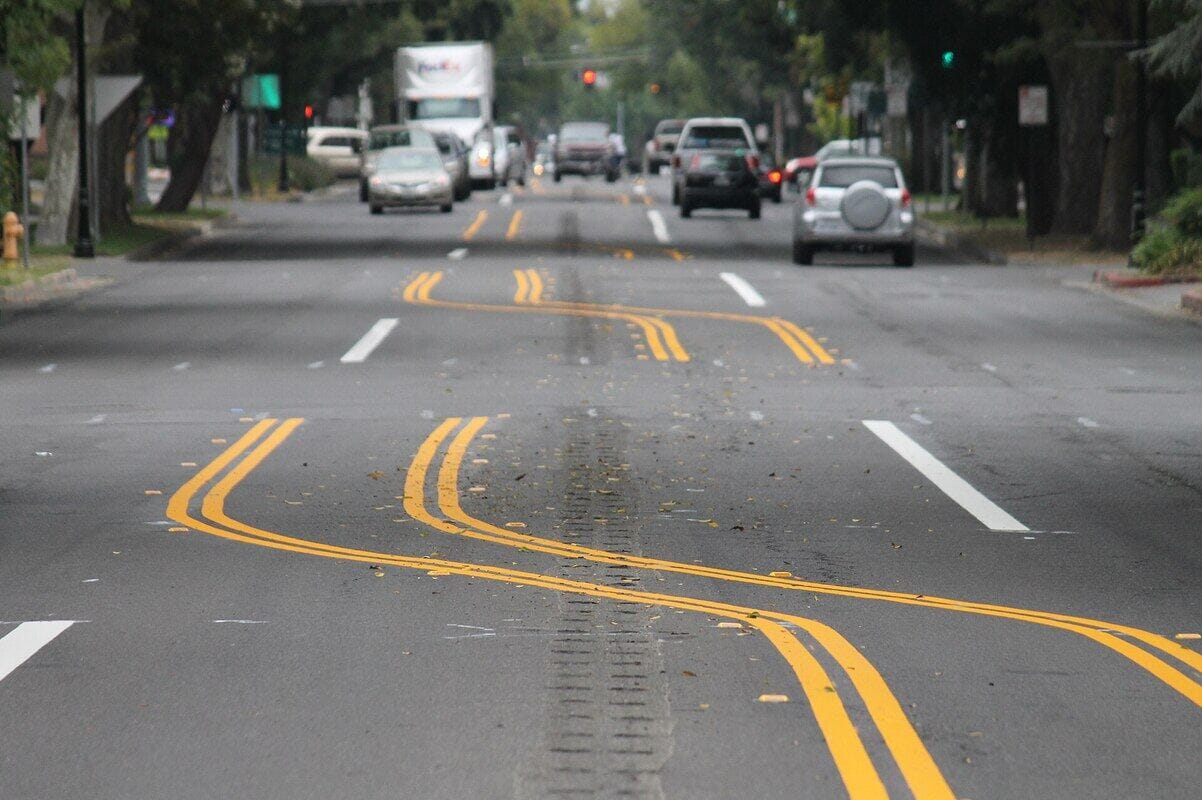
Redesigning Urban Streets for Safety: The Road Diet Approach
Urban streets have traditionally been designed to accommodate increasing vehicular traffic, often at the expense of pedestrian and cyclist safety. The “Road Diet” concept challenges this norm by reallocating road space to create safer, more balanced environments for all users.
Understanding the Road Diet
A Road Diet involves reducing the number of vehicle lanes to repurpose space for other uses, such as bike lanes, wider sidewalks, or dedicated turn lanes. For example, converting a four-lane road into a three-lane configuration with a center turn lane can provide space for protected bike lanes and pedestrian refuges. This reallocation aims to improve safety and mobility for all road users. (raleighnc.gov)
Benefits of Implementing Road Diets
-
Enhanced Safety: Studies have shown that Road Diets can lead to a significant reduction in crashes, including rear-end and left-turn collisions. Dedicated turn lanes allow vehicles to move out of traffic flow, reducing conflicts. (raleighnc.gov)
-
Improved Pedestrian and Cyclist Facilities: By reallocating road space, cities can create continuous and protected bike lanes, making cycling safer and more appealing. Wider sidewalks and pedestrian refuges also enhance safety for those on foot. (ipmnewsroom.org)
-
Traffic Calming: Narrower lanes and reduced road width naturally slow down vehicular traffic, leading to safer conditions for all users. (highways.dot.gov)
Recent Implementations and Success Stories
-
Raleigh, North Carolina: The city implemented a Road Diet on Lake Boone Trail, converting a four-lane road into a three-lane configuration with a center turn lane. This redesign allowed for the addition of bike lanes and pedestrian refuges, resulting in improved safety and connectivity. (raleighnc.gov)
-
Urbana, Illinois: Urbana tested a new road design on North Lincoln Avenue, reducing lanes and adding bike lanes to enhance safety for pedestrians and cyclists. The temporary redesign aimed to improve safety and gather community feedback for future planning. (ipmnewsroom.org)
-
Little Rock, Arkansas: The city implemented Road Diets on South Main Street and Napa Valley Drive, converting four-lane roads into two-lane configurations with turn lanes and space for bike lanes. These changes have been praised for managing traffic flow and contributing to neighborhood revitalization. (bloustein.rutgers.edu)
Considerations for Successful Implementation
While Road Diets offer numerous benefits, their success depends on various factors, including traffic volume, availability of alternative routes, and the specific role of the road within the city’s transportation network. It’s essential to conduct thorough planning and community engagement to ensure that the redesign meets the needs of all stakeholders. (highways.dot.gov)
In conclusion, the Road Diet approach represents a strategic shift in urban planning, prioritizing safety and accessibility for pedestrians and cyclists by thoughtfully redesigning roadways. By reallocating space and reducing lanes, cities can create more livable environments that accommodate all modes of transportation.