
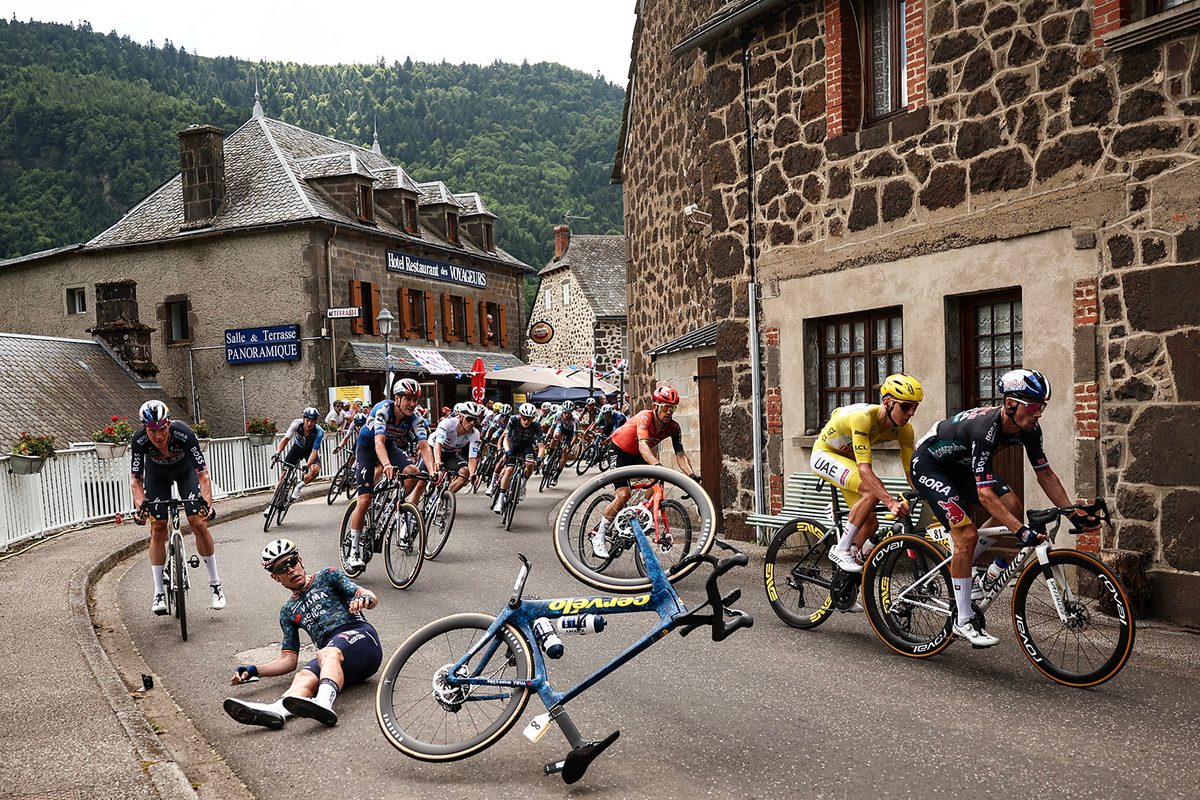
The Tour de France, renowned for its grueling stages and challenging terrains, presents significant risks to professional cyclists. Riders navigate high-speed descents, unpredictable weather conditions, and the ever-present threat of crashes, all while striving for peak performance.
High-Speed Challenges and Crashes
Cyclists often reach speeds exceeding 80 km/h during descents, with some stages seeing velocities up to 100 km/h. Such high-speed conditions amplify the consequences of any miscalculation or error. Crashes are prevalent, with riders frequently sustaining injuries ranging from fractures to concussions. For instance, during the 2026 Tour, Torstein Træen of Uno-X Mobility withdrew after multiple rib fractures sustained on Col du Tourmalet. (cyclingweekly.com)
Safety Measures and Protocols
In response to these dangers, the Union Cycliste Internationale (UCI) has implemented several safety protocols:
-
Concussion Protocol: Established in 2020, this three-step process ensures rapid identification and management of concussions during races. It includes immediate on-site evaluations, post-race follow-ups, and re-assessments the following day. (cyclingnews.com)
-
Rule of Three Kilometers: To protect riders in the final stages of a race, this rule stipulates that if a crash occurs within the last three kilometers, affected riders are credited with the same time as the group they were with at the time of the incident. (lequipe.fr)
-
Sprint Finish Regulations: The UCI mandates that finishing straights in bunch sprints be at least 200 meters long to reduce the risk of crashes in high-speed finishes. (cyclingnews.com)
Environmental Factors
Extreme weather conditions further complicate the race’s dangers. In 2026, an intense heatwave led to the shortening of Stage 9 due to temperatures exceeding 40°C. Riders employ various cooling strategies, such as wearing frozen vests and consuming ice lollies, to mitigate heat-related risks. (cyclingweekly.com)
Technological Innovations
Advancements in technology aim to enhance rider safety:
-
Helmet Design: Modern helmets incorporate Multi-directional Impact Protection System (MIPS) technology, designed to reduce rotational forces during impacts.
-
Tyre Safety: Partnerships with tyre manufacturers like Continental focus on developing tyres that offer better grip and puncture resistance, crucial for maintaining control on diverse road surfaces. (letour.fr)
Conclusion
While the Tour de France remains a perilous endeavor, ongoing safety measures, technological advancements, and strategic race management continue to mitigate risks, striving to protect the athletes who push the boundaries of endurance and skill.
Highlights:
- Which riders have abandoned the Tour de France 2026? Torstein Træen forced to withdraw from Tour with multiple fractured ribs after Col du Tourmalet crash, Published on Friday, July 10
- Tour de France stage nine shortened due to ‘exceptionally intense’ heatwave, Published on Saturday, July 11
- New UCI rules require finishing straights of ‘at least 200 meters’ in bunch sprints, Published on Tuesday, June 09