
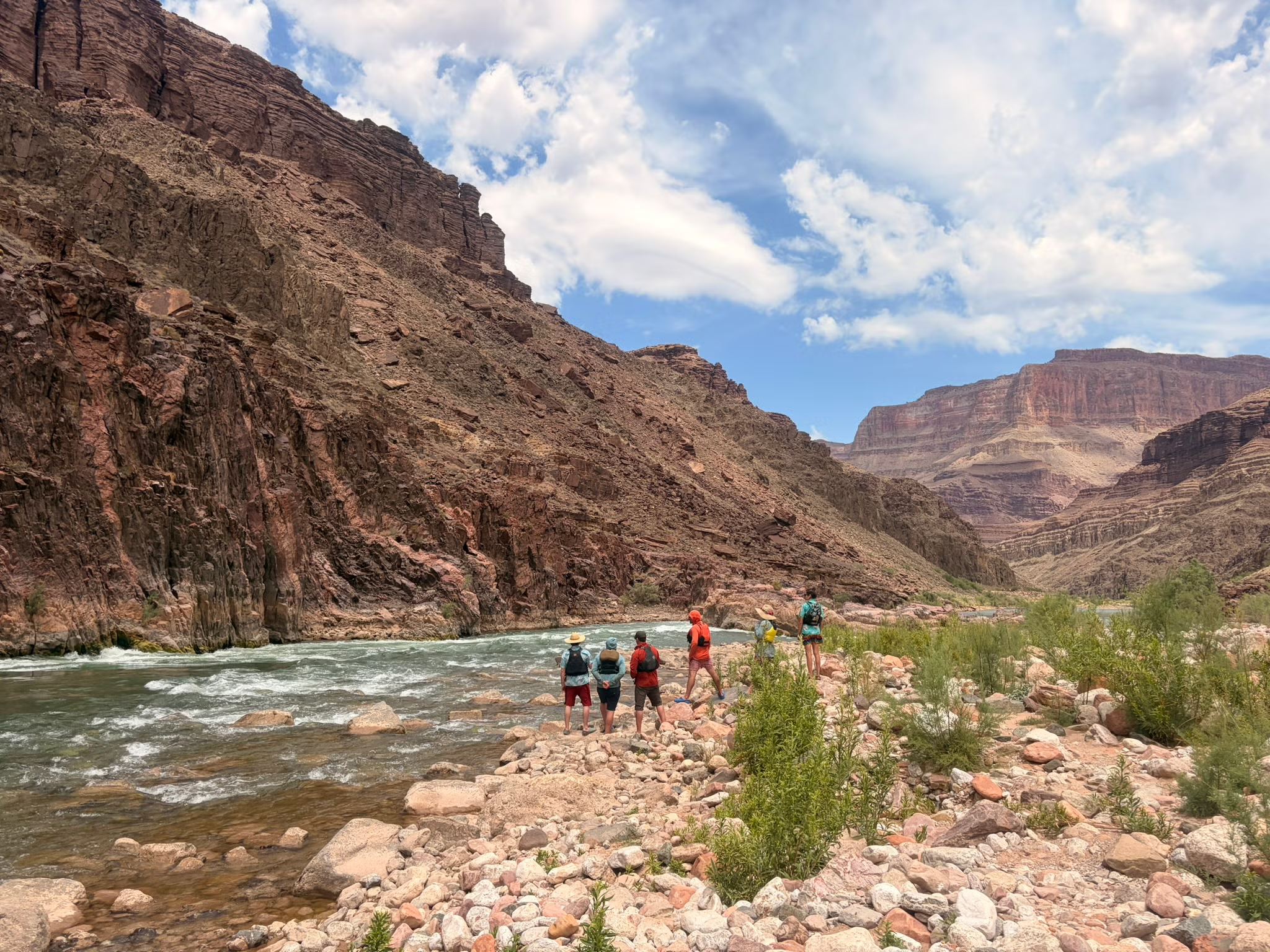
9 Grand Canyon Rafting Lessons That Transformed My Perspective
Published August 8, 2026
Embarking on a rafting expedition through the Grand Canyon has long been a dream of mine. Raised in a family that cherished outdoor adventures—from skiing and backpacking to kayaking alpine lakes in the Colorado Rockies—the allure of navigating the Colorado River’s rapids seemed a natural progression.
In May, that dream materialized. By the time I launched my raft from Lee’s Ferry, I was the last in my family to traverse this iconic route. My parents had undertaken the journey a decade prior, and both my dad and brother had recently completed their own trips. The opportunity arose serendipitously when my friend Pat invited me to join his group after a cancellation. It was finally my turn.
Having never rowed such formidable whitewater or participated in an expedition of this magnitude, I approached the trip with meticulous preparation. I delved into guidebooks, watched YouTube videos of rapids at varying water levels, and repacked my dry bags until I felt ready for any scenario. If there was a way to out-organize and out-prepare for this adventure, I was determined to find it.
However, the Colorado River had other plans.
Almost nothing went according to plan. The night before we launched, one member of our group was hospitalized with severe abdominal pain and possible internal bleeding and had to stay behind, turning our already small crew into just seven. On our second day, we high-centered one of our four rafts on a hidden rock and spent two exhausting, increasingly nerve-wracking hours trying to free it. Later that same day, we cut a kayaker loose from a rope that had pinned her underwater. Then, another member of our group unknowingly developed sepsis from Rocky Mountain spotted fever he’d contracted unknowingly before the trip, leading us to coordinate a helicopter evacuation from deep inside the Canyon.
And that was just the first three days of a 16-day trip.
The initial nights were filled with anxiety. Beneath a canopy of stars, I found myself overwhelmed, questioning my readiness and the wisdom of this endeavor. Despite all my planning and preparation, I was out of my element. The river was more formidable than I had anticipated, and nearly everything I relied upon for a sense of control was now beyond my grasp.
In an attempt to calm my mind, I likened the adventure to a challenging backcountry ski mission—long days, significant objectives, group decisions, and constant risk assessment, with the hope of a great story to share afterward.
Yet, there was a stark difference between a ski tour and a river trip. On a ski tour, you can always turn back. You can decide the snowpack isn’t right, you’re too fatigued, the weather is changing, or that it’s simply not your day, and you can retreat.
River trips, however, don’t offer that luxury. Once we embarked, we were committed to 225 miles over the next 16 days. There was no shortcut.
Initially, I believed the Grand Canyon was testing my adventurous spirit, leading to a crisis of self as doubts crept in about my identity and my relationship with the outdoors.
I had spent so much of my life—and so much of my time outdoors—believing that safety stemmed from preparation, control, and anticipating every possible outcome. The trip revealed how often I tried to earn my place by being competent, useful, or having, or pretending to have, all the answers.
The river stripped all of that away.
Somewhere between scouting House Rock, a daunting rapid at mile 17 featuring an 8-foot drop and a large boat-flipping hole, falling asleep beneath the Milky Way after another day I didn’t think I could handle, and waking up the next morning to do it all again, I found confidence rooted not in certainty, but in my ability to adapt. I learned I didn’t have to perform. I could ask for help, be inexperienced, make mistakes, and still belong.
After the first week, I stopped checking the time. I settled into the rhythm of the river. I stopped worrying about what came next and started paying attention to what was right in front of me. By the end of the trip, I was already scheming about how I could return and do it all again.
The lessons I learned in the Grand Canyon will stay with me for the rest of my life, and I don’t mean that in some grand, spiritual way—I’m talking about, like, next week. Because plans fall apart. Things—adventures, sure, but also jobs and relationships and traffic—get scary. You simply can’t be prepared for everything life throws at you, but you can be confident that you’ll handle it anyway. Here’s how.
1. Act Before You’re Ready; Wait a Moment Longer Than Comfortable
One of the first things I noticed on the river was that hesitation is costly. By the time you’ve fully processed what’s happening, the river has already carried you elsewhere. It’s why experienced boaters often say, “When in doubt, paddle.” A committed stroke is almost always better than freezing while you search for the perfect one.
The flip side took me longer to appreciate. Moving an 18-foot raft weighing 2,000 pounds through whitewater requires finesse. A single stroke doesn’t change the boat instantly, and the instinct, especially for someone new at the oars, is to immediately take another stroke to force the boat onto the perfect line.
The best boaters in our group rarely did that. They’d make a move, then wait. They understood that every stroke needed a moment to take effect before deciding whether another was necessary. Not every wobble was the beginning of a flip. Often, the boat found its line if you gave it the chance.
I don’t think it’s unique to river runners. How often do we make a decision, then immediately start looking for evidence that it was the wrong one? We send the email and reread it five times. We accept the job, then wonder if we should have stayed at the old one. Spend enough time outside, and you’ll see the same instinct everywhere. We wonder if we should’ve started earlier, packed lighter, turned around at the last junction, skied a different line, brought different gear. Sometimes we’re so busy evaluating the last decision that we aren’t fully present for the one in front of us.
The river didn’t convince me to act without thinking. If anything, it reinforced the value of preparation. But eventually, there comes a point when thinking has to give way to doing. Then, just as importantly, doing has to give way to waiting