
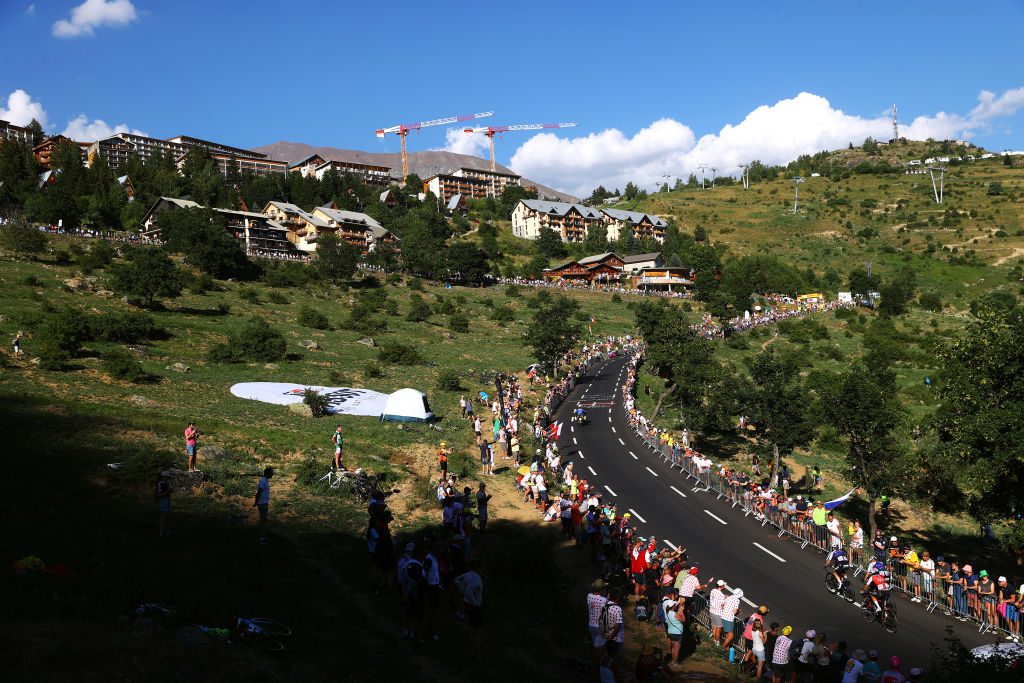
Alpe d’Huez
Alpe d’Huez, the iconic 13.8-kilometer climb with an average gradient of 8.1%, has long been a defining feature of the Tour de France. Its 21 numbered hairpin bends, each named after a previous stage winner, have witnessed countless memorable moments in cycling history. From Fausto Coppi’s inaugural victory in 1952 to Marco Pantani’s record ascent in 1997, the mountain has been a stage for legends. In 2026, Alpe d’Huez is set to play a pivotal role in the Tour’s narrative, with two challenging stages that promise to test the mettle of the peloton.
The 2026 Tour de France: A Double Ascent of Alpe d’Huez
The 2026 Tour de France, commencing on July 4, features a route designed to build suspense and excitement as the race progresses. Notably, the Tour will conclude with two consecutive stages at Alpe d’Huez, marking the first time in history that the race will tackle this legendary climb on back-to-back days. Stage 19, scheduled for July 24, will approach Alpe d’Huez via the classic 21 hairpin bends from Gap, while Stage 20 on July 25 will present a more demanding route, including the Col du Galibier and Col de Sarenne, before reaching the summit of Alpe d’Huez. (alpedhuez.com)
Alpe d’Huez: A Mountain of Legends
Since its debut in the Tour de France in 1952, Alpe d’Huez has been the backdrop for numerous historic moments. The climb’s challenging gradient and the strategic importance of its summit have made it a decisive point in the race. In 1997, Marco Pantani set a record ascent time of 37 minutes and 35 seconds, a benchmark that still stands today. The mountain’s popularity among fans has also led to its nickname, “Dutch Mountain,” due to the large number of Dutch spectators who flock to its slopes during the Tour. (roadmancycling.com)
The 2026 Double Ascent: A New Challenge
The 2026 Tour’s decision to feature Alpe d’Huez on consecutive days introduces a new level of challenge for the riders. Stage 19 will be a traditional ascent, testing the riders’ climbing abilities and endurance. Stage 20, however, will be particularly grueling, as it includes the Col du Galibier, the Col de Sarenne, and then the climb to Alpe d’Huez. This combination of climbs is expected to be the most demanding stage in recent Tour history, with a total elevation gain of 5,450 meters in a single day. (tour-magazin.de)
Looking Ahead
As the 2026 Tour de France approaches, all eyes will be on Alpe d’Huez. The double ascent is set to be a defining feature of the race, with potential to influence the general classification significantly. Cycling enthusiasts and participants alike are eager to witness how the peloton will tackle this formidable challenge and which riders will emerge victorious on the slopes of this legendary mountain.
Highlights:
- 2026 Tour de France route – the complete stage-by-stage guide, Published on Monday, July 20
- ‘Uncharted terrain’ builds on the legend of Alpe d’Huez at this year’s Tour de France – A retrospect of two sides to one mountain, Published on Monday, July 06