
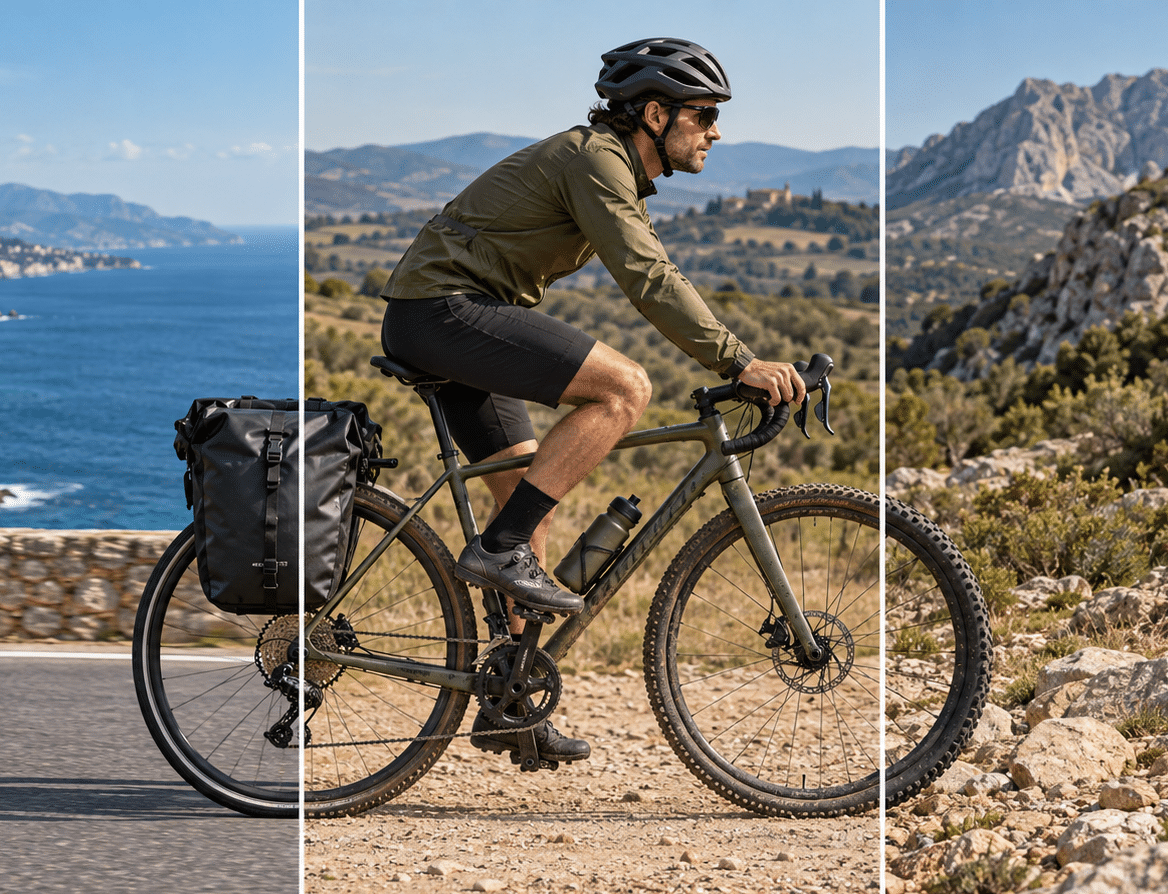
Transforming your existing bicycle to suit various terrains is a cost-effective and space-saving strategy. By selecting appropriate tires, you can adapt your bike to feel like multiple specialized machines without the need for additional purchases.
Tires: The Key to Versatility
Tires are the sole contact point between your bike and the ground, significantly influencing performance. Adjusting their width, tread pattern, and pressure can drastically alter how your bike handles different surfaces.
-
Narrow, Slick Tires: Ideal for smooth, paved roads, offering low rolling resistance and speed.
-
Moderate Width with Light Tread: Suitable for mixed surfaces, providing a balance between speed and grip.
-
Wider Tires with Aggressive Tread: Designed for rough, unpaved paths, enhancing traction and control.
By swapping tires, you can tailor your bike’s performance to match the specific demands of your ride.
Three Configurations for One Bike
Consider a bicycle with 700c (29″) wheels and ample clearance. With three sets of tires, you can prepare your bike for various terrains:
-
Primarily Asphalt Routes: For rides on well-maintained roads, opt for tires around 35-40mm wide with minimal tread. This setup offers speed and comfort, even when carrying luggage.
-
Mixed Terrain: For journeys combining paved roads and dirt paths, choose tires approximately 40-45mm wide with low-profile knobs. This configuration provides versatility, handling both surfaces effectively.
-
Primarily Unpaved Trails: For extended rides on rough trails, select wider tires, around 50-57mm, with pronounced knobs. This setup enhances comfort, traction, and control on challenging terrains.
Key Considerations Before Purchasing Tires
When selecting new tires, keep the following in mind:
-
ETRTO Size: Check the sidewall of your current tires for the ETRTO (European Tire and Rim Technical Organization) size, which indicates width and diameter in millimeters. For example, a 40-622 tire has a 40mm width and a 622mm diameter.
-
Rim Compatibility: Ensure your rims can accommodate the desired tire width. Rims have an internal width range suitable for specific tire widths.
-
Frame and Fork Clearance: Verify that your bike’s frame and fork have sufficient space for the wider tires, considering both vertical and lateral clearances.
-
Tube vs. Tubeless: Decide between using inner tubes or a tubeless setup. Tubeless systems can reduce the risk of flats and allow for lower tire pressures, enhancing comfort and grip.
Recommended Tires for Different Terrains
Here are some tire recommendations for various riding conditions:
Pneumatico Gravel G-One Allround Schwalbe morbido PerformanceLine Addix
Schwalbe G-One Allround
A versatile gravel tire suitable for dry conditions, offering a balance between speed and grip. (cyclingnews.com)
Continental Terra Trail PGC TL Gravel Tyre
| Ivanhoe Cycles
Continental Terra Trail
Designed for mixed terrains, this tire provides durability and performance across various surfaces. (chainringclub.com)
Canyon Grizl CF8 w/Rift im Test: Welches Ass hat dieses im Ärmel? | TOUR
Schwalbe G-One RX
Ideal for off-road and muddy conditions, offering superior grip and self-cleaning properties. (cyclingnews.com)
Vittoria Terreno T90 – thecyclecollective.cc
Vittoria Terreno T90
Suited for extreme conditions, this tire delivers exceptional traction and durability. (cyclingnews.com)
パナレーサー「グラベルキングSK」 26Cの“ブロックパターン”タイヤ オールラウンドチューブレスタイヤ「リーガクロス」 サイクルスポーツのニュース | サイクルスポーツ.jp
Panaracer GravelKing SK
A knobbed tire that offers a smoother rolling resistance, suitable for loose, rough gravel. (chainringclub.com)
Conclusion
By thoughtfully selecting and swapping tires, you can adapt your bicycle to a wide range of terrains, effectively transforming it to meet the demands of each ride. This approach not only saves money but also maximizes the versatility of your existing bike.