
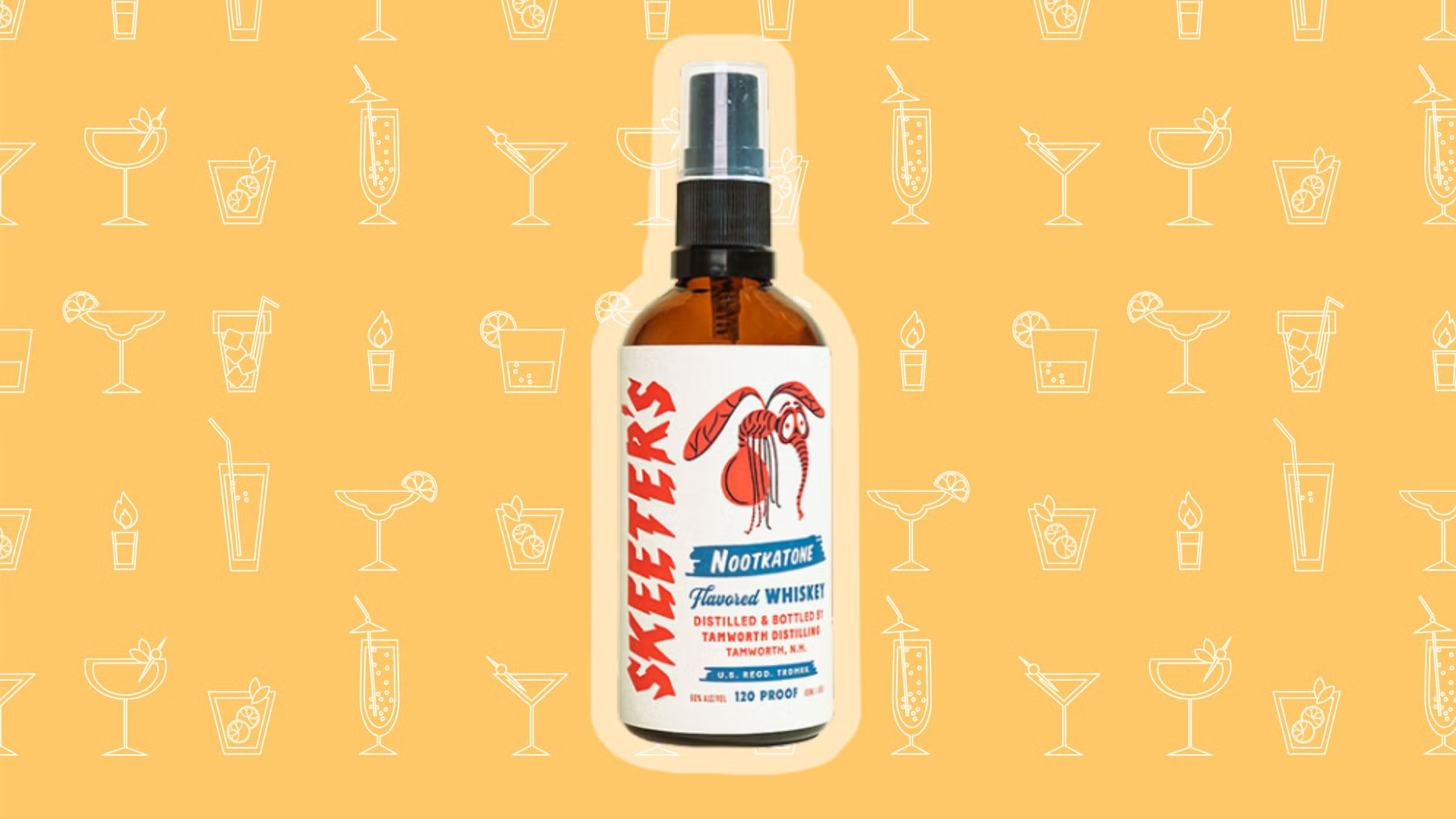
Exploring Nootkatone: A Natural Mosquito Repellent
In recent years, the quest for effective and natural mosquito repellents has led to the exploration of various compounds. One such compound, nootkatone, has garnered attention for its potential in repelling and even killing mosquitoes.
What is Nootkatone?
Nootkatone is a naturally occurring substance found in small quantities in the skin of grapefruits and in Alaskan yellow cedar trees. It imparts the distinctive aroma and flavor to grapefruit and is commonly utilized in the fragrance industry for perfumes and colognes. Beyond its sensory properties, nootkatone has been identified as a potent insect repellent. (cdc.gov)
Scientific Backing
Research has demonstrated that nootkatone can effectively repel and even kill mosquitoes. A study published in Current Biology in 2024 highlighted that at a concentration of 5%, nootkatone exhibited efficacy comparable to 5% DEET, the standard in insect repellents. The study emphasized that nootkatone is a natural compound, non-greasy, has a pleasant scent, and is safe for consumption. (cdc.gov)
Recent Developments
In July 2020, the U.S. Environmental Protection Agency (EPA) registered nootkatone for use in insecticides and repellents. This registration paved the way for manufacturers to develop consumer products containing nootkatone, such as sprays, lotions, and soaps. The EPA noted that nootkatone offers a novel mode of action, potentially aiding in the fight against mosquitoes resistant to existing insecticides. (epa.gov)
Alternative Natural Repellents
While nootkatone shows promise, other natural substances have also been studied for their mosquito-repelling properties. For instance, a 2025 study found that a lotion containing 6% catnip oil was as effective as a 15% DEET lotion in repelling mosquitoes. This discovery could be particularly beneficial in regions where DEET-based products are expensive or less accessible. (theguardian.com)
Conclusion
The exploration of natural compounds like nootkatone and catnip oil offers promising avenues for developing effective mosquito repellents. As research progresses, these natural alternatives may provide consumers with more options to protect themselves from mosquito-borne diseases.