
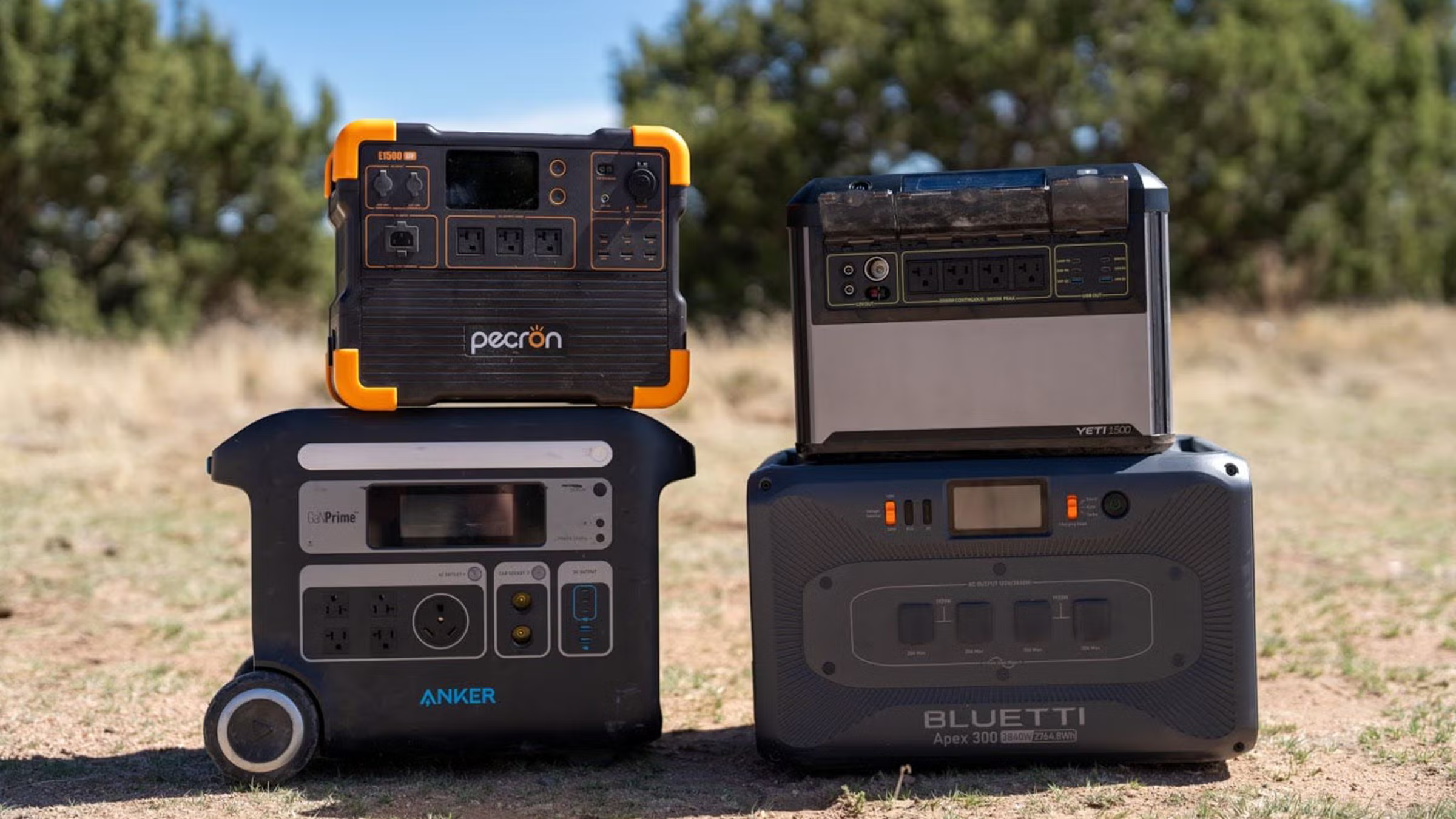
After a decade of custom-wiring camper vans, I’ve witnessed firsthand the evolution of portable power solutions. The advent of modern portable power stations has revolutionized off-grid living, offering a more straightforward and cost-effective alternative to traditional electrical setups.
The Evolution of Portable Power Stations
In the past, outfitting a camper van with a reliable power system involved a complex array of components: standalone batteries, inverters, converter chargers, solar charge controllers, breakers, and extensive wiring. This intricate setup demanded significant time, expertise, and financial investment. However, recent advancements have led to the development of all-in-one portable power stations that integrate these functions into a single, user-friendly unit.
Advantages of Modern Portable Power Stations
-
Simplicity: These units consolidate multiple components, reducing the complexity of installation and maintenance.
-
Cost-Effectiveness: By eliminating the need for individual components and professional installation, overall expenses are significantly lowered.
-
Portability: Designed for mobility, they are ideal for campers, RVs, and overland rigs, providing power wherever it’s needed.
Top Portable Power Stations for Off-Grid Adventures
After extensive testing, here are some of the leading portable power stations suitable for off-grid travel:
Anker Solix F2000
This unit boasts a 2,048Wh capacity and a 2,000W continuous output, capable of handling most camping appliances. It features a suitcase-style design with wheels and an extendable handle for easy transport. Notably, it includes a built-in light above the display, enhancing usability in low-light conditions. However, its XT60 connection may be less secure for some users compared to Anderson ports. (techradar.com)
Pecron E1500LFP
Offering a 1,536Wh capacity, this power station is expandable up to 9,216Wh with additional batteries. It supports rapid recharging, reaching 80% capacity in approximately 1.8 hours via AC. A standout feature is the built-in wireless charger, allowing for convenient device charging without cables. Some users have reported noise during operation, and the app interface may have occasional glitches. (techradar.com)
Goal Zero Yeti 1500
Designed for rugged adventures, this power station offers a 1,500Wh capacity and a 1,800W continuous output. It features a durable build with an IPX4 water-resistance rating and dust covers for all ports. The unit includes a T-slot channel for easy tie-down or integration into a camper setup. However, it lacks the ability to expand capacity with additional batteries and does not currently offer an alternator charger accessory. (techradar.com)
Bluetti Apex 300
This versatile power station provides a 2,764Wh capacity and can be expanded to a total of 58kWh with additional units and batteries. It offers both 30-amp and 50-amp AC ports, allowing direct connection to RVs. For 12V needs, the Hub D1 accessory provides multiple outputs, including a 12V, 50-amp Anderson port. Its weight and size may be a consideration for those seeking a more compact solution. (techradar.com)
Conclusion
The shift from traditional camper van electrical systems to modern portable power stations marks a significant advancement in off-grid living. These units offer a streamlined, cost-effective, and portable solution, making them an excellent choice for adventurers seeking reliable power on the go.