
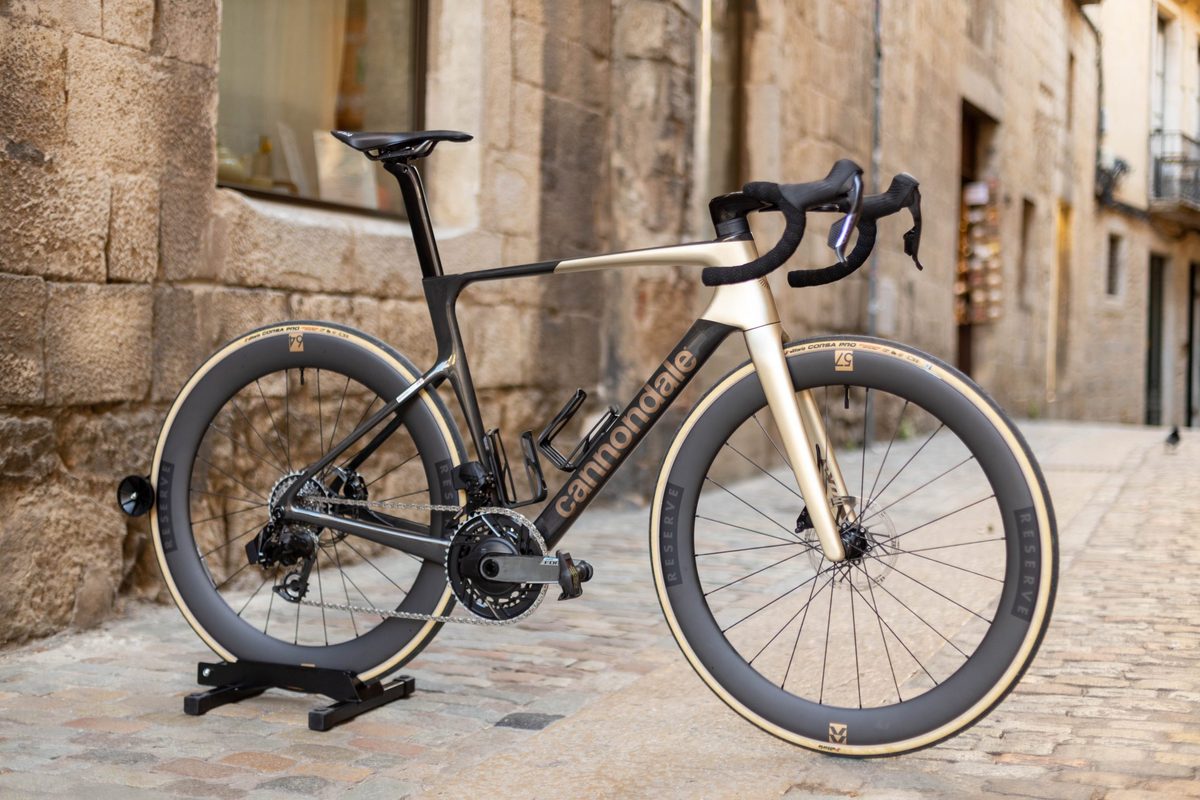
The Cannondale SuperSix has long stood as a paragon of racing excellence, evolving through five generations since its 2007 debut. This evolution reflects Cannondale’s commitment to refining aerodynamics, reducing weight, and enhancing rider comfort.
2007: The Genesis of SuperSix
In 2007, Cannondale introduced the SuperSix, its inaugural full-carbon frame. Weighing a claimed 1,050g for a fully painted 56cm frame, it featured a monocoque design with an oversized head tube and a tapered 1⅛”-to-1½” carbon fiber steerer tube. The frame’s bottom bracket and chainstay were molded as a single piece to bolster stiffness, while hourglass-shaped seatstays provided vertical compliance to mitigate road vibrations. This design garnered acclaim for its power transfer, stiffness, comfort, and handling. (bikeradar.com)
2012: SuperSix EVO – A New Era
The 2012 SuperSix EVO marked a significant advancement, introducing the EVO suffix to denote its evolutionary design. Under the guidance of carbon engineer Peter Denk, the frame’s weight was reduced to a claimed 695g for a 56cm size. This was achieved through an updated carbon-molding technique, incorporating an EPS core. The rear triangle, including chainstays and seatstays, was molded as a single piece, integrating the dropouts to create a continuous fiber structure. This design enhanced stiffness while maintaining vertical compliance for a smoother ride. The Hi-Mod variant emerged as a contender for the lightest frame globally upon its release. Riders like Peter Sagan utilized the SuperSix EVO to secure victories, including the points jersey at the 2012 Tour de France. (bikeradar.com)
2016: Embracing Disc Brakes
In 2016, Cannondale integrated disc brakes into the SuperSix EVO, marking a pivotal shift in road bike technology. The frame adopted a wider 73mm BB30a standard, allowing for asymmetric stays and a more robust non-driveside for increased efficiency. Truncated aero profiles were employed to enhance aerodynamics, though this introduced a slight weight penalty, with the rim-brake frame weighing 777g. The disc-brake version required a comprehensive redesign, resulting in a frame weight of 829g and a fork weight of 360g. The adoption of a 12mm thru-axle standard on the front, while retaining a standard quick-release on the rear, improved braking performance and wheel stability. The disc-brake model received high praise for its handling and braking capabilities. (bikeradar.com)
2019: Aero Overhaul
The 2019 SuperSix EVO underwent a significant aerodynamic refinement. The frame featured deep aerofoil tube shapes, many employing Kammtail principles to adhere to racing regulations. While still available with rim brakes, the disc-brake variant gained prominence. The frame’s weight increased to a claimed 866g for a 56cm size, with the Hi-Mod frameset weighing 389g. These aerodynamic enhancements reduced drag by over 30% compared to the previous model, solidifying the SuperSix EVO’s status as a formidable race machine. (bikeradar.com)
2023: Subtle Refinements
In 2023, the SuperSix EVO received subtle updates. The frame geometry was adjusted to lower the stack by 10mm, resulting in a more aggressive riding position. The frame’s weight was further reduced, with the Lab71 frame weighing 728g and the fork 410g for a 56cm size. These weight savings were attributed to an improved carbon manufacturing process. The introduction of the Delta steerer tube, a triangular-shaped design, allowed for a reduced head-tube size while maintaining fully integrated cable routing. The bike also transitioned to a threaded BSA/ISO bottom bracket, moving away from press-fit systems. The Syntace thru-axle standard replaced the previous Speed Release axles, contributing to a lighter overall build. (bikeradar.com)
2026: The Fifth-Generation SuperSix EVO
The 2026 SuperSix EVO represents the pinnacle of Cannondale’s engineering prowess. The Lab71 Series 0 frame weighs a claimed 728g for a 56cm size, with a 392g fork, making it the lightest disc-brake platform in Cannondale’s history. This weight reduction is achieved through an enhanced carbon manufacturing process. The frame’s geometry has been adjusted to lower the stack by 10mm, resulting in a more aggressive riding position. Aerodynamic performance has been improved, with refined tube shaping and an updated fork crown and head tube interface to reduce drag. The Delta steerer system continues to provide fully integrated cable routing, maintaining a clean and aerodynamic front end. The bike now features a BSA threaded bottom bracket, moving away from press-fit systems for greater reliability and ease of maintenance. Tyre clearance remains at 32mm, accommodating a range of tire options. The introduction of the SystemBar Road and SystemBar SL handlebars offers aerodynamic and lightweight cockpit solutions, respectively. The inclusion of SRAM’s Universal Derailleur Hanger design enhances compatibility and ease of maintenance. (veloracycling.com)
The Cannondale SuperSix has undergone a remarkable evolution over five generations, continually refining its design to meet the demands of modern racing. From its inaugural full-carbon frame in 2007 to the aerodynamic and lightweight fifth-generation model in 2026, the SuperSix remains a testament to Cannondale’s dedication to performance and innovation.
For a visual overview and further insights into the 2026 Cannondale SuperSix EVO, you might find the following video review helpful:
2026 Cannondale SuperSix Evo Review – The Best Got Better?