
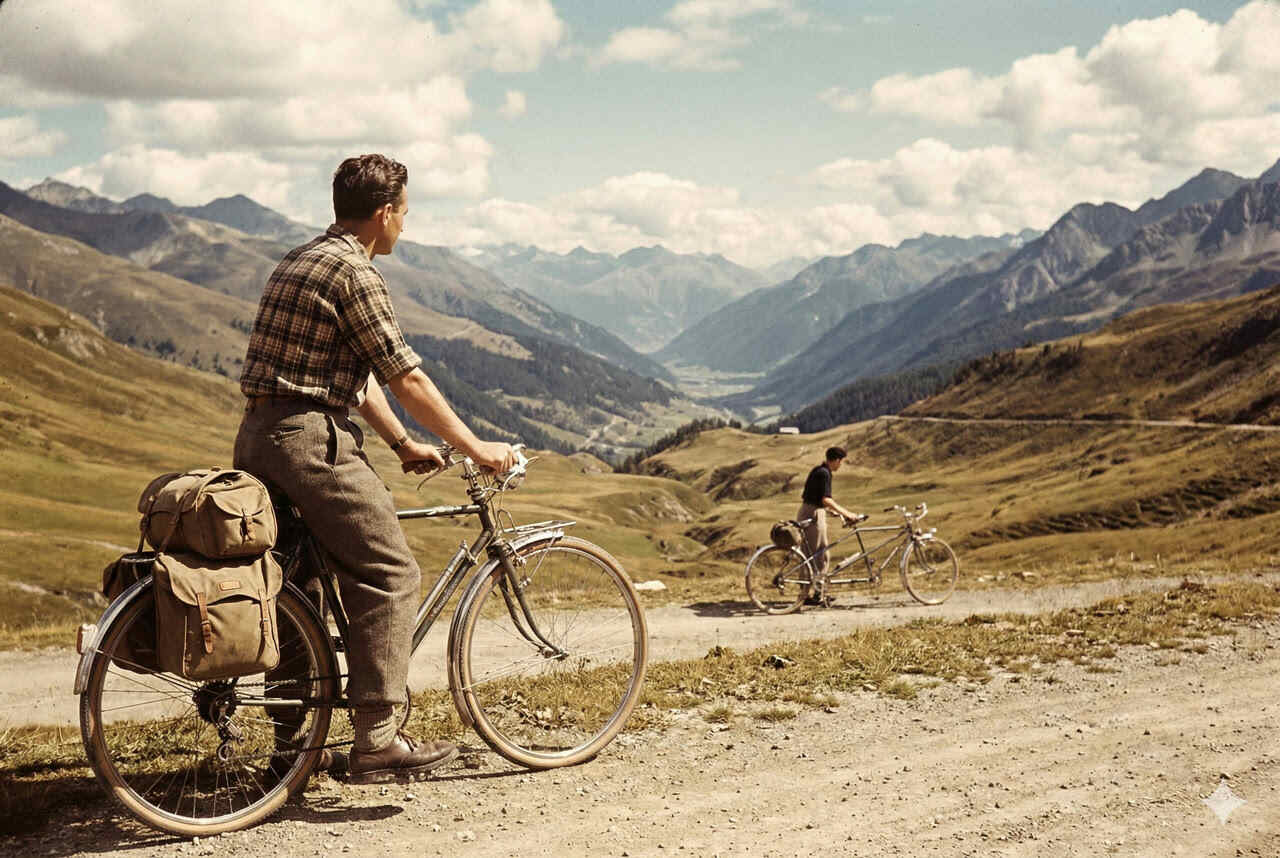
Rediscovering Bicycle Touring: A Glimpse into 1951’s Cycling Culture
In 1951, the concept of bicycle touring was already well-established, reflecting a deep appreciation for leisurely exploration and cultural immersion. An article from that year in Le Vie d’Italia, a publication of the Touring Club Italiano, emphasized the bicycle as a means to intimately connect with the landscape, rather than merely a tool for rapid travel.
The Essence of Slow Travel
The article underscored the philosophy of “slow travel,” advocating for journeys that prioritize scenic routes and unhurried exploration over speed and performance. It recommended introducing young cyclists to touring bikes—described as “more practical and serviceable”—to foster a love for travel over competitive racing. This approach highlighted that while not everyone would become a champion like Fausto Coppi or Gino Bartali, anyone could embrace the role of a traveler.
The Ideal Touring Bicycle
The ideal touring bicycle of the era was equipped with sturdy racks, side panniers, wider tires, reliable gears, and accessories that are now considered standard: dynamo-powered lights, speedometers, and even indicators. A timeless piece of advice from the article was: “Don’t forget the camera,” emphasizing that bicycle travel was already seen as a way to document and share the world.
Motorized Assistance: The Precursor to E-Bikes?
A particularly intriguing section of the article delved into “motorized cycling tourism,” discussing the integration of small engines into bicycles, such as the Velosolex and early Italian motorized bikes. These 45 or 49 cc engines could propel cyclists at speeds of 30–35 km/h, assisting on challenging climbs. While not electric bikes by today’s standards, the concept aimed to reduce physical strain and make cycling accessible to a broader audience. The article also touched upon the philosophical debate of whether a motorized cyclist was still a true cyclist or closer to a motorcyclist, concluding that while the means of travel may change, the desire to explore remained unchanged.
A Timeless Philosophy
Reflecting on this 1951 article reveals that many contemporary discussions—such as the debate between traditional bicycles and e-bikes, the balance between leisurely travel and performance, and the importance of essential accessories—were already present 75 years ago. Cycling tourism is not a fleeting trend; it is a longstanding practice that evolves with technology but remains true to its core: traveling to see and discover, not to arrive first. The bicycle, with or without a motor, continues to adapt to the times without losing its essence.
Perhaps the most modern lesson from 1951 is this: it doesn’t matter whether you pedal or are assisted by an electric motor. The important thing is to start. Use your vacation not to accumulate kilometers but to discover Italy—slowly, one road at a time.
For a detailed look at the original article, you can access it here: Source – pages 46-52.