
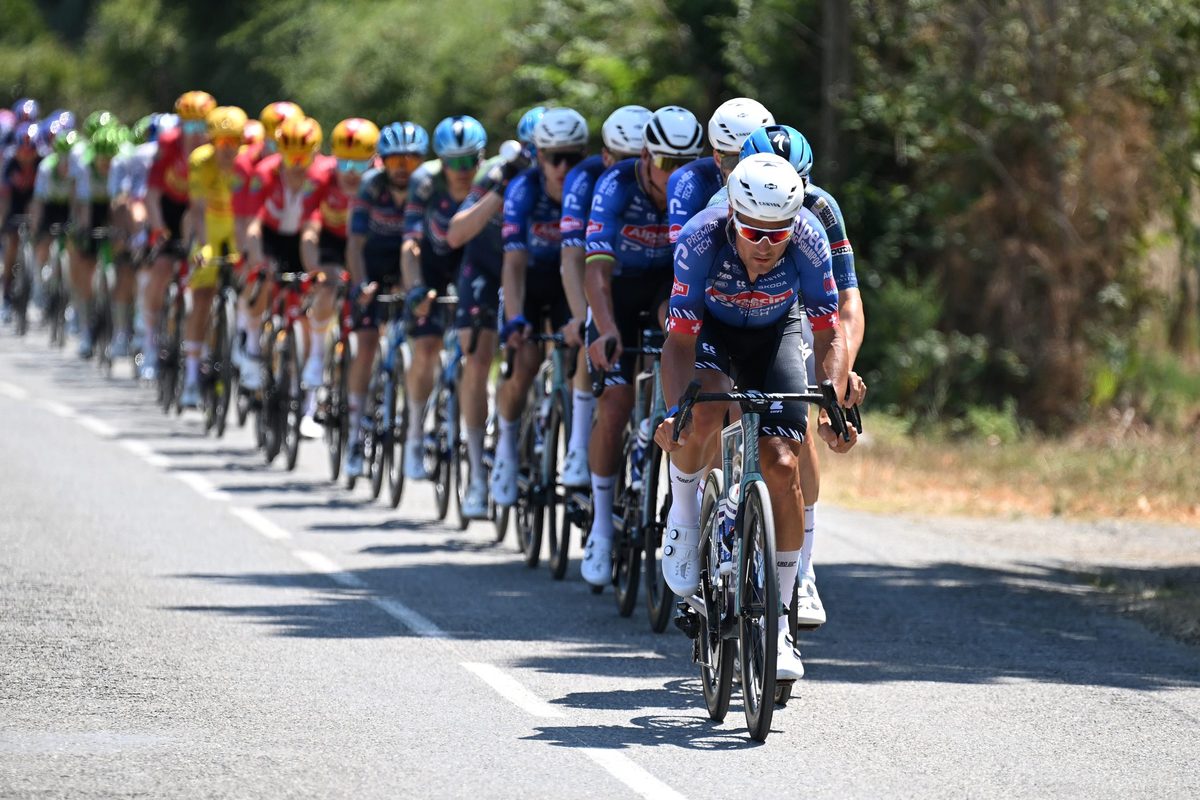
In the high-speed world of the Tour de France, cyclists often ride in close formation, known as the peloton. This strategic grouping offers significant advantages, primarily through the reduction of aerodynamic drag.
Understanding the Peloton’s Aerodynamic Benefits
Aerodynamic drag constitutes approximately 70% of the resistance cyclists face during forward motion. This resistance escalates with speed, making it a substantial factor at racing velocities. Riding solo, a cyclist expends considerable energy to overcome this drag. However, when cyclists form a peloton, they can significantly diminish this resistance.
Research indicates that drafting within a peloton can reduce drag by up to 40% compared to solo riding. This substantial decrease in resistance allows cyclists to conserve energy, enabling them to maintain higher speeds over extended periods. In the center of a fast-moving peloton, a rider might experience only 5% of the drag encountered when riding alone. This phenomenon often leads to riders coasting effortlessly during these moments.
Strategic Positioning and Team Dynamics
Within the peloton, team dynamics play a crucial role. Team leaders are typically shielded by domestiques—support riders who protect them from wind resistance and potential hazards. This strategic positioning allows leaders to conserve energy for critical moments, such as decisive breaks or climbs. For instance, during the 2026 Tour de France, Tadej Pogačar’s team, UAE Team Emirates, effectively utilized their domestiques to set a relentless pace, splintering the peloton and capitalizing on the Pyrenean terrain. (cyclingnews.com)
Domestiques also perform essential tasks, including delivering food and drinks to team leaders and providing mechanical assistance during technical issues. This support ensures that leaders can focus on performance without being distracted by logistical concerns.
The Peloton’s Role in Race Strategy
Beyond energy conservation, the peloton’s formation influences race tactics. Riders often position themselves based on their strengths and the stage’s profile. For example, sprinters prefer staying near the front during flat stages to position themselves for the final sprint, while climbers position themselves towards the rear during mountain stages to conserve energy for ascents.
The peloton also facilitates the formation of breakaways—groups of riders attempting to escape the main field. While breakaways can be exhilarating, they are challenging to sustain due to the peloton’s collective effort to reel them back in. Statistically, breakaways have a low success rate, with only about a 2% chance of leading to victory. (bikeradar.com)
Conclusion
The peloton is more than just a group of cyclists riding together; it is a strategic formation that leverages aerodynamic principles and team dynamics to enhance performance. By reducing drag and facilitating coordinated efforts, the peloton enables riders to achieve speeds and endurance levels that would be unattainable individually. Understanding the intricacies of the peloton offers insight into the complex strategies that define the Tour de France.