
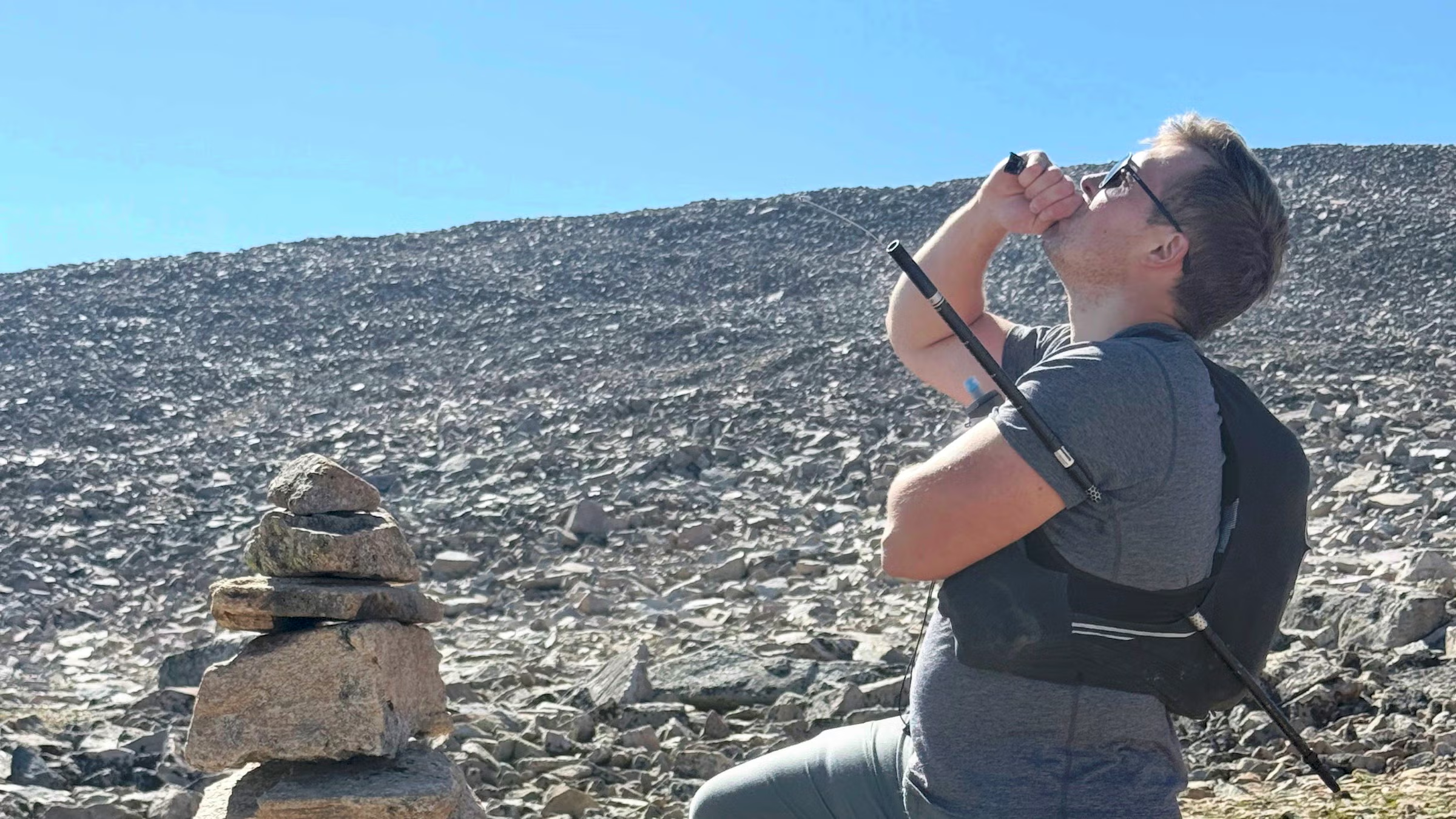
Survival Against the Odds: A Nurse’s Trek Down Montana’s Granite Peak
In a remarkable display of resilience and medical acumen, David Cifaldi, a 32-year-old nurse from Billings, Montana, transformed a perilous hiking accident into a testament of human endurance. On July 20, 2026, while ascending Granite Peak—the highest summit in Montana’s Beartooth Mountains—Cifaldi experienced a life-threatening mishap that would challenge even the most seasoned adventurers.
The Incident
Accompanied by friends Jesse Ross and Brad Reich, Cifaldi was nearing the summit of Granite Peak, standing at 12,803 feet, when the unexpected occurred. A misstep caused him to slip on loose rocks, leading to a fall onto one of his trekking poles. The 44-inch steel-tipped pole pierced through the flesh beneath his left arm, exiting through his lower back, narrowly missing vital organs. Despite the severity of the injury, Cifaldi remained remarkably composed, assessing his condition with the precision of a seasoned medical professional.
Immediate Response
Drawing upon his extensive experience in wound care, Cifaldi conducted a thorough self-assessment. He noted minimal bleeding, full sensation, and the absence of dizziness or lightheadedness. Recognizing the potential complications of removing the pole and the prohibitive costs associated with helicopter evacuation, he made a decisive choice: to self-rescue. Utilizing a Garmin inReach device, the trio notified authorities of their situation and their intent to descend the mountain on foot.
The Descent
Over the next six and a half hours, Cifaldi, Ross, and Reich navigated approximately 10 miles of rugged terrain, descending about 5,000 feet. The path was fraught with challenges, including snowfields and boulder fields, particularly on the aptly named Froze-to-Death Plateau. Each step required meticulous coordination to prevent exacerbating the injury. Cifaldi’s friends took turns monitoring his condition, ensuring the pole remained stable and that he was not in distress.
Reaching Safety
Upon reaching the trailhead, the group drove to a local clinic, and subsequently to St. Vincent Regional Hospital in Billings. There, surgeons carefully removed the trekking pole, and Cifaldi received the necessary medical attention. Remarkably, he returned to work just seven days later, underscoring his resilience and the efficacy of his medical training.
Reflections and Future Plans
In the aftermath, Cifaldi expressed profound gratitude for his friends’ support and his own medical expertise, which were instrumental in his survival. He acknowledged the critical role of preparedness and self-assessment in wilderness settings. Looking ahead, Cifaldi and his companions are considering another attempt to summit Granite Peak, with plans to return next year. This experience has not only tested their physical limits but also reinforced the importance of camaraderie and self-reliance in the face of adversity.
Conclusion
David Cifaldi’s ordeal serves as a compelling reminder of the unpredictable nature of outdoor adventures and the human spirit’s capacity to overcome adversity. His story is a testament to the importance of medical knowledge, preparedness, and the unwavering support of friends in navigating life-threatening situations.