
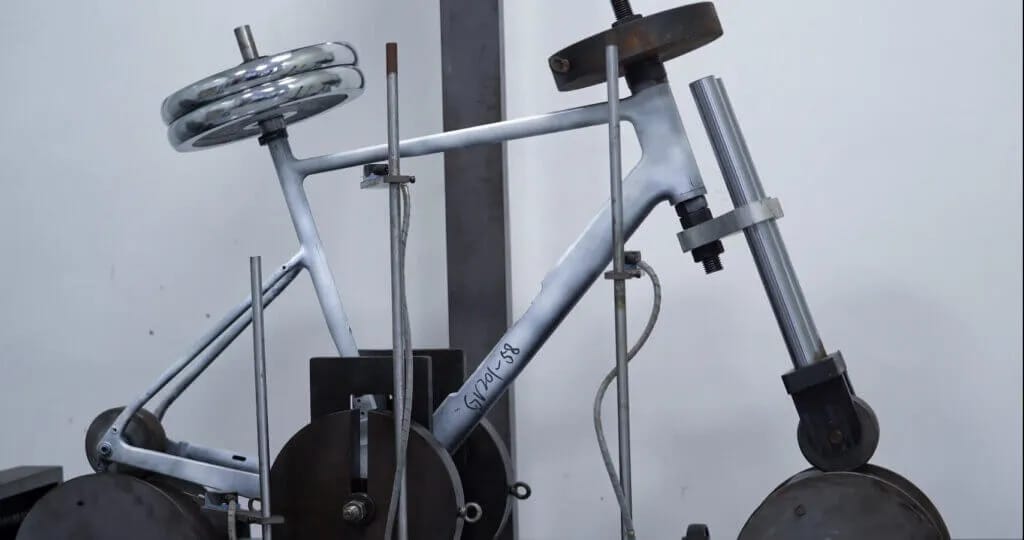
When evaluating the quality of a carbon bicycle frame, it’s essential to understand that the material itself is not a singular entity but a composite of various elements. The quality of a carbon frame is determined by several key factors:
1. Material Composition:
- Carbon Fiber Types: Different grades and orientations of carbon fibers affect the frame’s strength and stiffness.
- Resin Quality: The type and amount of resin used influence the frame’s durability and weight.
2. Manufacturing Process:
- Layup Technique: The arrangement of carbon fiber layers impacts the frame’s performance.
- Curing Process: Proper curing ensures optimal bonding between fibers and resin.
- Molding Pressure: Adequate pressure during molding eliminates voids and ensures uniformity.
3. Quality Control Measures:
- Non-Destructive Testing (NDT): Techniques like ultrasonic inspection and thermography detect internal defects without damaging the frame.
- Destructive Testing: Methods such as impact and fatigue testing assess the frame’s performance under stress.
4. Compliance with Standards:
- ISO 4210: Sets safety requirements for bicycles, including frame strength and durability.
- EN 14781: Specifies requirements for racing bicycles, focusing on impact resistance and fatigue strength.
5. Precision and Alignment:
- Geometric Accuracy: Ensures that frame angles and dimensions are within specified tolerances.
- Alignment Checks: Verifies that components like the bottom bracket and head tube are correctly aligned.
6. Real-World Performance:
- Ride Quality: A well-constructed frame offers a balance between stiffness and compliance, enhancing comfort and control.
- Durability: Frames should withstand prolonged use without significant degradation in performance.
It’s important to note that a higher price tag doesn’t always equate to superior quality. Frames from reputable manufacturers often undergo rigorous testing and quality control, ensuring they meet or exceed industry standards. When purchasing a carbon bicycle frame, consider the manufacturer’s testing protocols, compliance with international standards, and the frame’s performance characteristics to make an informed decision.