
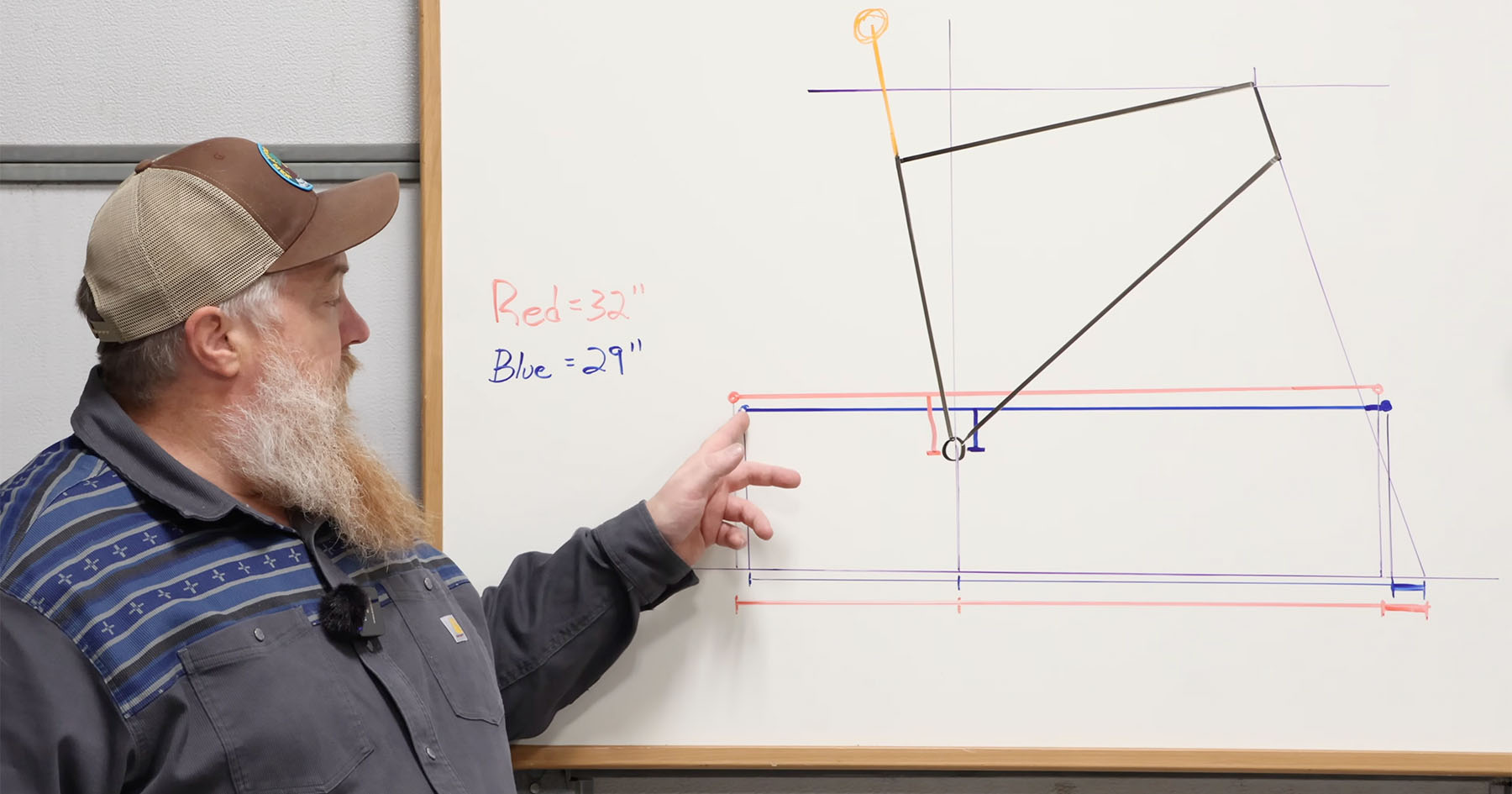
Esker Cycles, a trailblazer in the cycling industry, has recently unveiled a comprehensive video detailing the design and engineering behind their 32-inch wheel geometry. In this insightful presentation, founder Tim Krueger delves into the intricacies of crafting bicycles that accommodate the burgeoning 32-inch wheel trend.
The Rise of 32-Inch Wheels
The cycling world is witnessing a significant shift with the introduction of 32-inch wheels, a development that has rapidly gained traction among frame builders and bike brands. As Krueger aptly notes, the progress made in just six months with 32-inch wheels mirrors the four-year evolution experienced during the advent of 29-inch wheels. Drawing from his extensive experience in designing bikes during the 29er era, Krueger highlights the parallels in the evolution and experimentation associated with 32-inch bikes.
Innovative Design Approach
Krueger’s design philosophy for bicycle geometry is rooted in a meticulous process that begins with precise numerical calculations. These figures are then thoughtfully paired and adjusted to achieve a harmonious balance. However, the introduction of the 32-inch wheel necessitates a shift in this approach. Due to the mechanical constraints imposed by such a large wheel, the design process now starts at the rear of the bike. This strategic adjustment ensures that the unique challenges posed by 32-inch wheels are effectively addressed.
Industry Perspectives
The emergence of 32-inch wheels has sparked diverse opinions within the cycling community. Some industry experts express optimism about the potential for innovation, while others caution against repeating past mistakes. A recent article in Cycling Weekly emphasizes the need for the bike industry to learn from previous experiences with larger wheels and to approach the 32-inch trend with careful consideration. (cyclingweekly.com)
Considerations for Rider Fit
The integration of 32-inch wheels into bike designs also raises important questions about rider fit, particularly for those of shorter stature. An article in Bicycling explores the challenges associated with accommodating larger wheels on smaller frames, highlighting the potential impact on bike geometry and rider comfort. (bicycling.com)
Conclusion
Esker Cycles’ latest video offers a valuable glimpse into the complexities of designing bicycles for 32-inch wheels. Krueger’s insights underscore the importance of thoughtful engineering and adaptability in embracing this new wheel size. As the cycling industry continues to evolve, the experiences and innovations of companies like Esker Cycles will play a pivotal role in shaping the future of bike design.
For a deeper understanding of Esker Cycles’ approach to 32-inch wheel geometry, you can watch the full video below:
Esker Cycles 32-Inch Wheel Geometry Video