
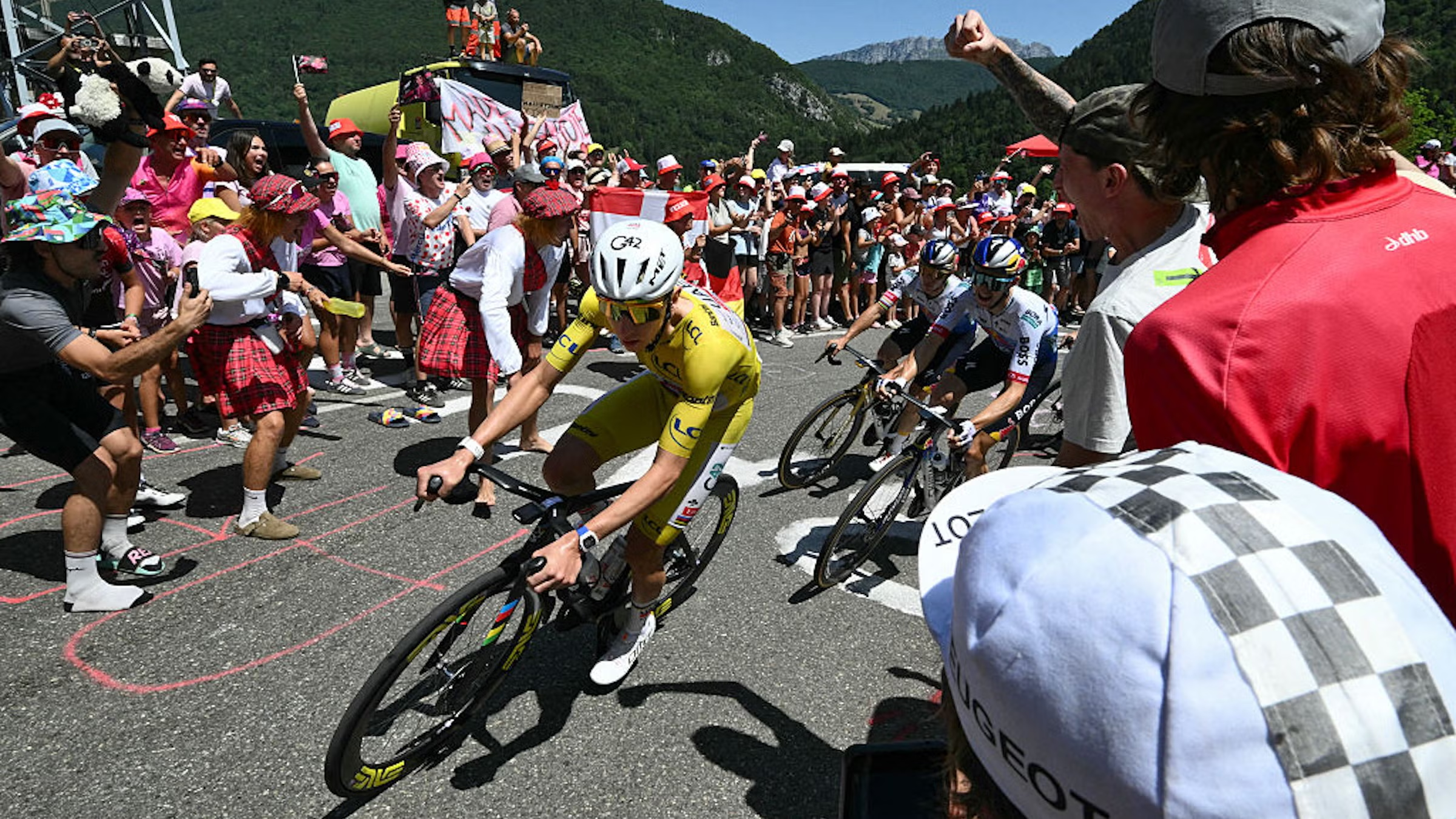
Tadej Pogačar’s recent Tour de France performances have captivated the cycling world, not only for his victories but also for the exceptional physiological feats he has demonstrated. A recent study published in the International Journal of Sports Physiology and Performance has provided deeper insights into the limits of human endurance, using Pogačar’s climbs as a benchmark. (outsideonline.com)
Estimating Pogačar’s VO₂ Max
VO₂ max, the maximum rate at which an individual can consume oxygen during intense exercise, is a critical indicator of endurance capacity. While laboratory tests have historically been the gold standard for measuring VO₂ max, real-world data from competitive events like the Tour de France offer valuable insights into an athlete’s capabilities.
Researchers analyzed data from four of Pogačar’s recent climbs, each lasting between 17 to 40 minutes:
- Plateau de Beille (2024 Tour de France): Estimated VO₂ max of 96 ml/kg/min
- Isola 2000 (2024 Tour de France): Estimated VO₂ max of 97 ml/kg/min
- Peyragudes (2025 Tour de France): Estimated VO₂ max of 94 ml/kg/min
- Ganda (2025 Tour of Lombardy): Estimated VO₂ max of 98 ml/kg/min
These estimates average to a VO₂ max of approximately 96 ml/kg/min, aligning with the highest recorded values in cycling. For context, Oskar Svendsen holds the record for the highest lab-measured VO₂ max at 96.7 ml/kg/min. (outsideonline.com)
Implications for Human Endurance
Pogačar’s performances suggest that the upper limits of human endurance may be higher than previously understood. While lab tests provide controlled measurements, real-world data from elite athletes like Pogačar offer a more accurate reflection of human potential under competitive conditions.
It’s important to note that VO₂ max is just one aspect of athletic performance. Factors such as lactate threshold, muscle efficiency, and mental resilience also play crucial roles in a cyclist’s success. Nonetheless, Pogačar’s exceptional VO₂ max underscores the remarkable physiological adaptations that contribute to his dominance in the sport.
As cycling science continues to evolve, studies like this provide valuable insights into the physiological demands of the sport and the extraordinary capabilities of its athletes.
Highlights:
- Tadej Pogacar confirms status as a cycling great with record-equaling fifth Tour de France title, Published on Sunday, July 26
- ‘A crazy atmosphere the whole climb’ – Tadej Pogačar takes fifth stage win of 2026 Tour de France with Alpe d’Huez record, Published on Friday, July 24
- Yellow jersey Tadej Pogačar explains why stage 11 of 2026 Tour de France smashed 27-year-record for fastest average speed, Published on Wednesday, July 15