
In the realm of electric bicycles (eBikes), the motor serves as the powerhouse, directly influencing performance, efficiency, and rider experience. A pivotal aspect of motor design is the rotor configuration, primarily categorized into inner rotor and outer rotor designs. Understanding these configurations is essential for selecting the optimal motor to meet specific riding needs.
Structural Overview: Inner Rotor vs. Outer Rotor
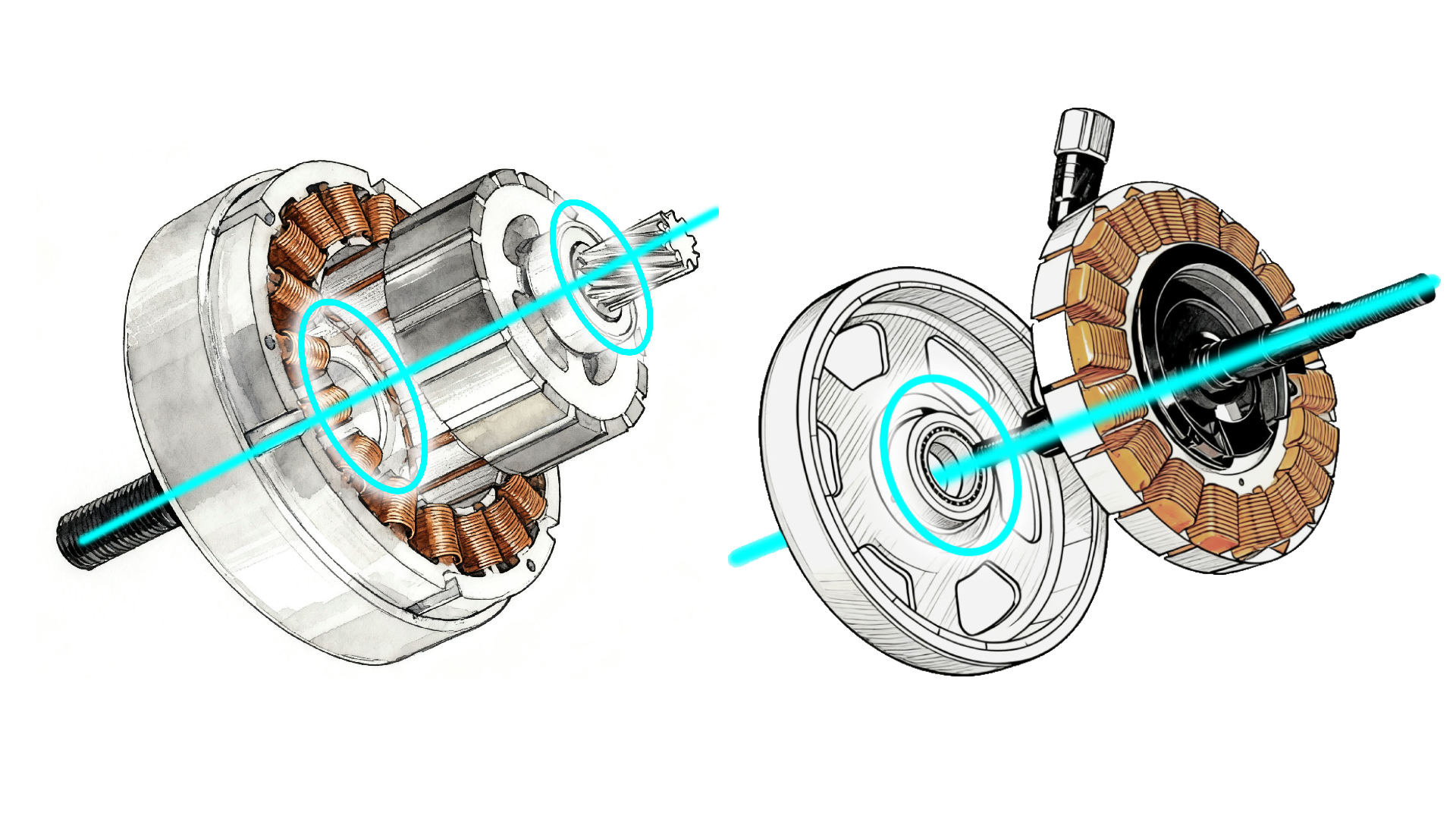
The fundamental distinction between inner and outer rotor motors lies in the positioning of the rotor and stator:
-
Inner Rotor Motor: Here, the rotor is situated at the center, surrounded by the stator. This design is akin to traditional motor setups, where the rotating part is enclosed within the stationary components.
-
Outer Rotor Motor: In this configuration, the rotor encases the stator, rotating around it. This setup is often employed in applications requiring high torque and stability.
Performance Characteristics
The rotor configuration significantly impacts various performance metrics:
-
Torque and Speed:
- Inner Rotor: Offers higher rotational speeds with rapid acceleration and deceleration, making it suitable for applications demanding quick response times.
- Outer Rotor: Provides substantial torque at lower speeds, ensuring smooth operation and is ideal for scenarios requiring consistent power output.
-
Heat Dissipation:
- Inner Rotor: The stator’s external placement facilitates efficient heat dissipation, enhancing performance during prolonged use.
- Outer Rotor: The rotor’s external position allows for effective heat management, which is beneficial during extended operations.
-
Mechanical Inertia:
- Inner Rotor: Features a lower moment of inertia, enabling swift dynamic responses and precise control.
- Outer Rotor: Exhibits a higher moment of inertia, contributing to smoother operation and reduced vibration.
Application Suitability
The choice between inner and outer rotor motors should align with the intended application:
-
Inner Rotor Motors: Ideal for high-speed applications requiring rapid acceleration and deceleration, such as power tools and industrial automation equipment.
-
Outer Rotor Motors: Suited for low-speed, high-torque applications like eBikes, drones, and wind turbines, where consistent power and stability are paramount.
Conclusion
Selecting the appropriate rotor configuration is crucial for optimizing motor performance in eBikes. Inner rotor motors excel in scenarios demanding high-speed operation and quick responsiveness, while outer rotor motors are preferable for applications requiring substantial torque and smooth, stable performance. Understanding these distinctions enables manufacturers and riders to make informed decisions, ensuring the motor complements the specific demands of the eBike’s design and intended use.