
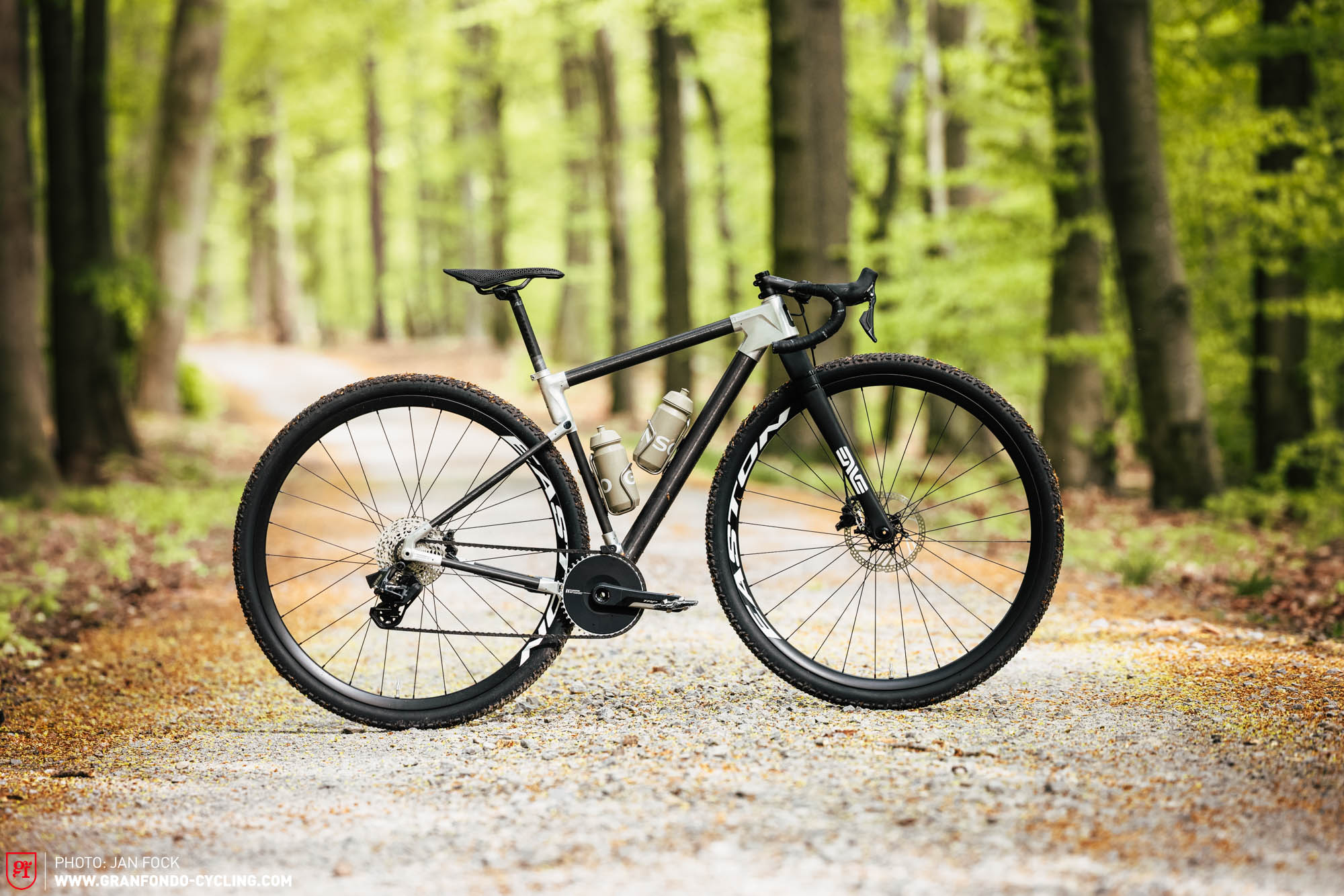
The Faction Bike Studio Atlas is a pioneering gravel bike prototype featuring 32-inch wheels, designed to enhance stability, traction, and comfort on rough terrains. This innovative approach aims to address the challenges posed by traditional 700c wheels, such as limited rollover capability and reduced stability on uneven surfaces.
Design and Construction
The Atlas employs a hybrid frame construction, combining carbon tubes with aluminum lugs. This method allows for adjustable geometry by swapping lugs, facilitating cost-effective prototype development without the need for new carbon molds or welding jigs. The frame accommodates 32-inch Easton carbon rims and 50mm Schwalbe G-One RX Pro tires, paired with a TRP/Classified Vistar Powershift drivetrain featuring a 46-tooth chainring. To maintain a low front stack height, a -35° stem is utilized, ensuring an aggressive riding position.
Geometry and Handling
The Atlas’s geometry is tailored to integrate the larger wheel size while preserving handling characteristics. The test frame, equivalent to a size 55 (medium), features a stack of 575 mm and a reach of 411 mm, aligning with current 700c gravel bikes like the Canyon Grail CF SLX. However, the 32-inch wheels raise the front end by approximately 32 mm compared to 700c wheels. To compensate, Faction employed a -35° stem, a practical solution for prototype development. The head angle varies across frame sizes, increasing from 68.5° in 2XS to 71.8° in XL/2XL, addressing toe overlap and front-center length considerations.
Performance and Ride Quality
The larger wheel size offers several performance benefits:
-
Obstacle Navigation: The 32-inch wheels roll over obstacles more smoothly, reducing speed loss and enhancing ride comfort.
-
Momentum Retention: The increased rotating mass helps maintain speed, requiring less effort to sustain momentum.
-
Traction: The longer contact patch of the 32-inch tires provides improved grip on loose surfaces, enhancing stability during climbs and descents.
These advantages contribute to a smoother and more controlled ride, particularly on rough and uneven terrains.
Challenges and Considerations
Despite its benefits, the Atlas prototype presents certain challenges:
-
Compatibility Issues: The 142 mm chainline causes the chain to rub against the spokes when in the largest sprocket under power, indicating a need for design adjustments to accommodate the larger wheel size.
-
Handling Dynamics: The increased wheel size and slack head angle result in less agile handling, requiring riders to plan maneuvers more deliberately.
-
Frame Sizing Constraints: Smaller frame sizes may struggle to provide adequate toe clearance around the oversized front wheel, potentially limiting the bike’s suitability for shorter riders.
-
Component Availability: The 32-inch wheel standard is still emerging, with limited availability of compatible tires and components, which could pose challenges for maintenance and repairs.
Industry Implications
The introduction of 32-inch wheels in gravel bikes is part of a broader trend towards larger wheel sizes in cycling. Brands like Schwalbe have announced 32-inch gravel tires, and other manufacturers are exploring this format. However, the adoption of 32-inch wheels in gravel bikes is still in its infancy, with many manufacturers yet to commit to this new standard. The Faction Bike Studio Atlas serves as a testbed to evaluate the viability and performance of 32-inch wheels in gravel cycling, providing valuable insights for future developments in the industry.
In conclusion, the Faction Bike Studio Atlas prototype demonstrates the potential of 32-inch wheels to enhance gravel bike performance by improving stability, traction, and comfort. While it addresses several limitations of traditional 700c wheels, it also presents new challenges that the cycling industry will need to overcome as it considers the broader adoption of this wheel size.