
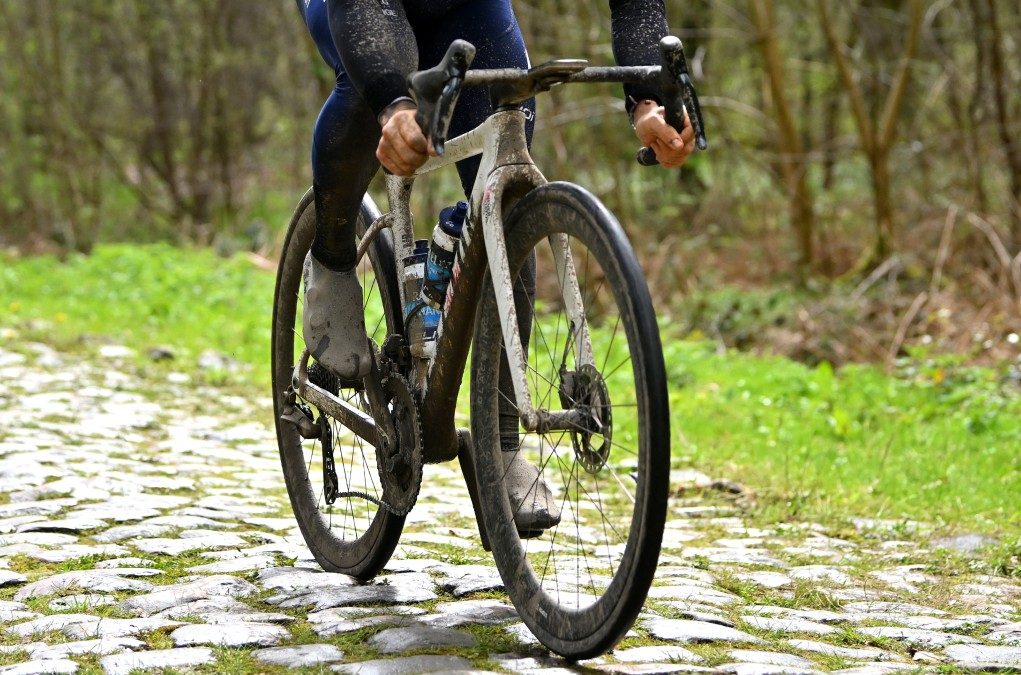
Paris-Roubaix, often dubbed the “Hell of the North,” is a grueling one-day race that challenges cyclists with its 258.3 km course, featuring 30 cobbled sectors totaling 54.8 km of rough terrain. (cyclingnews.com) Given the race’s demanding nature, the question arises: why don’t riders opt for gravel bikes, which are designed for such conditions?
The Terrain and Race Dynamics
The initial 100 km of Paris-Roubaix are contested on paved roads, followed by 55 km of cobbled sectors within the 260 km race. (bikeradar.com) While gravel bikes excel on unpaved surfaces, their geometry and design prioritize comfort and stability over speed, making them less efficient on smooth tarmac. This efficiency loss on paved sections can be detrimental in a race where every second counts.
Technological Advancements in Road Bikes
Modern road bikes have evolved to handle the rigors of Paris-Roubaix. With tire clearances accommodating widths up to 34mm, riders can equip their bikes with wider tires for enhanced grip on cobbles without sacrificing performance on paved roads. (bikeradar.com) Additionally, innovations like tubeless tires and adjustable tire pressure systems allow riders to adapt to varying terrains, further bridging the gap between road and gravel bike capabilities.
Historical Context and Rider Preferences
Historically, when rim brakes were standard, some riders experimented with modified cyclocross bikes, which offered wider tire clearance due to their cantilever brakes. However, with the advent of disc brakes and wider tire compatibility in road bikes, the need for such modifications has diminished. Professional cyclists are often conservative, preferring setups they are familiar with to minimize the risk of mechanical issues during the race.
Conclusion
While gravel bikes are engineered for unpaved terrains, their design compromises make them less suitable for the mixed conditions of Paris-Roubaix. The combination of paved and cobbled sections, along with the technological advancements in road bikes, ensures that traditional road bikes remain the preferred choice for this iconic race.