
In the evolving landscape of urban mobility, cargo bikes have emerged as a practical and eco-friendly alternative to traditional vehicles. Among the various designs, longtail cargo bikes and front-loading cargo bikes (often referred to as “cargo bikes”) stand out for their unique features and functionalities. Understanding the distinctions between these two can help you determine which aligns best with your transportation needs.
Understanding Cargo Bikes
Cargo bikes are specifically engineered to transport goods or passengers efficiently, reducing the reliance on cars and promoting sustainable urban living. They come in various configurations, with the two most prevalent being:
-
Front-Loading Cargo Bikes: These bikes feature a large cargo area situated between the front wheel and handlebars, allowing for substantial storage capacity.
-
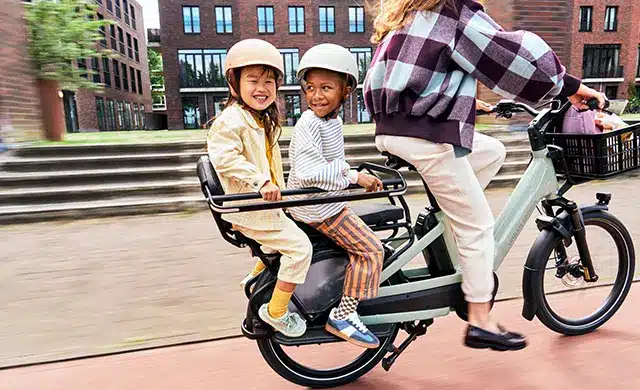
Longtail Cargo Bikes: Characterized by an extended rear frame, longtail bikes provide a reinforced rear rack capable of carrying significant loads or accommodating additional passengers.
Design and Ergonomics
-
Front-Loading Cargo Bikes: The prominent front cargo area offers ample space for transporting bulky items or multiple children. This design places the weight over the front wheel, potentially enhancing stability when moving but requiring more space for parking and maneuvering.
-
Longtail Cargo Bikes: With an elongated rear frame, longtail bikes maintain a traditional bicycle appearance while offering increased cargo capacity. The extended rear rack can be equipped with child seats, panniers, or other accessories, making them versatile for various hauling needs.
Maneuverability and Handling
-
Front-Loading Cargo Bikes: The front-heavy design can make these bikes feel less agile, especially in tight spaces or during sharp turns. Riders may need time to adjust to the altered handling dynamics.
-
Longtail Cargo Bikes: These bikes offer handling characteristics closer to standard bicycles, with the extended rear providing a stable platform without significantly altering the bike’s center of gravity. This design often results in a more intuitive riding experience, particularly in urban environments.
Load Capacity and Versatility
-
Front-Loading Cargo Bikes: Ideal for transporting large or heavy items, these bikes excel in scenarios where substantial cargo space is required. However, the fixed front cargo area may limit flexibility in accommodating different types of loads.
-
Longtail Cargo Bikes: The adaptable rear rack can be customized with various accessories, such as child seats or cargo bags, allowing for a balance between transporting passengers and goods. This versatility makes longtail bikes suitable for families, commuters, and those needing a flexible cargo solution.
Stability and Safety
-
Front-Loading Cargo Bikes: The low center of gravity due to the front cargo placement can enhance stability when moving. However, the increased length and weight may pose challenges when stationary or during low-speed maneuvers.
-
Longtail Cargo Bikes: The extended rear frame contributes to a stable ride, with the weight distribution closely resembling that of a traditional bicycle. This design often results in a more familiar and comfortable riding experience, especially for those accustomed to standard bikes.
Urban Considerations
In densely populated urban areas, the compact nature of longtail cargo bikes allows for easier parking and maneuvering through narrow streets. Their ability to fit into standard bike racks and storage spaces adds to their practicality in city settings.
Making the Right Choice
The decision between a front-loading cargo bike and a longtail cargo bike hinges on your specific transportation requirements:
-
Choose a Front-Loading Cargo Bike if:
- You frequently transport large or heavy items.
- You need a dedicated space for carrying multiple children.
- You have the storage space to accommodate a larger, more stationary bike.
-
Opt for a Longtail Cargo Bike if:
- You desire a versatile bike that can adapt to various hauling needs.
- You prefer a riding experience similar to traditional bicycles.
- You require a bike that is easier to store and maneuver in urban environments.
Both types of cargo bikes offer unique advantages, and the optimal choice depends on your individual lifestyle, cargo needs, and urban living conditions. By carefully evaluating these factors, you can select a cargo bike that seamlessly integrates into your daily routine, promoting a healthier and more sustainable mode of transportation.