
Naples’ New Cycling Infrastructure: A Critical Review
In recent years, Naples has embarked on an ambitious project to expand its cycling infrastructure, aiming to enhance urban mobility and promote sustainable transportation. The initiative, backed by approximately €10 million from the National Recovery and Resilience Plan (PNRR), seeks to develop 35 kilometers of new bike lanes by 2026. (mit.gov.it)
Fuorigrotta to Soccavo: A Disjointed Expansion
A significant portion of this expansion focuses on connecting the neighborhoods of Fuorigrotta and Soccavo. The plan includes the construction of approximately 10 kilometers of bike lanes, integrating key locations such as the University of Naples “Federico II” campuses, the Mostra d’Oltremare exhibition center, and the Maradona Stadium. (ansa.it)
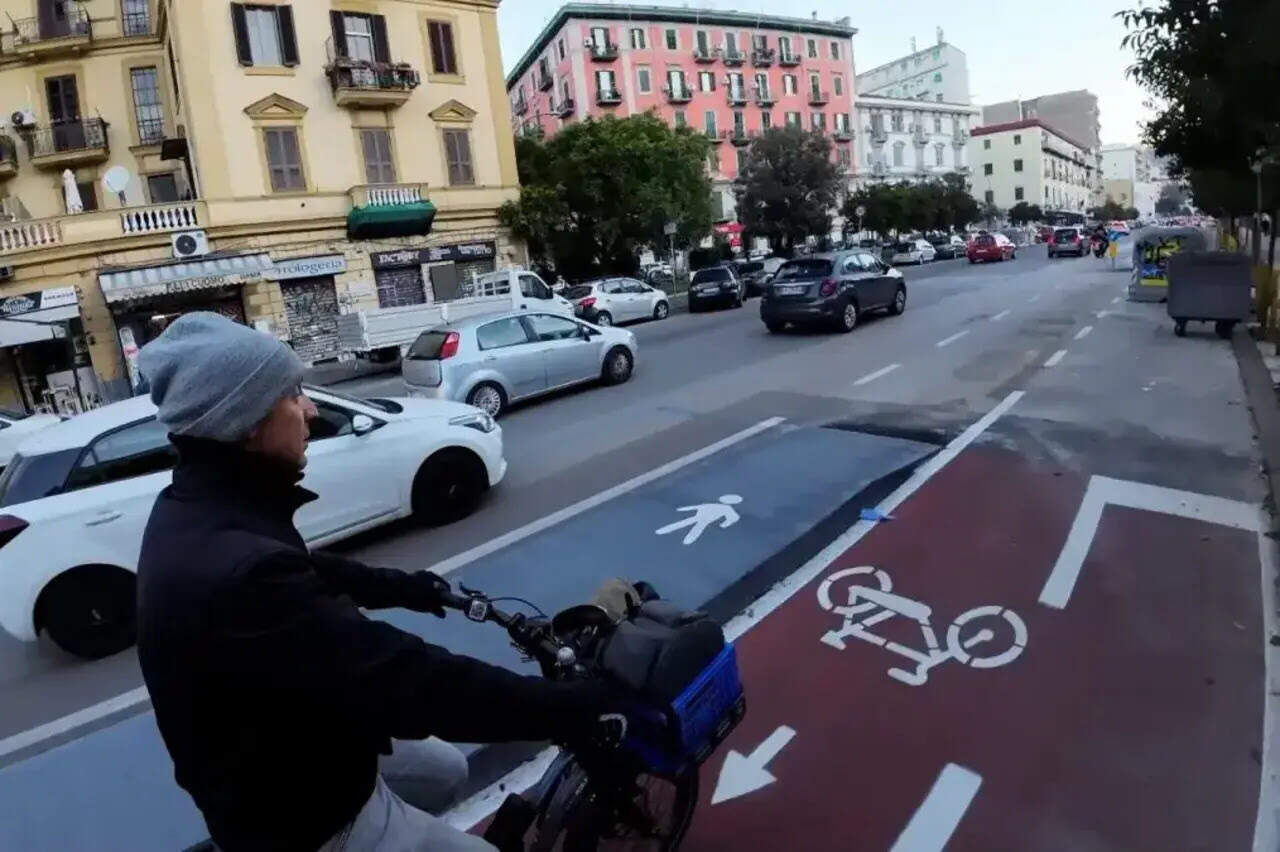
However, the execution of these plans has faced criticism. The bike lanes have been constructed on existing sidewalks, leading to shared spaces between pedestrians and cyclists without clear physical separation. This design choice has raised concerns about safety and functionality, as it fails to provide dedicated space for cyclists and may lead to conflicts with pedestrians. (napoli.corriere.it)
Structural Issues and Safety Concerns
Further issues have been identified in the design and implementation of the bike lanes. For instance, sections of the bike lanes are narrower than the minimum recommended standards, making overtaking difficult and compromising safety. Additionally, the lack of continuity and integration with existing infrastructure has resulted in a fragmented network, reducing the overall effectiveness of the cycling routes. (mobilita.org)
The Need for Integrated Planning
Experts emphasize that effective cycling infrastructure requires comprehensive planning that considers the entire urban mobility system. This includes integrating bike lanes with public transportation, ensuring continuity, and creating a network that is intuitive and accessible. Without such integrated planning, the current efforts may not achieve the desired outcomes in promoting cycling as a viable mode of transportation. (mobilita.org)
Conclusion
While Naples’ initiative to expand its cycling infrastructure is commendable, the current implementation reveals significant shortcomings. To truly transform urban mobility and encourage cycling, a more thoughtful and integrated approach is necessary—one that prioritizes safety, connectivity, and user experience. Without these considerations, the city’s cycling infrastructure may remain underutilized and ineffective.