
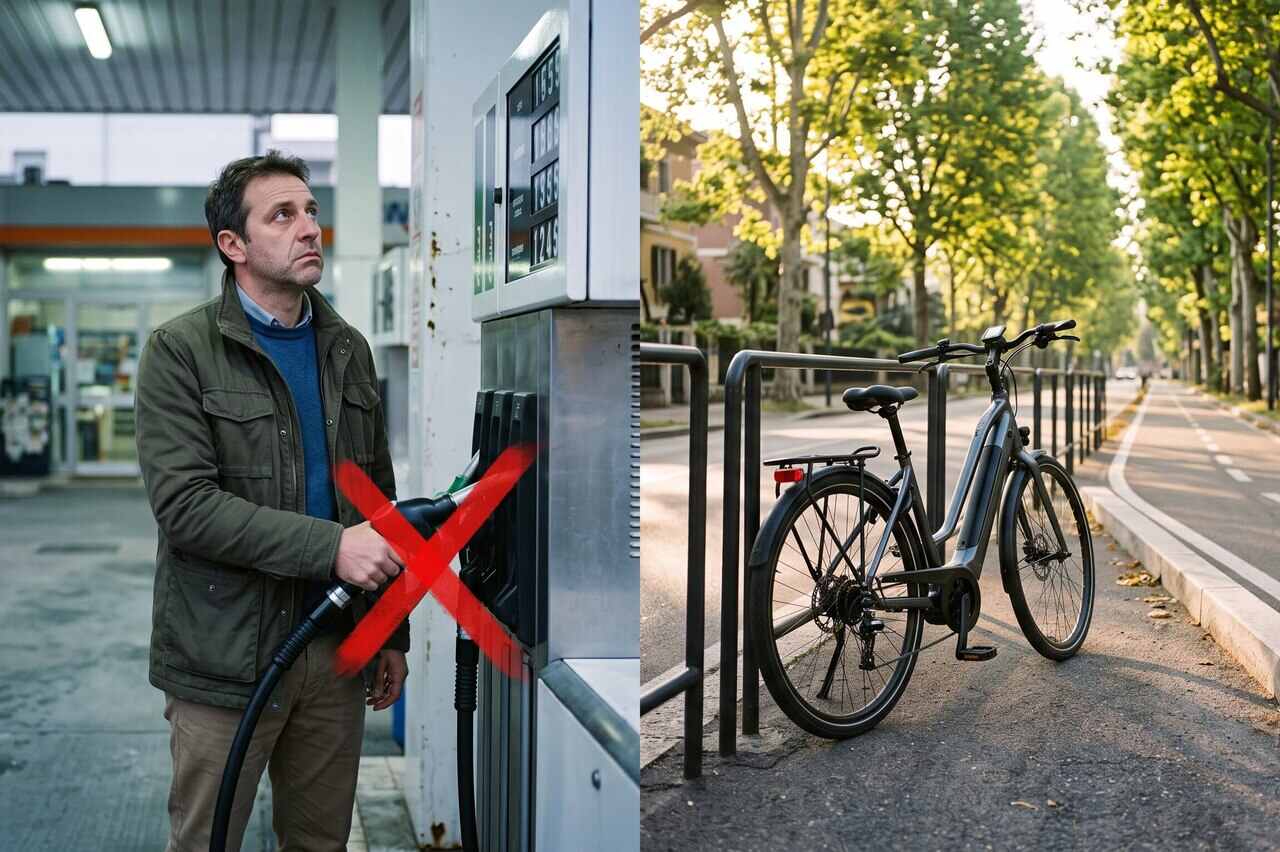
Five Strategies to Alleviate the Impact of Rising Fuel Prices on Italian Households
Italy is grappling with record-high fuel prices, placing a significant strain on household budgets. As of September 2026, petrol costs approximately €2.141 per litre, and diesel €2.281 per litre, both exceeding the EU average. (euenergyprices.eu) This surge is largely attributed to global energy market disruptions, including geopolitical tensions in the Middle East. (ansa.it)
To mitigate the financial burden on Italian families, the following five measures are proposed:
1. Corporate Bike Leasing Programs
Encouraging businesses to implement bike leasing schemes can promote cycling as a viable commuting option. In Germany, such programs have revitalized the cycling market, and similar initiatives are under discussion in Italy. Employees can select a bicycle and pay through salary deductions, with the company retaining ownership for a specified period. This approach offers savings of 35-40% compared to private purchases. For successful implementation, investments in cycling infrastructure, such as dedicated lanes, secure parking, and shower facilities at workplaces, are essential.
2. Incentives for Remote Working
Promoting remote work can significantly reduce daily commuting, thereby decreasing fuel consumption. Over the past decade, daily travel among Italians has decreased by 41%, partly due to the adoption of smart working practices. Encouraging companies to establish stable remote work policies can lead to fewer car journeys, less traffic congestion, and reduced environmental impact.
3. Establishment of Emergency Cycling Networks
In response to energy crises, many European cities have rapidly developed temporary cycling lanes to compensate for reduced public transport. Implementing similar measures in Italy can provide safe routes for cyclists without waiting for extensive infrastructure projects. Simple interventions, such as road markings, physical barriers, and reduced speed limits, can create protected cycling paths, encouraging more people to choose bicycles over cars.
4. Secure Bicycle Parking Facilities
Addressing the fear of theft is crucial to encourage cycling. Installing adequate bike racks at public offices, schools, and hospitals, along with secure bike stations at train stations, can facilitate the combination of cycling and train travel, reducing reliance on cars for medium-distance journeys. The Netherlands’ extensive cycling infrastructure, including the world’s largest bike parking facility in Utrecht, serves as a successful model.
5. Support for School Cycling Initiatives
Initiatives like “Bicibus,” where groups of children cycle to school under adult supervision, can reduce the number of parents driving their children, thereby decreasing traffic and fuel consumption. Supporting volunteers who lead these groups with small contributions, insurance coverage, and recognition can have an immediate positive impact on road safety and fuel usage. For instance, Udine has allocated €20,000 for such projects through associations and non-profit organizations.
Learning from the Dutch Experience
In the 1970s, the Netherlands faced a similar energy crisis. The “Stop de Kindermoord” movement, driven by parents advocating for safer streets for children, led to significant urban planning changes, including the creation of extensive cycling networks. This transformation has made the Netherlands a global leader in cycling infrastructure. Italy can draw inspiration from this example to implement measures that reduce fuel dependency and enhance urban mobility.
Conclusion
Implementing these strategies can provide immediate relief to Italian households facing high fuel costs. By promoting cycling, supporting remote work, and investing in secure infrastructure, Italy can reduce its reliance on oil, alleviate financial pressures, and move towards a more sustainable and efficient transportation system.
Highlights:
- El Gobierno limita la subida de la tarifa del gas natural al 15% y fija la de la bombona de butano en 19,55 euros, Published on Monday, September 28
- El Gobierno renueva el escudo anticrisis reforzado con un tope al gas con la vista puesta en la calefacción del otoño, Published on Tuesday, September 29