
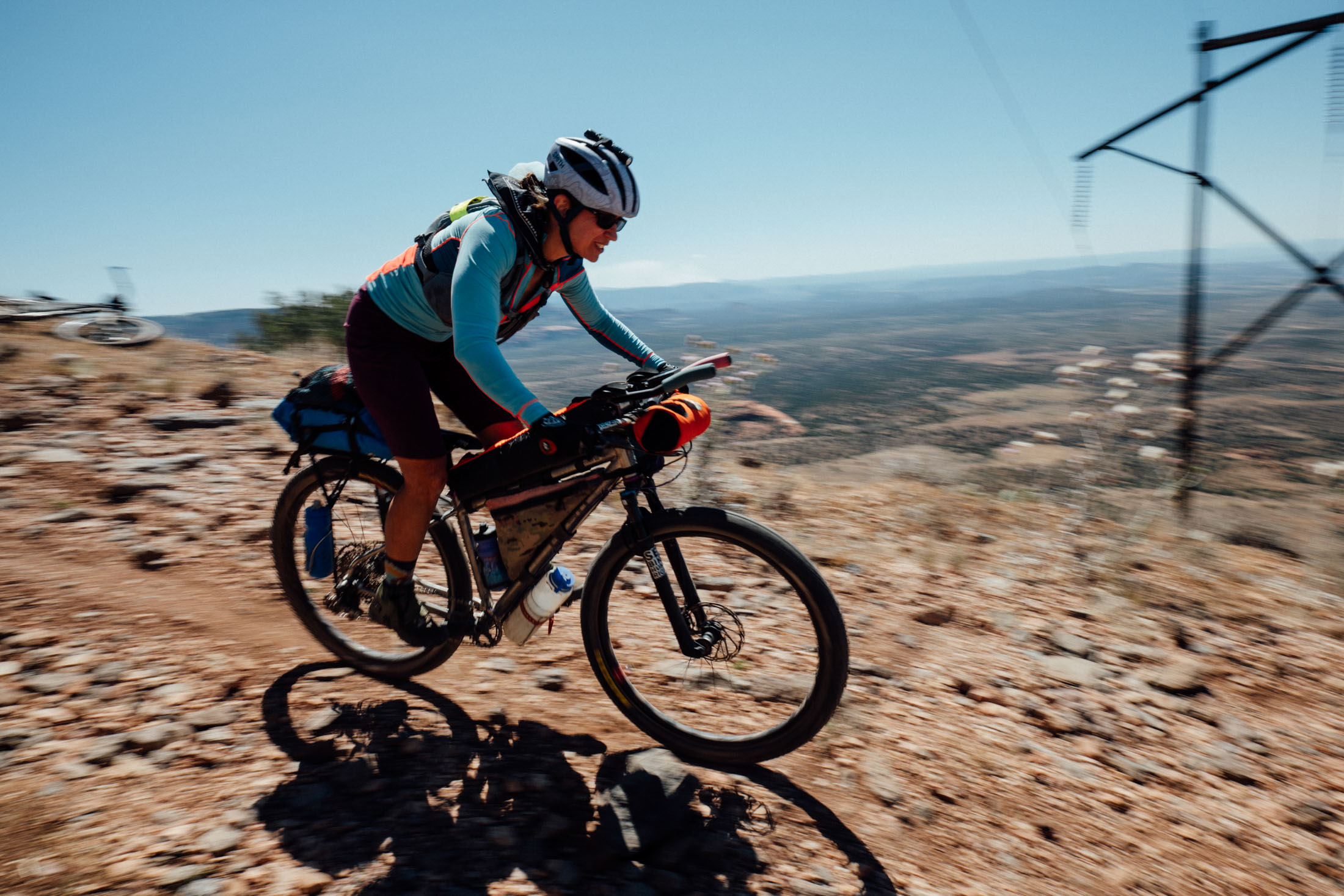
The 2026 Pinyons and Pines Bikepacking Race, held in Arizona, has concluded, showcasing the resilience and determination of its participants. This year’s event was particularly grueling, featuring a 413-mile course with a daunting 40,000 feet of elevation gain. The route traversed diverse terrains, from arid deserts adorned with cacti to dense ponderosa pine forests, incorporating challenging singletrack and rugged jeep trails. (bikepacking.com)
Race Overview
The race commenced on May 14, 2026, at 6:00 AM from Flagstaff Bicycle Revolution in Flagstaff, Arizona. Participants embarked on a self-supported journey through Northern Arizona, navigating a mix of singletrack, doubletrack, and dirt roads. The course was designed to test the limits of endurance and skill, offering a comprehensive tour of the region’s diverse landscapes. (bikepacking.com)
Challenging Terrain and Conditions
Riders faced a series of formidable challenges throughout the race:
-
Casner Mountain Descent: Approximately 37 miles into the race, participants descended Casner Mountain via a steep jeep road with grades up to 15%. The descent was rocky and technical, demanding precise bike handling skills.
-
Mingus Mountain Ascent: At mile 66, riders began the ascent of Mingus Mountain, starting in the desert and climbing into dense forest. The 15-mile singletrack was exposed, steep, and overgrown, slowing progress.
-
Crown King Ascent: Around mile 135, the route entered the desert again, with temperatures reaching 90°F or higher. The 17-mile climb into the Bradshaw Mountains led to Crown King, offering limited resupply options.
-
Mt. Union Summit: After 56 miles of Prescott singletrack, riders faced an out-and-back to the top of Mt. Union. Despite being only 8.5 miles and 1,000 feet of climbing, the summit was psychologically taxing at this stage of the race.
-
Final Ascent to Flagstaff: At mile 330, the route left Camp Verde and began a 52-mile ascent back toward Flagstaff. The climb was less steep but extended, with 28 miles remaining after reaching Mormon Mountain.
These segments highlighted the race’s demanding nature, with riders alternating between cool forests and sweltering deserts, often facing significant stretches of remote terrain with large gaps between resupply points. (bikepacking.com)
Notable Performances
Despite the grueling conditions, several riders delivered exceptional performances:
-
Timon Fish: The 40-year-old rider secured first place, completing the 413-mile course with 40,000 feet of elevation gain in just 1 day, 20 hours, and 47 minutes. (bikepacking.com)
-
Jeff Kerkove: Finishing three hours after Fish, Kerkove claimed second place with a time of 1 day, 23 hours, and 47 minutes.
-
David Tschan: Tschan took third place, completing the race in 2 days, 4 hours, and 26 minutes.
In the women’s field, the competition was intense, with Gwen Cameron and Katie Smyth battling for the lead as they completed the Prescott Circle Trail. Sarah Didier, who had diverted off course seeking a hotel, was making steady progress to rejoin the leaders. (bikepacking.com)
Conclusion
The 2026 Pinyons and Pines Bikepacking Race stands as a testament to the endurance and spirit of the bikepacking community. The event not only tested the physical limits of its participants but also showcased the breathtaking diversity of Arizona’s landscapes. As riders continue to push the boundaries of self-supported racing, events like Pinyons and Pines remain pivotal in highlighting the challenges and rewards of long-distance bikepacking.