
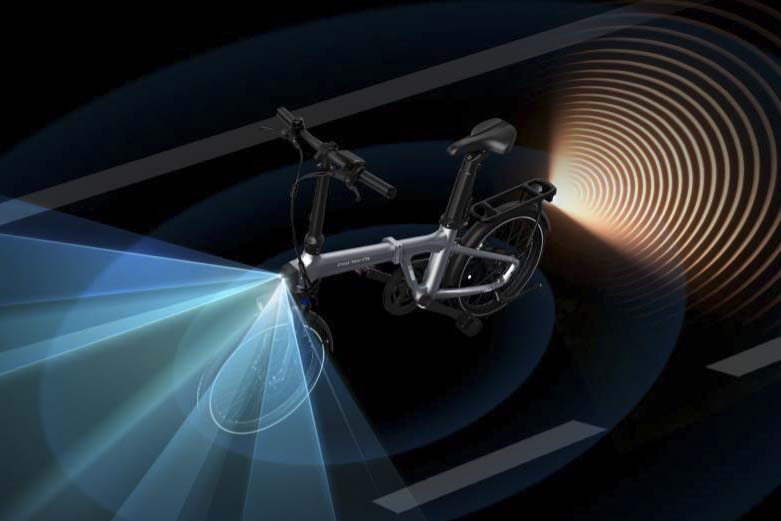
In recent years, the integration of LiDAR (Light Detection and Ranging) technology into electric bicycles (e-bikes) has emerged as a pivotal advancement, enhancing rider safety and situational awareness. LiDAR employs laser pulses to create precise 3D maps of the surroundings, enabling real-time detection of obstacles and potential hazards.
Industry Adoption of LiDAR in E-Bikes
Several leading e-bike manufacturers have begun incorporating LiDAR technology into their models:
-
Hesai Technology and Niu Technologies: In March 2026, these companies announced a partnership to integrate Hesai’s FTX LiDAR sensor into Niu’s new electric two-wheelers, marking a significant step in bringing LiDAR to the e-bike sector. (chinaevhome.com)
-
Segway: At CES 2026, Segway introduced the Rearview Radar, an accessory that brings automotive blind-spot detection to e-bikes, enhancing rider safety by alerting them to approaching vehicles from behind. (prnewswire.com)
-
Canyon: In June 2026, Canyon unveiled the Predict bike, a prototype featuring a 360-degree sensor array, including radar and cameras, designed to anticipate road hazards and improve rider safety. (media-centre.canyon.com)
Benefits of LiDAR Integration
The incorporation of LiDAR into e-bikes offers several advantages:
-
Enhanced Safety: LiDAR provides real-time detection of obstacles, allowing riders to react promptly to potential hazards.
-
Improved Navigation: By mapping the environment, LiDAR assists in better route planning and navigation, especially in complex urban settings.
-
Advanced Rider Assistance: Integrating LiDAR with other technologies, such as automatic gear shifting and adaptive lighting, can create a more intuitive and responsive riding experience.
Challenges and Future Outlook
Despite its benefits, the widespread adoption of LiDAR in e-bikes faces challenges:
-
Cost: High-quality LiDAR sensors can be expensive, potentially increasing the overall cost of e-bikes.
-
Integration Complexity: Seamlessly integrating LiDAR with existing e-bike systems requires significant engineering and development efforts.
However, as technology advances and production scales up, the cost of LiDAR components is expected to decrease, making it more accessible for mainstream e-bikes. The future of e-bike safety and performance increasingly relies on the integration of advanced technologies like LiDAR, promising a safer and more efficient riding experience.
Highlights:
- CES just teased the future of e-bikes and it might finally fix range anxiety, Published on Sunday, January 04