
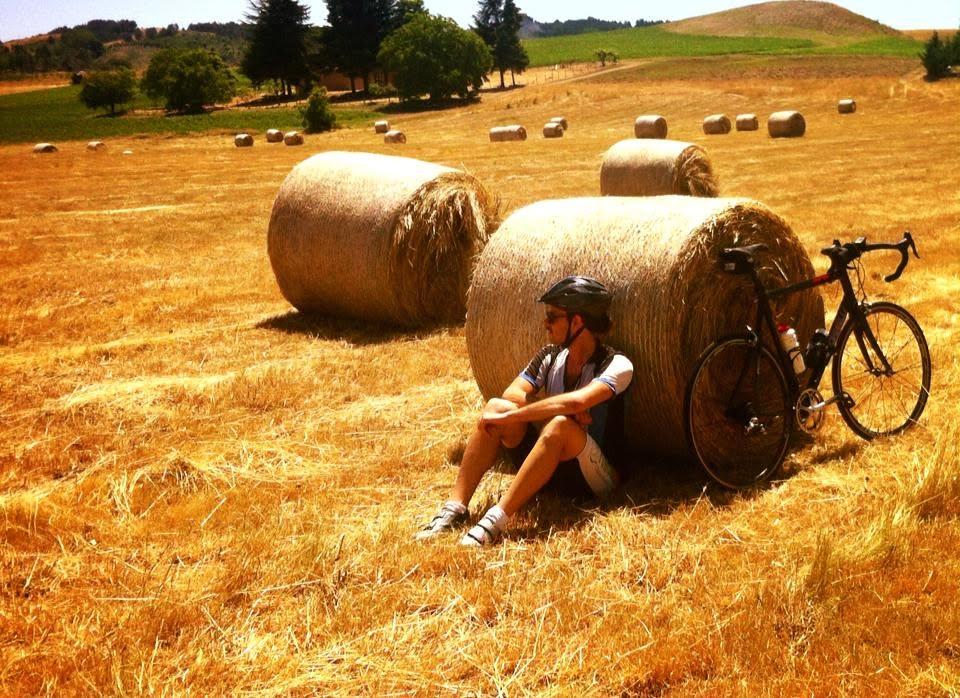
Exploring Calabria’s Sila Plateau: A Cyclist’s Journey
In the spring of 2020, amidst the global pause induced by the COVID-19 pandemic, I found an opportunity to merge three of my greatest passions: writing, cycling, and my deep affection for the Sila Plateau mountains. The idea of traversing forests, vast plains reminiscent of North American prairies, peaks offering panoramic vistas, and towns rich in history and charm, all while penning a book about the experience, had been on my mind for some time.
Despite living in Sila and cycling its roads almost daily, the spark to embark on this journey hadn’t ignited until then. The lockdown provided the necessary stimulus, and inspiration struck through reading Paolo Rumiz’s “La leggenda dei monti naviganti” and watching Jovanotti’s documentary “Non voglio cambiare pianeta,” both of which aired during those months.
From Acri to the Arbëreshë Villages
In June, as the cicadas began their song, I decided it was time to start. Previous trips, mostly shared with longtime cycling friends, had been modest, carrying only essentials: some food and a mere five euros for a coffee or gelato. Water was never a concern, as Sila’s pure, fresh springs are abundant. My hometown, Acri, served as the starting point.
My first ride delved into Calabria’s Arbëreshë culture in the villages surrounding Mount Crista. This wasn’t a random choice; according to English traveler Norman Douglas, this area is the northeastern gateway to the Sila plateau. San Giorgio Albanese, San Cosmo Albanese, Vaccarizzo, and San Demetrio Corone are towns perched on the mountain, gazing towards the Ionian Sea, the mythical waters cherished by Ulysses, all while enveloped in the early summer scent of wild oregano.
Bandits, Lakes, and Peaks
In the following days, I visited Bocchigliero and Longobucco, the latter referred to by Vincenzo Padula as the “Siena of Calabria.” Renowned for its textile industry and tales of brigandage, Longobucco was the birthplace of Palma, known as the “King of the Mountain.” Often likened to Sila’s Robin Hood, he was always on the side of the poor and farmers of his time. Then there were the lakes: Cecita with its captivating northern and southern shores, the lesser-known gem of Ariamacina, and Lake Arvo, reflecting the picturesque Lorica.
But the true allure of these places, where every pedal stroke was an emotion, lay in the peaks: Monte Altare, the queen of Sila Greca, which in May is adorned with the yellow of broom; Monte Pettinascura, bastion of the wild Fossiata; Monte Scuro, the site of Filippo Ganna’s memorable victory in the only autumn Giro d’Italia; and finally, the last Thule—the highest point—of the Botte Donato ridge, a place of silence and sighs where we saw eagles soar.
It’s also worth mentioning Camigliatello Silano, often dubbed Calabria’s Cortina d’Ampezzo, and Silvana Mansio, a charming tourist village founded by a Lombard entrepreneur. In the late 1940s, it was the filming location for Duilio Coletti’s masterpiece “Il lupo della Sila,” featuring a stellar cast including Silvana Mangano, Amedeo Nazzari, and Vittorio Gassman.
A Living Sentiment in the Heart
Every time I hold this book, my heart fills with happiness because it brings to mind the warmth of those days, the wind, the sound of wheels sizzling on asphalt, the encounters, the stories, and the wonder of a bicycle journey on Sila’s roads. Not just trees, lakes, rocks, mountains, towns, and people for whom baking bread is also a miracle: these mountains are a living sentiment in my heart. A love as vast and pure as the sky that frames them on the clearest spring days.
Through the pages of “Pedalando sulle strade dell’altopiano,” I wanted to share the joy and splendor of these little-known places in a Calabria that is often thought to be only sea, and what they represent for me. After all, when there’s passion, I believe there’s everything.
Cycling, for me, is a way to explore what lies beyond the doorstep and discover new places without necessarily going too far.
[Manuel Francesco Arena]
➡️ Pedalando sulle strade dell’altopiano