
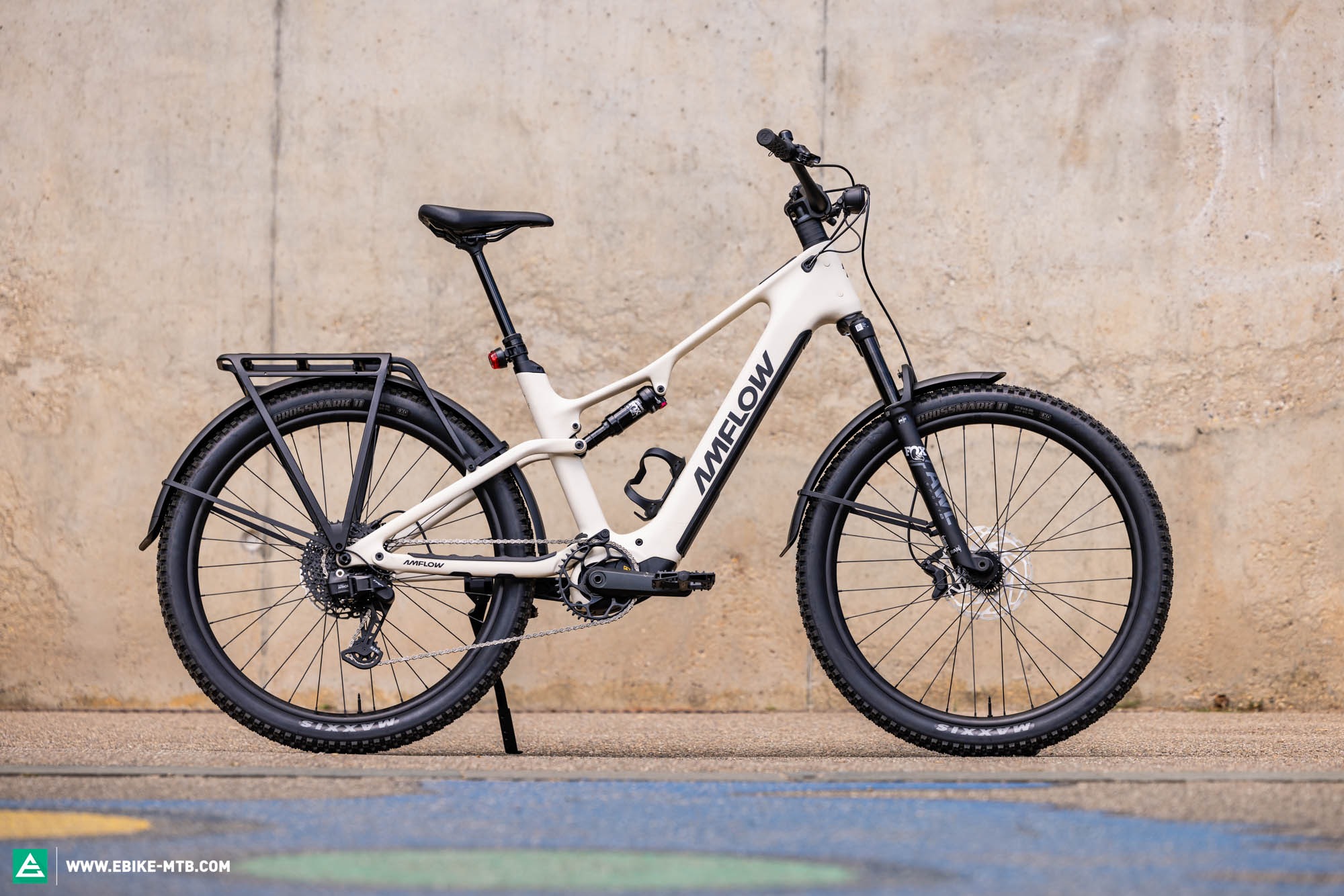
Amflow TL Carbon | First Impressions & Spec ReviewAMFLOW TL Carbon: Pushing the Boundaries of E-Bike Weight Limits
In June 2026, AMFLOW unveiled the TL Carbon, a groundbreaking e-bike that challenges conventional weight restrictions. With a permissible total weight (PTW) of 200 kg, including provisions for child seats and trailers, the TL Carbon sets a new benchmark in the e-bike industry. (prnewswire.com)
A New Era in E-Bike Design
The TL Carbon is engineered to accommodate a wide range of riders and uses, from daily commuting to off-road adventures. Its full-carbon frame, weighing just 2.9 kg, contributes to a total bike weight of 22.6 kg, making it one of the lightest in its class. (velodisco.com)
Robust Performance and Versatility
Equipped with the Avinox M2 motor, the TL Carbon delivers a peak power output of 1,100 W and a maximum torque of 125 Nm, ensuring reliable performance across various terrains. The bike features a full suspension system co-developed with FOX, offering 120 mm of front travel and 105 mm of rear travel, effectively absorbing shocks and enhancing rider comfort. (prnewswire.com)
Enhanced Load Capacity
The TL Carbon’s design allows it to carry up to 200 kg, including the bike’s weight, rider, and additional loads. The rear rack supports up to 27 kg, while an optional front rack can handle up to 20 kg, making it suitable for carrying children or towing trailers. (velodisco.com)
Implications for the E-Bike Industry
AMFLOW’s TL Carbon challenges the traditional weight limits of e-bikes, demonstrating that higher permissible weights are technically feasible. This advancement opens new possibilities for e-bike applications, catering to a broader range of riders and use cases. (prnewswire.com)
Conclusion
The AMFLOW TL Carbon represents a significant step forward in e-bike design, offering enhanced performance, versatility, and load capacity. Its introduction signals a shift in industry standards, paving the way for more robust and adaptable e-bikes in the future.