
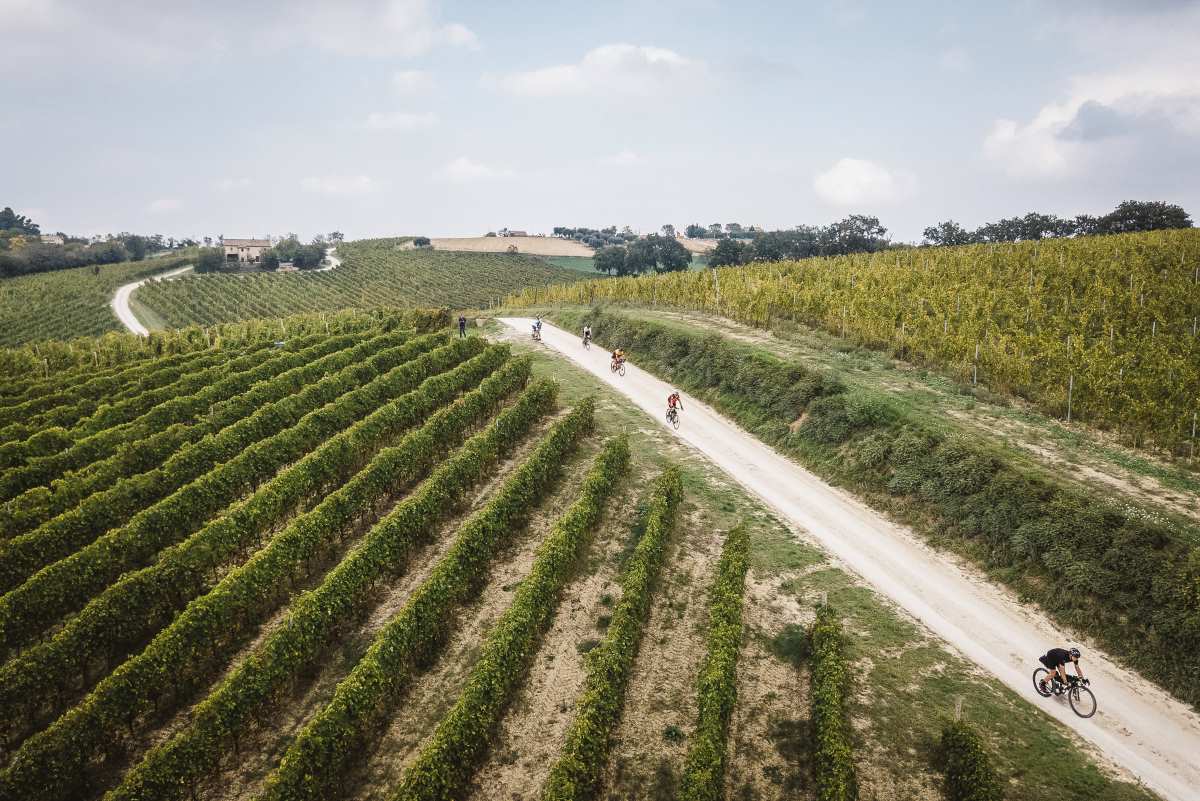
The Cammino Divino is a 93-kilometre trail in the heart of Italy’s Marche region, offering cyclists a unique journey through diverse landscapes, rich history, and renowned vineyards. This bi-directional route connects the Adriatic coast at Senigallia to the inland heights of Apiro, traversing the Vallesina valley and a mosaic of agriculturally rich and gastronomically significant territories.
A Collaborative Initiative Across Ten Municipalities
The Cammino Divino is the result of a collaborative effort among ten municipalities: Senigallia, Morro d’Alba, San Marcello, Jesi, Monte Roberto, San Paolo di Jesi, Staffolo, Cingoli, and Apiro. The Jesi municipal council recently approved a three-year protocol for the management, enhancement, and coordinated promotion of the trail. This agreement aims to create a unified, recognizable, and structured tourist product by utilizing existing secondary roads, trails, and bike paths, all within an environmentally and economically sustainable framework.
Trail Highlights: From Sea to Mountains, Through Lacrima and Verdicchio
The Cammino Divino unfolds along a path that starts at sea level and gradually ascends towards the inland areas. It’s designed to be completed over multiple days, with stages adaptable based on the chosen mode of transport (trekking or cycling) and the cyclist’s fitness level.
-
Senigallia → Morro d’Alba: Starting from the Adriatic coast, the route quickly enters the hilly landscape, leading to Morro d’Alba, the homeland of the Lacrima wine, where the rural dimension becomes prominent.
-
Morro d’Alba → San Marcello → Jesi: Entering the heart of the Vallesina valley, cyclists pass through vineyards and farm roads. Jesi, with its historic centre enclosed by medieval walls, serves as a natural hub and service centre along the route.
-
Jesi → Monte Roberto → San Paolo di Jesi → Staffolo: This segment is dominated by the Verdicchio dei Castelli di Jesi, one of Italy’s most renowned white wines. The trail passes through farms and wineries, integrating outdoor experience with wine culture.
-
Staffolo → Cingoli → Apiro: The final stretch is the most “Appennine”: expansive panoramas, low-traffic roads, and views towards Monte San Vicino and the Marche Apennines. The journey concludes in Apiro, a mid-mountain area that symbolically marks the transition from sea to mountains.
Rural Identity and Sustainable Mobility
The distinctive feature of the Cammino Divino is its agricultural identity. The trail crosses territories dedicated to the production of two renowned wines: Lacrima di Morro d’Alba DOC and Verdicchio dei Castelli di Jesi DOC. Cyclists and hikers don’t merely traverse a landscape; they enter a vibrant production system, made up of wineries, agritourisms, and farms. This approach caters to a growing demand from travellers attentive to sustainable mobility, quality experiences, and the connection between territory and product.
A Model for Territorial Regeneration
The Cammino Divino serves as an interesting case for at least three strategic reasons:
-
Network Among Small and Medium Municipalities: The approach is cooperative rather than competitive; the territory presents itself as a unique system, with an integrated offer of hospitality, dining, winery visits, and bike-friendly services.
-
Destagionalisation: A 93-kilometre cycle-pedestrian itinerary is accessible in spring, summer, and autumn, but also in the less traditional beach months. For locations like Senigallia, this means extending the season beyond traditional maritime tourism.
-
Enhancement of Inland Areas: Connecting the coast to the hilly and pre-Apennine areas means redistributing tourist flows and spending. It’s a model consistent with national policies on villages and inland areas, which see trails as a tool for sustainable local development.
Why It’s an Attractive Itinerary for Cycle Tourism
For those travelling by bike, the Cammino Divino offers:
- Low-traffic secondary roads
- Sections on bike paths and rideable dirt roads
- Progressive and never extreme elevation changes
- High density of cultural and gastronomic points of interest
It’s an ideal route for gravel and trekking bikes but also accessible with e-bikes, expanding the potential user base. The bidirectionality adds logistical flexibility: one can start from the sea and ascend inland or do the opposite, perhaps returning by train along the Adriatic coast.
The Deeper Meaning of the Cammino Divino
It’s not just a path on a map. It’s a territorial marketing project that uses slow tourism as a development lever. A lightweight infrastructure that connects coast and inland, wine and landscape, villages and countryside.
In a moment when cycle tourism and the tourism of trails represent one of the most dynamic segments of Italian travel, the Cammino Divino stands as a concrete example of how to build a coherent, sustainable, and identity-rich experiential product.
From sea to mountains, in 93 kilometres: enough to change one’s perspective on the territory.
And perhaps also on the way of travelling.