
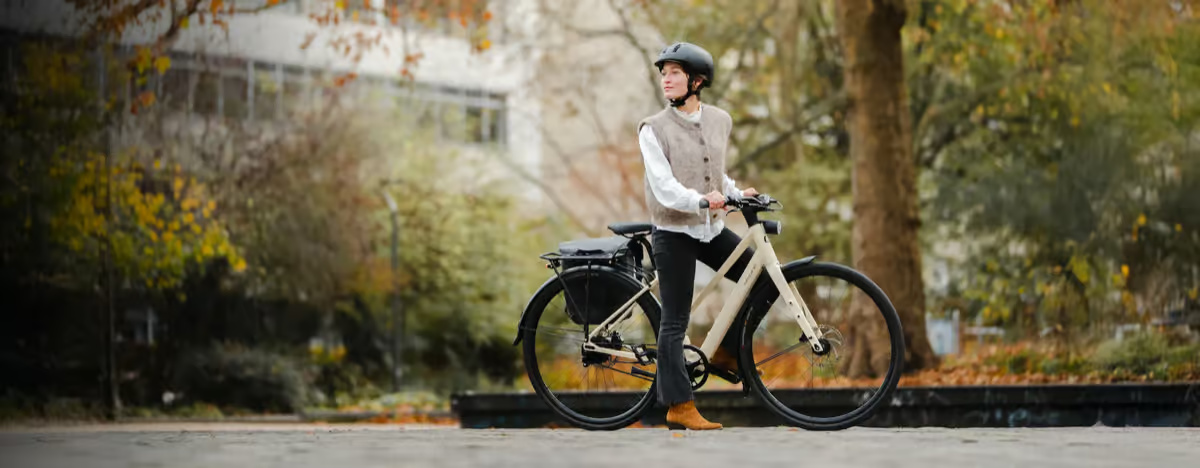
Comparison of the 9 Best Lightweight Electric Bikes of 2026
Are you in the market for a lightweight electric bike? The good news is that by 2026, we have finally seen electric bikes (E-bikes) weighing under 15 kg—almost on par with traditional bikes. These are the kinds of models that you can comfortably carry up three flights of stairs, slip onto public transport without blocking the aisle, and navigate city streets with one-handed ease.
However, a lightweight E-bike is about more than just weight. It requires balancing several factors, including battery life, torque, and often, price. The key is finding the right equilibrium between weight and actual usage. This article aims to help you navigate that balance.
At Roulez Jeunesse, our network of repairers encounters hundreds of electric bikes each month. We know firsthand what makes the difference in longevity: batteries that last, motors that run smoothly, and transmissions that don’t squeak. This practical experience has informed our selection of the best lightweight electric bikes for 2026, offering a special focus on those weighing less than 15 kg from our more general guide on E-bikes.
What Defines a “Lightweight” Electric Bike?
A standard electric bike can weigh anywhere between 22 and 28 kg due to the addition of a motor, battery, and reinforced frame. However, recent advancements have led to the development of models under 15 kg, which is comparable to traditional city bikes.
In this comparison, we classify bikes into three categories:
-
Ultra-light: Under 15 kg — These models are exceptionally portable and ideal for multi-modal transport, apartments without elevators, or simply for the pleasure of riding something that feels almost weightless.
-
Light: Between 15 and 18 kg — This is the sweet spot. Such bikes are manageable and balanced enough to handle daily use.
-
“Reasonably Light”: Between 18 and 20 kg — These bikes still retain a significant weight advantage over standard E-bikes but start to feel heavy when carried.
Important to note: lighter bikes often come with compromises, such as a smaller battery (resulting in less range), rear hub motors instead of central ones, and generally higher price tags—a factor when materials like carbon frames are involved. We provide further guidance below in our selection guide.
Comparative Table: The 9 Best Lightweight Electric Bikes of 2026
| Model | Weight | Price | Motor | Torque | Battery | Transmission |
|---|---|---|---|---|---|---|
| Origine Montmartre Air | 12.29 kg* | €3,040 | Mahle X30 (hub) | 45 Nm | 250 Wh | Single-speed belt |
| Van Rysel E-GRVL AF HD | 14.5 kg | €2,900 | Mahle X35+ (hub) | 40 Nm | 250 Wh | SRAM Apex 1×12 |
| Specialized Vado SL 2 Carbon | 14.9 kg | €6,199 | SL 1.2 / Mahle (mid-drive) | 50 Nm | 520 Wh | Shimano CUES 11v |
| Orbea Vibe H30 | 15 kg | €2,799 | Mahle X35+ (hub) | 40 Nm | 248 Wh | Shimano Deore 10v |
| Tenways CGO600 Pro | 16 kg | €1,599 | Mivice M070 (hub) | 40 Nm | 360 Wh | Gates CDN belt |
| Canyon Roadlite:ONfly AL | 16.1 kg | €3,499 | FAZUA Ride 60 (mid-drive) | 60 Nm | 430 Wh | Shimano Deore XT 1x12v |
| Orbea Carpe 25 | 17.7 kg | €2,999 | Shimano EP600 (mid-drive) | 85 Nm | 420 Wh | Shimano CUES 9v |
| Moustache Dimanche 28 Road 2 | 17.5 kg | €3,399 | Bosch Perf. SX (mid-drive) | 60 Nm | 400 Wh | Shimano CUES 10v |
| Ellipse E2 / E2 ST | 19.4 kg | €2,490 | Mivice M080 (hub) | 45 Nm | 504 Wh | Gates or Shimano 9v |
Our Selection of the 9 Best Lightweight Electric Bikes of 2026
Origine Montmartre Air Lite: The Lightest, Made in France
Weight: From 12.29 kg. Yes, you read that right. The Origine Montmartre Air is the lightest bike in our selection, with a stripped configuration (without accessories). Fully equipped, it weighs only 13.82 kg—still remarkably light and one of the lightest on the market. Carrying it up stairs is a breeze.
Motor: The secret lies in an optimized aluminum frame, carbon fork, and the discreet Mahle X30 motor (45 Nm), ingeniously integrated into the rear hub. The mono-speed Hutchinson CrossDyn belt system eliminates derailleurs and chains, reducing weight and ensuring zero maintenance. The compact 250 Wh battery provides approximately 100 km of range, ideal for urban commutes.
Price: €3,040.
Van Rysel E-GRVL AF HD: The Versatile Gravel Option
Weight: 14.5 kg.
This gravel bike ticks all the boxes for a lightweight urban E-bike, featuring built-in lights and wireless display. On weekdays, it serves as an efficient commuter, while on weekends, it handles rough terrain with ease. Thanks to the Mahle X35+ motor (40 Nm) and SRAM Apex 1x12v transmission, it adapts to various terrains seamlessly.
Price: €2,900.
Specialized Vado SL 2 6.0 Carbon: The Ultimate Premium Bike
Weight: 14.9 kg.
The Specialized Vado SL 2 showcases a central motor design, developed in collaboration with Mahle, amplifying your pedaling effort with a natural feel. With a 520 Wh battery, it offers impressive autonomy and comfort thanks to the Future Shock suspension.
Price: €6,199.
Orbea Vibe H30: The Discreet All-Rounder
Weight: 15 kg.
With subtle styling and an integrated Mahle motor, this bike looks like any ordinary city bike. It features a Shimano Deore 10-speed transmission but has a smaller battery (248 Wh) for daily rides.
Price: €2,799.
Tenways CGO600 Pro: The Best Value for Money
Weight: 16 kg.
This entry-level bike is surprisingly robust, featuring a maintenance-free Gates belt system and a hidden Mivice motor (40 Nm). Ideal for urban commutes, the Tenways CGO600 Pro is the most accessible E-bike on our list.
Price: €1,599.
Canyon Roadlite:ONfly AL: The Sporty Urban Machine
Weight: 16.1 kg.
Combining a central FAZUA motor and a 430 Wh removable battery, this bike delivers solid performance with an exceptional Shimano Deore XT 1x12v transmission. It’s built for flat city riding as well as hilly terrains.
Price: €3,499.
Orbea Carpe 25: The Powerhouse
Weight: 17.7 kg.
Equipped with an impressive 85 Nm torque Shimano EP600 motor, the Carpe 25 is ideal for hilly terrains, blending urban practicality with strong performance.
Price: €2,999.
Moustache Dimanche 28 Road 2 Open: The Local Favorite
Weight: 17.5 kg.
Powered by the trusted Bosch Performance Line SX motor, this bike is designed for everyday urban use, featuring an integrated battery for a seamless look.
Price: €3,399.
Ellipse E2 / E2 ST: The Customizable Option
Weight: 19.4 kg (E2) or 19.8 kg (E2 ST).
The heaviest on our list, but packed with features like integrated safety lights and the largest battery, the Ellipse stands out for its customization options, allowing you to build a bike that fits your personal style.
Price: €2,490.
Factors to Consider When Choosing Your Lightweight Electric Bike
The Weight vs. Autonomy Trade-Off
This is the primary concern for lightweight e-bikes. Generally, a smaller battery means lighter weight, but less autonomy.
- 250 Wh: Approximately 100 km of autonomy, suitable for daily commutes of up to 15 km.
- 360-430 Wh: Offers flexibility for longer rides and tougher conditions.
- 500+ Wh: Ideal for extensive trips with less frequent charging.
Rear Hub Motor vs. Central Motor
This is a crucial technical choice. Rear hub motors (like Mahle and Mivice) are lighter and quieter, while central motors (Shimano and FAZUA) provide higher torque and a more natural ride—especially useful in hilly areas.
Aluminum vs. Carbon Frame
Carbon frames are lighter but come at a premium and are often more fragile. For city bikes exposed to everyday bumps, aluminum often makes for a more practical choice.
Belt vs. Chain Drive
While belt systems are low-maintenance, they are often single-speed—making them less suited for hilly rides. Chain systems allow for multiple gears but require regular maintenance.
Where to Buy Your Lightweight Electric Bike
Purchasing a lightweight e-bike also involves deciding where to buy. You can opt for new bikes from reputable sellers or consider refurbished options for significant savings.
- New Bikes: Check with authorized retailers for fresh models.
- Refurbished Options: Consider purchasing refurbished bikes to save up to 40%.
Frequently Asked Questions
What is the Lightest Electric Bike?
The lightest E-bike currently available is the Coboc eCycle F1 at 10.8 kg, but in our selection, the Origine Montmartre Air Lite at 12.29 kg takes the crown.
Do Lightweight Electric Bikes Have Less Autonomy?
Typically, yes. Lightweight E-bikes start with battery capacities of 250-520 Wh compared to traditional E-bikes, which range from 500-750 Wh.
Can I Take a Lightweight E-bike on the Train?
Yes, lightweight E-bikes can fit easily on public transport, making them a versatile option.
What Budget Should I Expect for a Lightweight Electric Bike?
Entry-level lightweight E-bikes start around €1,599, with the most extensive selections priced between €2,500 and €3,500.
In conclusion, the choices for lightweight electric bikes in 2026 are plentiful and tailored for varying needs and preferences. Whether you’re seeking a compact urban commuter or a powerful hill-climber, this guide aims to help you find the perfect match.